
Lieferung heute & morgen

Qualitätsgarantie

Willkommens-Angebote freischalten: KOSTENLOSE Lieferung | Bis zu 80 % RABATT | Kostenlose 30-Tage-JoyPlus-Testphase
App herunterladen
By a Joybuy Product Recommendation Officer, August 28, 2026
Choosing the right lighting is crucial for a room's atmosphere and functionality. A LED recessed spotlight set promises a modern, uniform, and energy-efficient solution. But the market is flooded with options whose technical details often create more confusion than clarity. Making the wrong choice can lead not only to aesthetic disappointment but also to unexpected costs and safety risks.
Before you invest, you should be aware of the three most common pitfalls when selecting LED recessed spotlights:
To avoid these pitfalls and make an informed decision, focus on three core technical features.
Modern ceiling structures, especially suspended ceilings, often offer limited space. A shallow installation depth is therefore not a luxury, but a necessity.
The flexibility of your lighting determines the room's atmosphere. Two functions are central to this.
The IP (Ingress Protection) code indicates how well a light is protected against the ingress of foreign objects and water.
Instead of presenting an overwhelming list, we have selected products that meet specific needs and are designed to avoid the pitfalls mentioned.
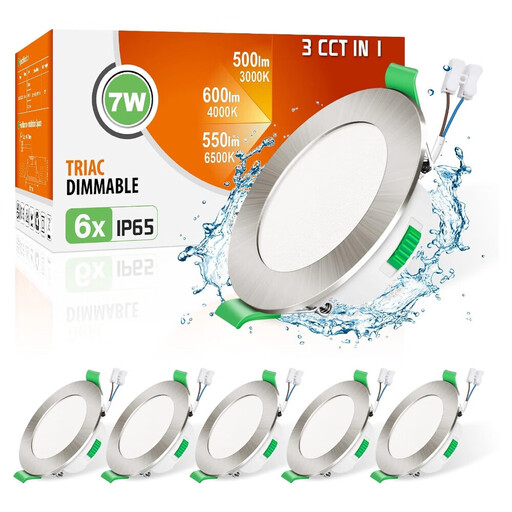
Why it's a perfect match: This set is an all-in-one solution for DIYers who value simplicity and safety. The direct 230V connection, ultra-slim design (29 mm), and high IP65 protection rating make installation straightforward in any room, including the bathroom.
No transformer required (230V direct connection). The IP65 rating exceeds the requirements for wet rooms, offering maximum safety. Dimmability is designed for trailing-edge dimmers.
The combination of IP65 protection and CCT colour temperature changing offers the ultimate flexibility and safety for any project.
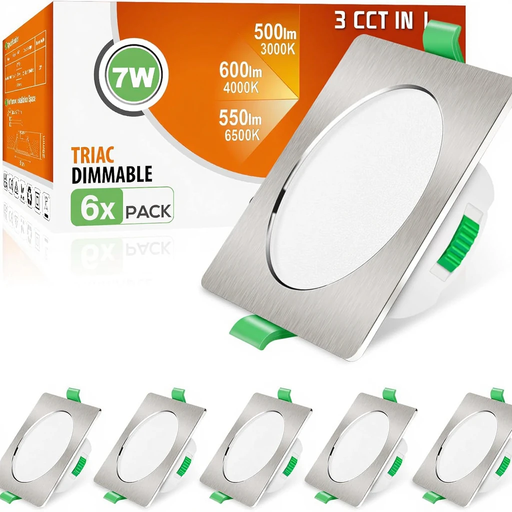
Why it's a perfect match: For anyone looking to make a clean, modern design statement. The square frame and brushed nickel spot finish stand out from standard solutions and perfectly complement contemporary interior styles.
This set combines sophisticated design with technical reliability: a 230V connection, the correct IP44 rating for bathrooms, and flexible light control through dimmability and CCT.
The distinctive, square design (square recessed spotlight) in brushed nickel offers a high-end look without compromising on the technical requirements for wet rooms.

Why it's a perfect match: This set offers outstanding value for money. It bundles premium features like IP65 protection and CCT colour selection into a classic, unobtrusive design (white LED spotlight) that blends seamlessly into any ceiling.
Despite its accessible price point, it makes no compromises on safety (IP65) or ease of installation (230V, low-profile). The CCT function prevents you from choosing the wrong light colour.
Maximum functionality and safety at an attractive price. The high IP rating and flexible light colour make a compelling case for budget-conscious buyers.
We have curated an up-to-date selection of products that meet these selection criteria and all applicable safety requirements.
In most regions, any lighting that connects directly to the 230V mains power should be installed by a qualified electrician to comply with local electrical codes. This ensures your safety and the proper functioning of the system. While sets with a 230V direct connection are technically straightforward, working with your home's electrical system requires professional expertise.
CCT stands for "Correlated Colour Temperature" and describes the ability to change a light's colour. An LED recessed spotlight set with CCT functionality typically offers three levels:
There's no one-size-fits-all answer, as the requirement depends on the ceiling height, desired brightness (lumens per spot), beam angle, and the room's purpose. As a rough guideline for good ambient lighting in a room with a standard ceiling height (approx. 2.50 m), consider: