
Lieferung heute & morgen

Qualitätsgarantie

Willkommens-Angebote freischalten: KOSTENLOSE Lieferung | Bis zu 80 % RABATT | Kostenlose 30-Tage-JoyPlus-Testphase
App herunterladen
LED recessed spotlights provide even lighting while taking up very little ceiling space thanks to their slim design. However, not every model will automatically be right for your needs. Key factors include the ceiling cut-out, installation depth, IP rating and type of electrical connection.
This guide is for homeowners, tenants, renovators, DIY enthusiasts and electricians looking to buy LED recessed spotlights, LED ceiling spotlights or additional outdoor lighting.
An LED spotlight may seem technically suitable but still not fit the existing ceiling opening. The required cut-out sizes can vary considerably, for example between 90–100 mm, 95–110 mm and 115–135 mm. Installation depth matters too: slim LED recessed spotlights measuring around 25.5 to 34 mm deep are better suited to ceilings with limited cavity space.
Before placing your order, measure:
An IP44 recessed spotlight is protected against solid objects measuring 1 mm or more, as well as splashing water from different directions. However, this rating does not mean the light can be immersed in water or exposed to a direct jet of water.
Where you install the light also matters in a bathroom or kitchen. In areas exposed to water, you must follow the applicable installation zones and safety requirements. If you’re unsure, have a qualified electrician make the connection.
A model described as “dimmable” will generally need a compatible dimmer. Not every existing wall dimmer works reliably with LED lights. If you’re considering dimmable LED recessed spotlights, check that your dimmer is compatible and confirm the specified dimming method.
A 3CCT LED spotlight lets you choose between several colour temperatures, for example:
On many models, you select the colour temperature using a switch on the light itself, rather than changing it every day using the wall switch.
230 V LED recessed spotlights connect directly to the mains and, if suitably designed, do not need a separate transformer. Models rated at 12–24 V, on the other hand, require a suitable power supply or transformer, which is often not included.
A 12–24 V spotlight can be a good choice for furniture, display cabinets, under kitchen cabinets or motorhomes. For direct installation in the ceilings of living spaces, a 230 V model is often easier to plan for. Mains electrical work must only be carried out with the power off and in accordance with current regulations.
Wattage describes power consumption, not brightness alone. Light output is measured in lumens (lm). For example, a 10 W model producing 1,050 lm gives a different amount of light from a 6 W model producing 430 lm.
Other factors to consider include:
Aluminium can help dissipate heat. Plastic housings can also be suitable, provided the light is approved for the intended installation and there is sufficient clearance from heat-sensitive materials. Do not cover ventilation slots or cooling surfaces.

Why this product suits this type of buyer: This set is ideal if you want to fit several rooms or a hallway with matching, slim lights. The stated installation depth is 25.5 mm, and the cut-out size is 95–110 mm.
The dimensions and direct 220–240 V connection are clearly specified. However, this model is not dimmable and emits cool white light at 6,500 K only.
Set of 6, 430 lm per light, IP44 rating and shallow installation depth.
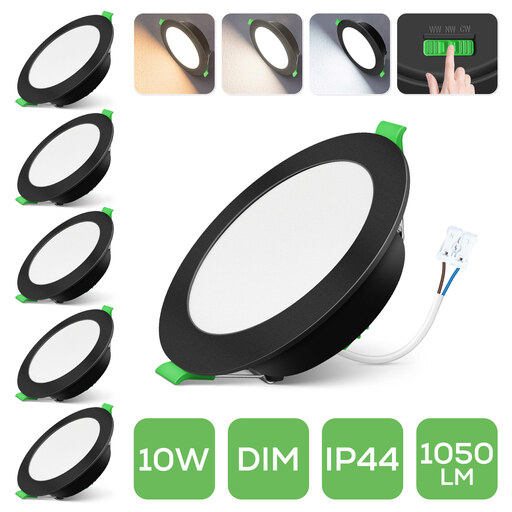
Why this product suits this type of buyer: With three selectable colour temperatures, this set is a versatile choice for living spaces, kitchens and bathrooms. It offers a stated dimming range of 10 to 100 per cent when used with a compatible dimmer.
Choose between colour temperatures of 3,000, 4,000 and 6,500 K. The existing dimmer must be compatible with the light for the dimming function to work.
10 W, 1,050 lm per spotlight, 34 mm installation depth, 90–100 mm cut-out and IP44 rating.
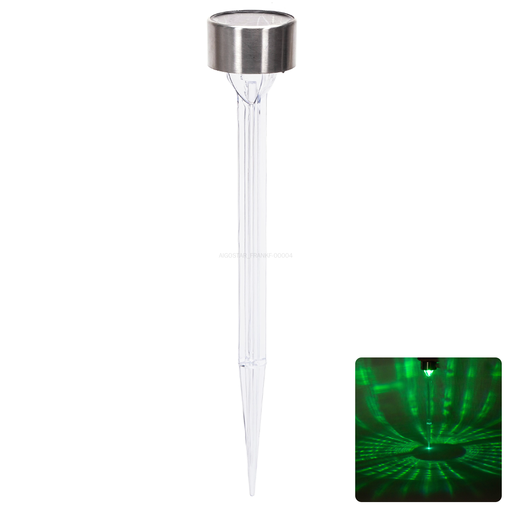
Why this product suits this type of buyer: This solar garden light is designed for paths, lawns and flower beds where you don’t want to install a mains connection. Simply push it into soft ground.
The charging time is stated as around 4–6 hours, with a light duration of up to 8–12 hours. The solar panel needs direct sunlight for an adequate charge.
RGB lighting, Ni-MH battery, automatic dusk function, IP44 rating and wireless installation.
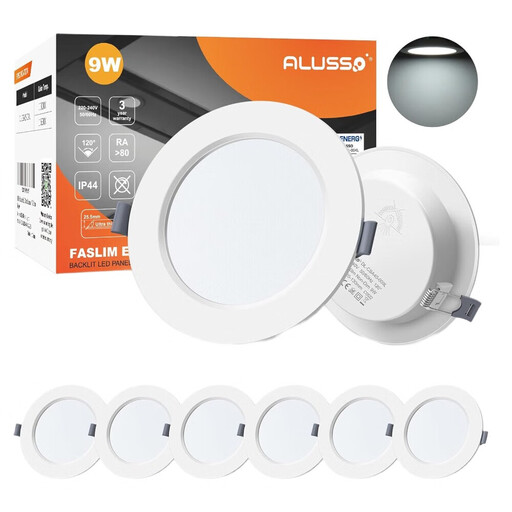
Why this product suits this type of buyer: With a stated installation depth of just 25.5 mm, this set is worth considering for renovations where space is limited. It is designed for indoor spaces such as bathrooms, kitchens, living rooms and bedrooms.
The required cut-out size of 115–135 mm is clearly specified. This model is not dimmable, so don’t plan to use it with a dimming function.
9 W, 720 lm, direct 230 V connection, IP44 rating and slim design.
We’ve put together a complete, regularly updated list of products that meet these strict selection criteria and fully comply with the safety regulations in force in the EU.
Before installation, switch off the circuit and secure it against being switched back on. For 230 V lights, you’ll need properly made connections, suitable terminal blocks and compliance with installation regulations. Tenants should also discuss any structural changes with their landlord.
Running costs depend on the wattage, daily operating time and electricity tariff. A 10 W light used for four hours a day consumes 0.04 kWh per day. With multiple spotlights, consumption increases in line with the number of lights. Solar garden lights don’t need a fixed mains connection, but their actual running time depends on sunlight, the time of year, shade and battery condition.
Depending on where they are installed, models with an IP44 rating may be suitable for certain areas of a bathroom. However, IP44 only protects against splashing water. You must comply with the required protection zones and clearances. IP44 is not sufficient if the light may be exposed to a direct jet of water or immersed.
Product specifications often give a rated lifespan of 15,000 to 30,000 hours. This depends on operating conditions such as ambient temperature, heat dissipation, mains quality and daily use. A long rated lifespan is no substitute for correct installation.
No. Only models explicitly labelled as dimmable should be used with a compatible LED dimmer. On 3CCT models, the colour temperature is usually selected separately on the light itself. Before buying, make sure the light, dimmer and connection type are compatible.