
Lieferung heute & morgen

Qualitätsgarantie

Willkommens-Angebote freischalten: KOSTENLOSE Lieferung | Bis zu 80 % RABATT | Kostenlose 30-Tage-JoyPlus-Testphase
App herunterladen
An LED recessed spotlight should sit discreetly in the ceiling, provide enough light and be compatible with your existing electrical installation. In practice, however, poor purchases are often caused not by the LED technology itself, but by unsuitable cut-out dimensions, an incorrectly assessed IP rating, or incompatible dimmers and smart home systems.
This buying guide explains which details to check before you buy and which models may suit different needs.
An LED ceiling spotlight might have an outer diameter of 145 mm, for example, but need a ceiling cut-out of 120–130 mm. The key measurement is not just the visible size, but the stated cut-out diameter.
Before you buy, you should:
A slim LED recessed spotlight with an installation depth of just around 25.5 mm can be useful where the ceiling void is shallow. However, you should still check the connections and ventilation requirements.
An IP44 LED recessed spotlight is protected against solid objects and splashing water from various directions. This can make it suitable for certain indoor areas with higher levels of moisture, such as bathrooms or kitchens. However, this rating does not cover direct jets of water, persistent condensation or immersion in water.
When choosing an LED recessed spotlight for a bathroom, you must also take into account the installation zone, distance from water sources and local electrical regulations. Installation on a 230 V supply should be carried out by a qualified electrician.
A dimmable LED spotlight needs a compatible dimmer. 230 V models often require a trailing-edge dimmer. Smart models, on the other hand, are often dimmed solely through an app, gateway or voice assistant.
For example, some Bluetooth Mesh lights are not designed to be dimmed with a conventional wall dimmer. So don’t simply reuse an existing dimmer without checking that it is compatible.
For 230 V LED recessed spotlights, direct connection to 220–240 V or 230 V is an important consideration. Some models do not need a separate transformer. Low-voltage lights rated at 12–24 V, however, must not be connected directly to the mains.
Check the following details:
The terms warm white, neutral white and cool white refer to colour temperature:
A 3CCT LED spotlight lets you select from several colour temperatures using a switch on the housing. With smart models, you can usually adjust the colour temperature in an app. The CRI or Ra rating indicates colour rendering. A value of Ra ≥80 is stated for the products mentioned and provides a basic guide for indoor use.
A smart LED recessed spotlight with Bluetooth Mesh can connect several lights together. However, you may need a gateway to control them remotely when you’re away from home or to connect them to voice assistants. Check:
An RGB+CCT LED spotlight also offers coloured light and adjustable shades of white. This feature is not essential for general room lighting and should not be confused with higher light output.
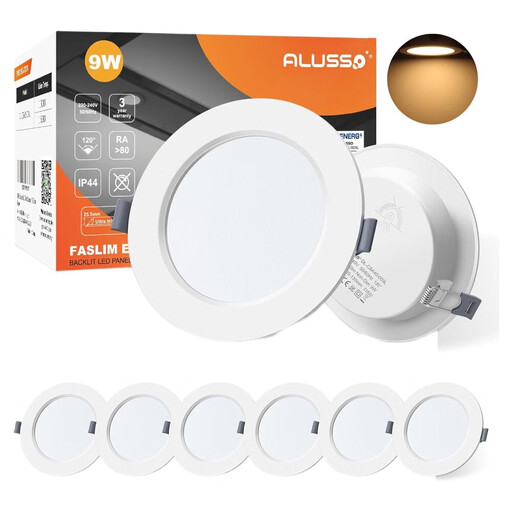
Why this product suits this profile: This six-piece set is designed to provide consistent lighting across several rooms or a longer hallway. Its stated colour temperature of 3000 K suits a warm, welcoming indoor atmosphere.
The product details specify a cut-out of 115–135 mm, a 230 V connection and IP44 protection. These figures make it easier to check the dimensions and suitability before ordering.
Six lights, 9 W per spotlight, 690 lm per spotlight, 3000 K and IP44, according to the product details. This model is not dimmable.
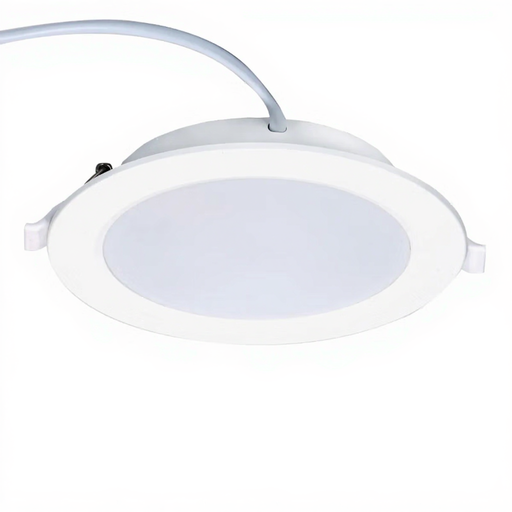
Why this product suits this profile: This light is aimed at households and small business premises where colour temperature, grouping and Bluetooth Mesh control are important.
The IP20 rating clearly limits use to dry indoor areas. A compatible gateway is also required for remote and voice control.
9 W, 780 lm, 2700–6500 K, Bluetooth Mesh and a 120° beam angle, according to the product description. The stated cut-out is 120–130 mm.
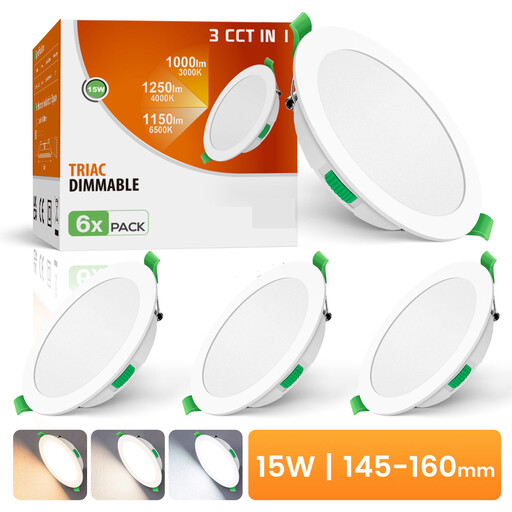
Why this product suits this profile: This set is suited to renovations where different rooms need different lighting moods or you want dimmable lighting.
The three selectable colour temperatures and stated dimming function make the lighting options clearer than an unspecified claim that the light is ‘adjustable’.
15 W, 1200 lm, 3000/4000/6500 K, IP44 and dimming from 10–100%, according to the product details. The stated cut-out is 145–160 mm.
We’ve put together a complete, regularly updated list of products that meet these strict selection criteria and fully comply with the safety regulations in force in the EU.
Before working on the electrical installation, switch off the circuit at the consumer unit and make sure it cannot be switched back on accidentally. A 230 V recessed spotlight must be installed by a qualified electrician.
Power consumption is the main factor in running costs. A 9 W light uses 9 kWh over 1,000 hours of operation. If you’re using several spotlights, add together the total wattage of the set. Your actual electricity costs will depend on the unit rate in your tariff.
Various models have a stated lifespan of between 25,000 and 30,000 hours. This manufacturer’s figure is a guide and depends on factors such as ambient temperature, ventilation, switching cycles and mains conditions. Do not cover lights with insulation if the installation instructions state that this could affect heat dissipation.
Warm white at around 3000 K is a popular choice for living rooms and bedrooms. Neutral white at 4000 K can work well in kitchens, hallways or work areas. A 3CCT model lets you choose your preferred setting after installation.
Only if the model is specifically stated to be dimmable and the dimmer you use is compatible. With some smart lights, brightness can only be controlled through an app or gateway. Check the product details before installing a dimmer.
Many models have a stated lifespan of 25,000 to 30,000 hours. This figure is not a guarantee for every installation. Choosing the right installation depth, allowing for sufficient heat dissipation and following the electrical requirements can help the light last as intended.