
Lieferung heute & morgen

Qualitätsgarantie

Willkommens-Angebote freischalten: KOSTENLOSE Lieferung | Bis zu 80 % RABATT | Kostenlose 30-Tage-JoyPlus-Testphase
App herunterladen
Choosing the right lighting is crucial for a room's atmosphere. LED recessed spotlights are a particularly popular solution for modernising living spaces like bathrooms, kitchens, or living rooms. They are discreet, modern, and energy-efficient. However, the vast selection of models with specific technical features can quickly lead to poor purchasing decisions. A flickering dimmer, an unsuitable light colour, or fixtures damaged by moisture are common frustrations. This guide will help you understand the critical criteria and make an informed choice.
When selecting ceiling spots, there are several traps that often only become apparent after installation. Knowing what they are allows you to avoid them from the start.
LED bathroom recessed lights, an appropriate level of protection is essential.dimmable recessed spots only to find they flicker or buzz with their existing wall switch. The reason is often an incompatibility between the spotlight and the dimmer type (e.g., leading-edge vs. trailing-edge dimmers).To avoid the problems mentioned above, you should focus on a few critical technical parameters. These determine functionality, durability, and ease of installation.
Modern ceiling structures, especially in renovated older buildings or with suspended ceilings, often offer very little space. In these cases, low-profile ceiling spots with a shallow installation depth (often under 35 mm) are the only solution. Measure the available cavity in your ceiling before making a selection.
Another key advantage is a direct connection to the 230V mains supply. Models labelled as 230V LED spots or transformerless recessed spotlights do not require an external transformer. This significantly simplifies installation, as less wiring and space are needed in the ceiling cavity.
The IP rating indicates how well a light is protected against the ingress of foreign objects and water.
LED kitchen spots, where steam and splashes can occur.Flexible lighting design is a central aspect of modern living. Two functions are particularly useful here:
Based on the criteria mentioned, we have identified some products that provide a suitable solution for specific user profiles and their requirements.
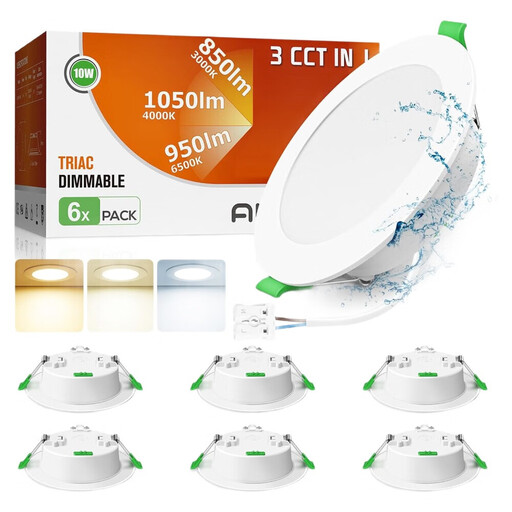
Why This Fits Their Persona: Ideal for users seeking a flexible and straightforward all-in-one solution for various rooms. The combination of dimmability, 3CCT, and IP44 protection makes this spot a versatile tool for the kitchen, bathroom, and living area.
The 3CCT function prevents choosing the wrong lighting atmosphere. The IP44 protection qualifies it for damp rooms, bypassing the problem of unsuitable lights in the bathroom. Compatibility with trailing-edge dimmers reduces the risk of flickering.
Low-profile design (34 mm depth) for easy installation. Direct 230V connection without a transformer. High light output of 1050 lumens at 10 watts.
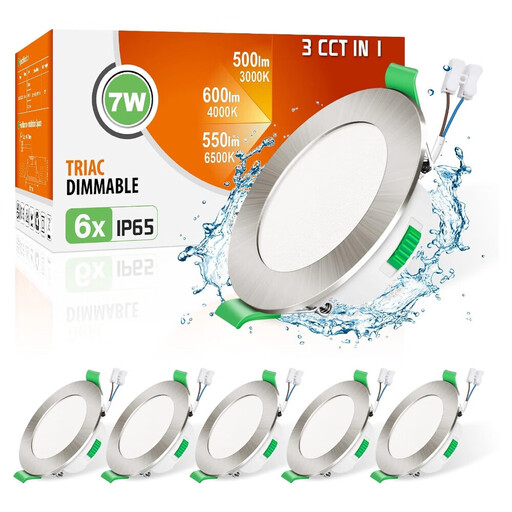
Why This Fits Their Persona: Perfect for users who value a high-quality appearance and maximum durability. The brushed nickel finish and high IP65 rating meet sophisticated demands for both design and function, even in challenging environments.
The IP65 protection offers maximum safety against water and dust, far exceeding the minimum standard, thus reliably preventing moisture damage. The clear specification for trailing-edge dimmers ensures a trouble-free dimming function.
Very shallow installation depth of only 29 mm. High-quality material feel thanks to aluminium with a nickel finish. Suitable for both indoor and protected outdoor areas.
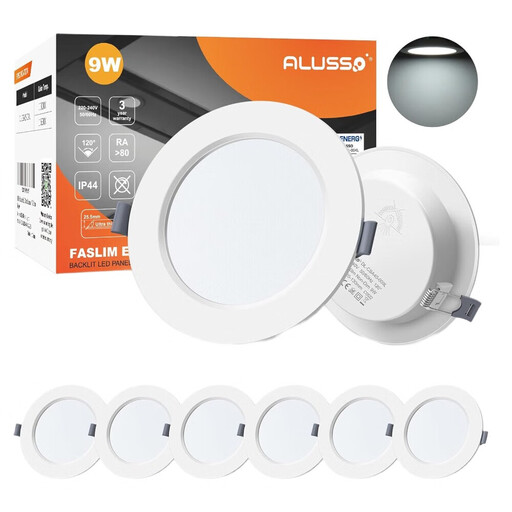
Why This Fits Their Persona: The first choice for renovators facing extremely limited space in the ceiling. This model is specifically designed to provide a lighting solution where standard spots would not fit.
Directly solves the critical installation pitfall of insufficient ceiling cavity depth. With an installation depth of just 25.5 mm, this spot fits into almost any suspended ceiling, preventing mounting compatibility issues from the outset.
Extremely low-profile design. Direct 230V connection for simple installation. IP44 protection also makes it suitable for bathrooms and kitchens. Note: This model is not dimmable.
We have compiled a complete, real-time updated list of products that fully meet these strict selection criteria and UK safety regulations.
No, the main advantage of 230V models is that they connect directly to the standard household mains supply. A separate transformer is not required. This simplifies installation and saves space in the ceiling. Look for product descriptions like transformerless recessed spotlight or 230V direct connection.
3CCT stands for the ability to choose between three different colour temperatures. A small switch on the light allows you to set the light colour before final installation: typically Warm White (approx. 3000K) for a cosy atmosphere, Neutral White (approx. 4000K) for functional lighting, and Cool White (approx. 6500K) for a stimulating, daylight-like brightness.
A general guideline is to plan for about one recessed spot per 1.5 to 2.5 square metres of ceiling area. However, the exact number depends heavily on the brightness (lumens) of the spots, the beam angle, the ceiling height, and the intended use of the room. You will need less light for general illumination in a living room than for a work surface in the kitchen. Check the product's lumen specification and, if in doubt, plan for one extra spot that you can dim if needed.