
Lieferung heute & morgen

Qualitätsgarantie

Willkommens-Angebote freischalten: KOSTENLOSE Lieferung | Bis zu 80 % RABATT | Kostenlose 30-Tage-JoyPlus-Testphase
App herunterladen
An LED sensor light switches on automatically when movement is detected or when the ambient light level drops. This is handy for kitchen cupboards, drawers, hallways, stairs and bedrooms. Outdoors, you can use models with suitable protection against moisture.
However, not every light suits every location. The sensor type, mounting method, power supply and the actual technical specifications are all crucial. The following guide shows what households in the UK should look out for before buying.
A PIR motion sensor reacts to detected movement within a specific area. An LED night light with a light sensor, on the other hand, switches on and off depending on brightness. These two functions are not the same:
If you are looking for a cupboard light with a sensor, you will usually need a PIR sensor. For a permanent, orienting night light that plugs into a socket, a light sensor may be more suitable.
High brightness is not automatically an advantage. A compact light is sufficient for a drawer, whereas an under-cabinet kitchen light should illuminate a larger work surface evenly. Pay attention to the stated luminous flux in lumens rather than just the number of LEDs.
Colour temperature also affects how you use the light:
A cordless LED light can be installed flexibly, but it needs to be recharged regularly. With adhesive mounting, the nature of the surface can also be crucial. Smooth, grease-free surfaces offer better conditions than dusty or rough ones.
With a USB rechargeable LED light, buyers should also check the battery capacity, the charging port and compatibility with a 5-volt USB power adapter. A larger capacity, for example 1,100 mAh, can enable longer operating intervals. However, the actual run time depends on sensor activity, brightness and how long you use it.
Check whether the stated range suits the installation location. The 20 cm and 30 cm cupboard lights in this selection specify a PIR range of 3 to 5 metres. This is sufficient for a small cupboard; in a long hallway, you should choose the position carefully.
Also important are details about the switch-on duration and whether the light reactivates with every movement. If this information is missing, it can be difficult to predict how the light will behave in practice.
A light measuring 200 × 38 × 10 mm is suitable for narrow shelves or smaller wall-hung cupboards. The 30 cm model at 300 × 38 × 10 mm covers a longer area. For drawers, several short lights may be more practical than a single long one.
A magnetic LED light offers advantages if you want to remove it for cleaning or charging. With adhesive tape mounting, no drilling is required, but you should clean and dry the surface before installation.
For indoor use, a model without special water protection is sufficient, depending on the product. Outdoors, the IP rating is crucial. The Brilliant Iseo has IP44 and is designed to be splash-proof according to the product specifications. This does not mean it can be submerged in water or exposed to a continuous, strong water jet.
Models with IP20, such as the Aigostar plug-in night light, are intended exclusively for dry indoor areas. For a patio, entrance, balcony or garden, you should only use a light whose product specifications explicitly cover the intended outdoor location.

Why this product fits the profile: The two-pack is designed for smaller cupboards, shelves and hallways, and requires no drilling according to the product specifications.
A PIR sensor with a stated range of 3–5 metres and three adjustable colour temperatures prevent a purely generic approach.
Two lights, 21 LEDs per unit, 800 mAh battery, USB charging and adhesive mounting without drilling.
Why this product fits the profile: The longer design is intended for larger cupboard compartments, kitchen areas and shelves that need more illumination.
The product data clearly states the dimensions, sensor range, number of LEDs and battery capacity, making it easier to choose the right size.
41 LEDs, 1,100 mAh battery, three colour temperatures and a 30 cm housing with USB charging function.

Why this product fits the profile: This portable light is ideal for users who need a solution without a fixed mains connection for the entrance, patio or indoor areas.
The stated IP44 rating clearly distinguishes its intended use from purely indoor lights with IP20.
300 lumens, 3,000 Kelvin, integrated battery, USB charging, magnetic attachment and motion sensor.
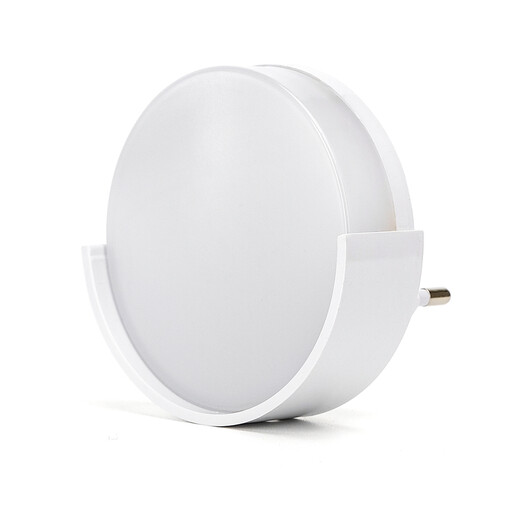
Why this product fits the profile: This plug-in model is suitable for dry indoor areas when you want automatic orientation without a battery or installation effort.
The light sensor is described with a switching threshold of under 20 lux; the light is explicitly intended for indoor use with IP20.
1 watt power consumption, 40 lumens, 6,500 Kelvin, 220–240 volts and no battery or recharging required.
We have put together a complete, regularly updated list of products that fully meet these strict selection criteria and the safety regulations in force in the EU.
Installation depends on the model. Adhesive lights are attached to a clean, dry and preferably smooth surface. With magnetic models, you should check whether a suitable metal surface is available. Plug-in lights require no installation. Outdoor lights must be fixed securely and in accordance with the installation instructions.
The lifespan depends on the LED module, electronics, switching cycles and operating conditions. With battery-powered lights, the ageing of the battery is also relevant. A stated lifespan of 25,000 hours, as with the Aigostar model, refers to the product specification and is not the same as a guaranteed daily operating time.
The consumption is usually low, especially if the sensor only activates the light when needed. With plug-in models, you can compare the power consumption directly: the night light with light sensor mentioned operates at 1 watt, another model in the selection at 0.3 watts. With battery-powered versions, the energy consumption mainly comes from regular recharging.