
Lieferung heute & morgen

Qualitätsgarantie

Willkommens-Angebote freischalten: KOSTENLOSE Lieferung | Bis zu 80 % RABATT | Kostenlose 30-Tage-JoyPlus-Testphase
App herunterladen
An LED sensor light can automatically illuminate dark cupboard shelves, kitchen worktops, hallways or children's bedrooms. What really matters, however, isn't just the number of LEDs or a low price. For everyday use, the key factors are a suitable sensor, the right power supply, and an installation method that works with your particular surface.
A PIR sensor reacts to movement – or more precisely, to changes in heat radiation within its detection range. A light with a dusk or ambient light sensor, on the other hand, switches on and off depending on the surrounding brightness. These two functions are not the same.
For a wardrobe, a cupboard light with a sensor that activates when you open the door or move nearby is usually more practical. As an orientation light in a hallway, a plug-in light with a dusk sensor may be sufficient. If you only look for the word 'sensor', you could end up with a light that has a different type of automation than you expected.
Automatic activation only works if the sensor actually detects the movement. Behind cupboard doors, inside a narrow drawer, or to the side of a walkway, the position of the sensor can be crucial.
Check before you buy:
For example, the Ultra-thin Cabinet Light specifies a PIR range of 3 to 5 metres and adhesive tape installation. These figures are based on the product specifications and should be checked against your intended location.
A battery-operated LED light is usually flexible to position, but requires regular battery changes. A rechargeable LED light reduces the need for disposable batteries, but must be taken down or connected by a cable to charge. A plug-in light doesn't need a battery, but is tied to an existing socket.
For frequently used kitchen or wardrobe areas, a USB-rechargeable model can make sense. For a permanent night light in a hallway, a plug-in solution is often simpler.
A PIR sensor is suitable for areas where movement should trigger the lighting. A dusk sensor reacts to falling light levels. Some models combine both principles. So read the instruction manual and the technical specifications before relying on a particular switching logic.
For an LED night light with a motion sensor in a bedroom or child's room, it's also important to know whether the light only activates in the dark. Otherwise, it could switch on even when there's enough daylight.
The length should match the area:
An LED under-cabinet light with a longer light surface usually distributes light differently than a compact night light. So pay attention to the installation position and whether the light should shine directly onto the worktop or into the interior of a cupboard.
For rechargeable models, the capacity, charging port and charging time are relevant details. According to the product description, the Ultra-thin Cabinet Light has an 800 mAh battery, USB charging and dimensions of 200 × 38 × 10 mm. The installation method is adhesive tape, with no drilling required.
Magnetic mounts make it easy to remove the light for charging. Adhesive fixings, on the other hand, are particularly quick to install, but need a clean, dry and load-bearing surface. On delicate paintwork or uneven surfaces, you should check beforehand whether the adhesive tape is suitable.
For lights in the kitchen, near bathrooms or in the cellar, you should also consider the ingress protection rating. The products mentioned are not automatically suitable for damp rooms. You must follow the relevant safety instructions, the permitted environment and the stated IP rating.

Why this product fits the profile: The 2-pack covers two small areas, such as a drawer and a kitchen cupboard. According to the product description, installation is drill-free using adhesive tape.
The sensor type, range and battery are all clearly stated. This makes it easier to judge whether the light suits your planned installation position.
800 mAh battery, three colour temperatures, 3 to 5 metres PIR range and two lights per pack.

Why this product fits the profile: The 60 cm design is intended for longer cupboard or under-cabinet areas and can provide a continuous light source there.
The length is clearly stated. This reduces the risk of choosing a light that is too short for a wide wardrobe or kitchen area.
60 cm length and a sensor light design intended for use in cupboards.
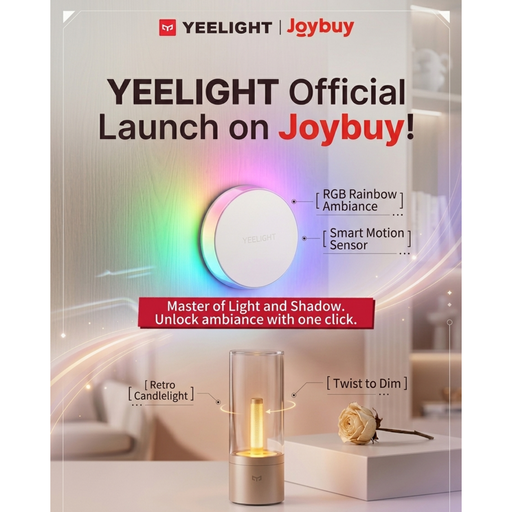
Why this product fits the profile: This magnetic night light is ideal for users looking for flexible ambient lighting in the living room, bedroom or playroom.
The product description explicitly mentions the motion sensor, the magnetic design and the USB-C charging port.
USB-C rechargeable, magnetic fixing and 11 preset light effects according to the product specification.
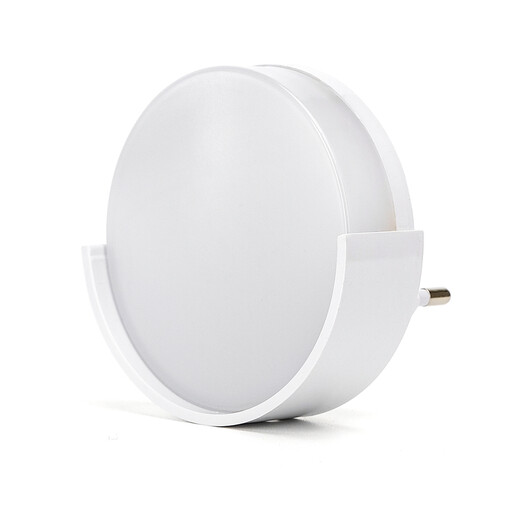
Why this product fits the profile: This plug-in light is designed for hallways, stair areas and children's rooms where a permanently available orientation light is needed.
The light operates without batteries and, according to the product description, switches on below 20 lux. This makes the switching logic clearer than with vague sensor descriptions.
1 W power, 40 lm luminous flux, 220–240 V mains operation and IP20 for indoor use according to the product data.
We've put together a complete, regularly updated list of products that fully meet these strict selection criteria and the safety regulations in force in the EU.
Many compact models are fixed using adhesive tape, a magnetic mount or a self-adhesive mounting plate. The surface should be clean, dry, grease-free and sufficiently load-bearing. With a magnetic night light, the light can often be removed for charging. Before installation, you should check whether the fixing is suitable for painted, veneered or rough surfaces.
The actual service life depends on the LED module, battery, switching frequency, temperature and care. With a rechargeable LED light, the battery is usually the component whose capacity can decrease over time. A plug-in light with a permanently installed LED module, on the other hand, requires no battery changes. Manufacturer information on lifespan should be understood as technical guidelines, not as a guarantee for every use case.
The consumption is determined by the power, the duration of illumination and the frequency of activation. A light with a low wattage and a short run-on time typically uses less energy in everyday use than a permanently switched-on model with higher power. So, alongside the luminous flux, also check the automation and the ability to adjust the activation duration. For an LED light for the kitchen and wardrobe, demand-controlled activation can avoid continuous operation.