
Lieferung heute & morgen

Qualitätsgarantie

Willkommens-Angebote freischalten: KOSTENLOSE Lieferung | Bis zu 80 % RABATT | Kostenlose 30-Tage-JoyPlus-Testphase
App herunterladen
An LED sensor light kitchen can automatically illuminate dark cupboard interiors, worktops or hallways. However, choosing one often leads to unnecessary expense: some lights boast a high number of LEDs but fail to mention the actual light output or battery life. Others can be fitted without drilling, yet quickly lose their grip on smooth or greasy surfaces.
The term "motion detector" is not always clear-cut either. What really matters is whether a PIR sensor genuinely responds to movement, how far its detection range extends, and whether the light is suitable for your intended installation spot. To make a well-informed choice, three factors should be at the forefront: installation, light specifications and power supply.
A figure like 800 or 1,100 mAh describes the battery's capacity, not automatically how long it will last. How long a rechargeable LED light works also depends on brightness, activation time and how often the sensor is triggered. A kitchen with frequent foot traffic will therefore need different charging intervals than a seldom-opened wardrobe.
Look out for:
The number of LEDs alone is not a reliable indicator of illumination quality. More important are the luminous flux, beam angle, colour temperature and the length of the light. A narrow LED cupboard light may be sufficient for one shelf, whereas a long worktop needs more even light distribution.
For different situations, multiple colour temperatures are useful:
A cupboard light without drilling is often attached using adhesive strips. Before fitting, the surface should be clean, dry, grease-free and as smooth as possible. On rough wood, damp tiles or heavily soiled surfaces, adhesion may weaken.
With an LED under-cabinet light with motion detector, you should also check:
A PIR sensor detects changes in heat radiation caused by movement. It typically switches the light on and off automatically. This is practical for drawers and kitchen cupboards, whereas a permanently used worktop might be better served by a manual switch or a dimmable LED desk lamp.
Measure the available space before buying. The 30 cm light from the selection below, for example, is specified as 300 × 38 × 10 mm. A more compact version measures 200 × 38 × 10 mm. The shallow depth can be relevant for shelves or cupboard sides.
For a permanent indoor installation, the electrical configuration is also important. A hardwired light should only be fitted by a qualified electrician. This applies particularly to a pendant light kitchen island operating at 220–240 V or 220 V, which is connected directly to the mains.
Rechargeable and cupboard lights often use ABS plastic, metal and LED components. Clean such lights with a soft, dry cloth and avoid abrasive products as well as excessive moisture. Devices with a lithium battery should not be opened or used if visibly damaged.
The following products are organised by specific use cases. Technical details refer to the respective product descriptions.

Why this product fits the profile: The 2-pack is designed for small cupboards, shelves and hallways. Its compact form suits areas where a longer LED light strip kitchen would not fit.
The description states 21 LEDs, a PIR detection range of 3–5 metres, three colour temperatures and an 800 mAh battery. This allows you to assess the key purchase data in advance.
Two lights, USB charging at 5 V and adhesive strip mounting without drilling.
Why this product fits the profile: The longer version is suitable for kitchen wall cabinets, wardrobes and shelves where a larger illuminated area is needed.
The product data lists dimensions of 300 × 38 × 10 mm, 41 LEDs, three colour temperatures and a 1,100 mAh battery. This clearly describes the design and power supply.
PIR sensor with 3–5 metre range, USB charging and two lights per set.
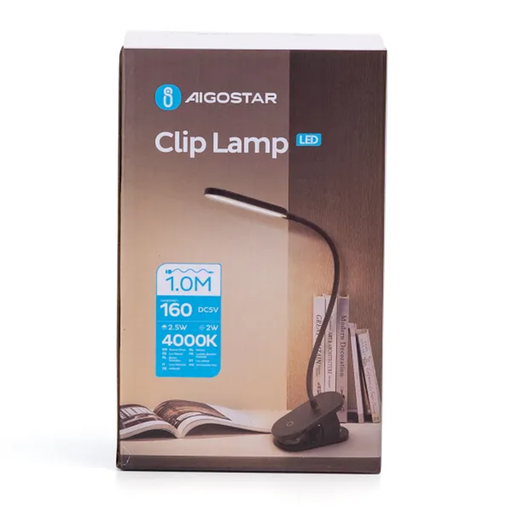
Why this product fits the profile: This rechargeable clip-on lamp can be attached to shelves, desks or bed frames. It is an alternative to a fixed LED sensor light kitchen when flexible positioning is required.
Instead of a vague brightness claim, it states 160 lm, 2.5 W and a colour temperature of 4,000 K. Three run times of 3, 7 and 30 hours are also listed.
Clip-on mounting, USB charging, flexible silicone arm and three brightness levels.
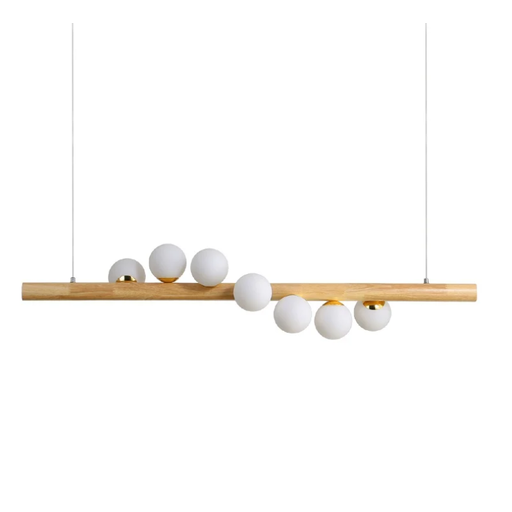
Why this product fits the profile: This linear pendant light is intended for kitchen islands, dining rooms and larger living areas. It does not replace a portable sensor light, but can serve as a fixed main light source.
The description states seven G9 LED bulbs at 5 W each, 220–240 V, a cable length of 1,500 mm and a non-dimmable design.
Linear design with seven glass shades, adjustable drop and materials including wood, glass and metal.
We have put together a complete, regularly updated list of products that fully meet these strict selection criteria and the safety regulations in force in the EU.
Many battery-powered lights are attached using adhesive strips and require no drilling. The mounting surface should be dry, clean and grease-free. Before fitting, check that the sensor has a clear view of the desired movement area. For hardwired lights, particularly pendant lights, a qualified electrician is required.
The run time per charge depends on battery capacity, brightness and how often the light is activated. An 800 mAh or 1,100 mAh battery is therefore only a comparative value. With a sensor light that is activated briefly each time, the run time may differ from continuous operation. The manufacturer's information on run time and charging intervals should be checked before purchase.
LED lights generally require very little electrical power compared to many older bulbs. With a USB light, energy consumption mainly occurs when charging the battery. For an accurate assessment, the stated wattage, daily usage time and frequency of sensor activation are relevant. A light that is left on continuously will naturally consume more than an LED night light with short activation periods.