
Lieferung heute & morgen

Qualitätsgarantie

Willkommens-Angebote freischalten: KOSTENLOSE Lieferung | Bis zu 80 % RABATT | Kostenlose 30-Tage-JoyPlus-Testphase
App herunterladen
An LED sensor light can illuminate pathways automatically at night, make the contents of cupboards easier to see or provide flexible ambient lighting. However, not every model is suitable for every location. Unclear information about sensor range, battery life or installation often means that a light reacts too late in everyday use, needs recharging frequently or fails to stay securely attached to the surface.
This guide explains which technical specifications matter before you buy and which models are suitable for different households and usage scenarios.
A motion sensor, often referred to as a PIR sensor, activates the light when movement is detected. This is suitable for hallways, stairs, wardrobes or kitchen areas. A dusk sensor, on the other hand, responds to the ambient light level and switches the light on when it gets dark.
An LED night light with a motion sensor therefore does not automatically stay on all night. A night light with a dusk sensor, however, can remain lit continuously as soon as the room is dark enough. Before buying, you should therefore be clear about whether movement or brightness is meant to trigger the light.
The actual runtime of a rechargeable LED light depends on brightness, how long it stays on and how often it is activated. A claim such as ‘up to’ usually describes favourable operating conditions. For everyday use, battery capacity, charging port and charging interval are therefore also important.
A USB-C night light is practical if you already have suitable cables and chargers at home. With permanently installed batteries, you should also check whether the light can be used while it is charging.
An LED cupboard light with adhesive strips can be installed without drilling. However, dust, grease, rough walls or damp surfaces can reduce the adhesive’s grip. The surface must be dry and clean before installation. For heavier lights or areas subject to constant strain, a magnetic mount or screw fixing may be more suitable.
Pay attention to the stated detection range and detection angle. A short range is sufficient for a slim LED light strip inside a cupboard. In a hallway or on a staircase, however, it is important that movement is detected from different directions.
The on and off delays, as well as the available operating modes, are also relevant. Some models offer a permanent lighting mode, while others operate exclusively automatically. Low brightness can be useful in children's rooms and bedrooms, so that the light is not dazzling at night.
Colour temperature is specified in Kelvin:
A dimmable LED lamp can be adapted more easily to different situations. For worktops, luminous flux in lumens and even illumination are also important. RGB LED lighting and smart LED lighting provide decorative colour effects, but do not necessarily replace functional room lighting.
For indoor use, you can choose between mains power, batteries or an integrated rechargeable battery. Mains-powered models require a socket, but are not dependent on their charge level. Rechargeable and battery-powered lights can be positioned more flexibly.
For outdoor areas or damp zones, the IP protection rating must be suitable for the surroundings. For example, a model with IP44 is protected against splashing water from different directions, but is not designed to be immersed in water. Lights with IP20 are intended exclusively for dry indoor spaces. You should also follow the manufacturer's instructions regarding the power supply, charging source, installation and heat generation.
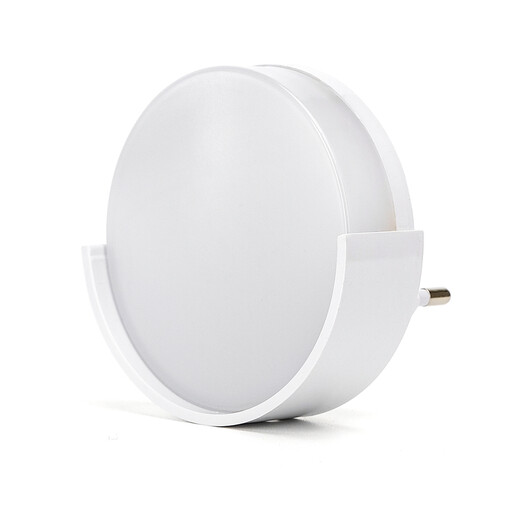
Why this product suits this profile: This plug-in model requires neither a rechargeable battery nor separate installation, making it suitable for hallways, children's rooms or stairways.
According to the product details, the integrated sensor switches on below 20 lux. The 220–240 V power supply means regular recharging is not required.
1 W power consumption, 40 lm luminous flux, IP20 and a 6500 K light colour for dry indoor spaces.
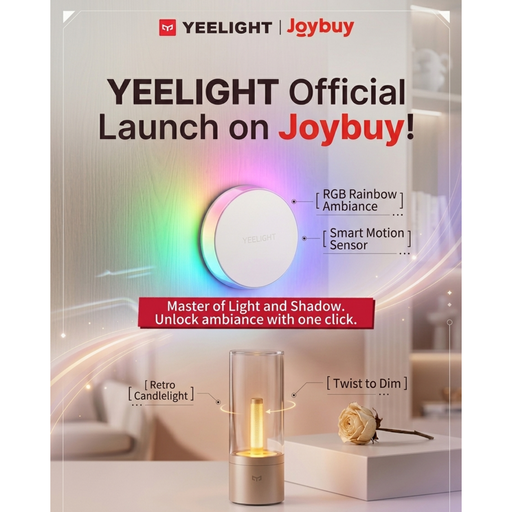
Why this product suits this profile: This rechargeable mood light combines motion detection with variable lighting effects for living rooms, bedrooms or gaming rooms.
The product description specifies 11 preset effects, a motion sensor, magnetic mounting and USB-C charging.
Cordless use, magnetic mounting and RGB lighting effects in one compact indoor light.

Why this product suits this profile: Two slim lights with PIR sensors are designed for cupboards, kitchen units, shelves and hallways.
The stated detection range of 3–5 m and USB charging make the usage limitations clear.
Three colour temperatures, 800 mAh battery, 21 LEDs per light and tool-free adhesive mounting.
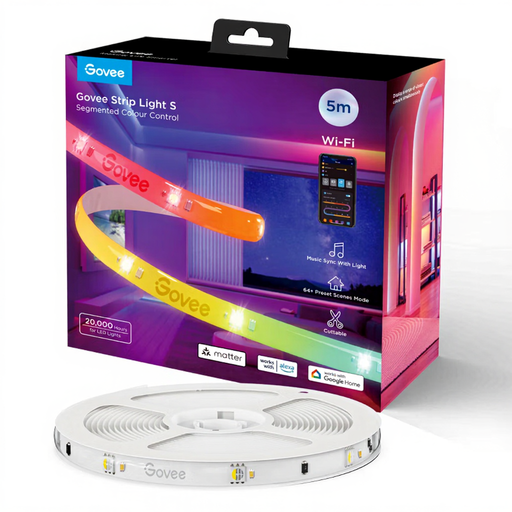
Why this product suits this profile: The 5-metre light strip is designed for gaming rooms, TV backlighting and controllable ambient lighting.
It can be controlled via the app, a voice assistant or a Matter-compatible smart home system. The protective coating is intended for dry indoor spaces.
RGBIC segment control, music synchronisation, 64 scene modes, plus Wi-Fi, Bluetooth and Matter support.
We have put together a complete, regularly updated list of products that fully meet these strict selection criteria and the safety regulations applicable in the EU.
The installation location should not obstruct the sensor's detection area. Adhesive surfaces adhere most reliably to dry, smooth and grease-free surfaces. With magnetic models, the mount should sit completely flush. Mains-powered lights must only be connected in accordance with the instructions; if you are unsure, consult a qualified electrician.
The lifespan depends on the LED module, electronics, operating time and ambient temperature. With rechargeable models, battery ageing is also a relevant factor. Stated lifespans should be understood as the manufacturer's figures and do not constitute a guarantee of a specific period of use.
LED lights generally require little electrical power. However, running costs depend on wattage, how long the light is switched on and your electricity tariff. A model with a motion sensor can shorten operating time, while a dusk sensor may remain active for many hours. For a rough comparison, use: Power in watts × operating hours ÷ 1000 = kilowatt-hours. The result is then multiplied by your electricity unit rate.