
Lieferung heute & morgen

Qualitätsgarantie

Willkommens-Angebote freischalten: KOSTENLOSE Lieferung | Bis zu 80 % RABATT | Kostenlose 30-Tage-JoyPlus-Testphase
App herunterladen
LED sensor lights switch on automatically when movement is detected or ambient light levels fall. This makes them suitable for hallways, staircases, children’s rooms, bathrooms, kitchens, cupboards and bedrooms. However, the term “sensor light” alone does not tell you everything you need to know. The sensor type, installation method, light colour and power supply determine whether a light is genuinely practical in its intended location.
A motion-sensor light responds to movement within its detection area. A dusk-sensor night light, on the other hand, responds to the ambient light level and switches on when it gets dark. Some models combine both functions.
For a hallway that only needs to be lit as you walk past, a PIR sensor is usually the better choice. A plug-in night light with a dusk sensor may be more suitable if you need a dimmed guide light throughout the night. If you do not distinguish between these functions, you may end up buying a light that stays on continuously or is activated by every small movement.
A high number of LEDs does not automatically mean that a light is suitable for every task. An LED night light for finding your way around at night requires different features from an under-cabinet LED light for a kitchen worktop.
For bedrooms and children’s rooms, a warm white night light in the region of 2700 to 3000 Kelvin is often more comfortable for orientation. Neutral or cool white light may be more practical for sorting items in a cupboard. The luminous flux in lumens, beam angle and distance from the illuminated surface are also important.
A rechargeable sensor light does not need a permanent socket, but it does require regular charging. For cupboard and kitchen lights, you should therefore check whether the USB port is easy to reach. Actual runtime may also depend on the number of times the light is switched on each day and the brightness level selected.
A permanently installed model or a plug-in night light requires less maintenance. However, its position is limited by a socket or existing power connection.
Look out for the following details:
The sensor should not be obstructed by furniture, curtains or other objects. With plug-in models, the adjacent socket must also remain accessible where the design requires this.
Choose between:
For adhesive installation, the surface should be clean, dry and sturdy enough to support the light. For bathrooms and other damp areas, you must check specifically whether the product is approved for this type of use. A stated protection rating such as IP20, for example, indicates use in dry indoor areas and does not mean that the product is water-resistant.
Colour temperature is measured in Kelvin. Warm white is typically around 2700 to 3000 Kelvin, while higher values create a cooler appearance. Several brightness levels or stepless dimming make it easier to adapt the light to a child’s room, hallway or kitchen area.
Power consumption in watts is particularly relevant for lights that remain switched on for many hours. Low consumption reduces electricity usage, but it does not replace the need to check light output, sensor function and installation method.

Why this product suits the profile: This two-pack is ideal for households that want to equip several short routes, such as hallways, children’s rooms or staircases, with automatic guide lighting.
According to the product details, the automatic dusk sensor prevents the light from operating during the day. Three brightness levels allow you to adapt it to the room in question.
Two lights, warm white at 2700 Kelvin, three dimming levels and 0.5 watts of power consumption according to the product description.
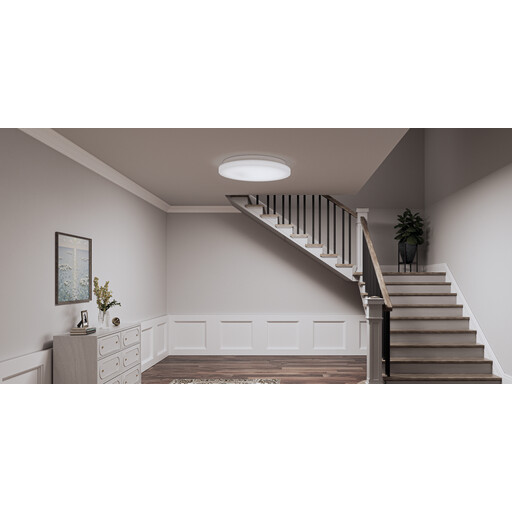
Why this product suits the profile: This ceiling light is designed to provide central room lighting and is aimed at users who prefer a permanently installed solution with presence detection.
The product name explicitly refers to presence detection. Before buying, check the installation method, connection and room size against the manufacturer’s specifications.
Ceiling-light design and integrated presence detection according to the product name, making it suitable for a different purpose from a small night light.

Why this product suits the profile: This set is designed for kitchen wall units, wardrobes and shelves where wireless, drill-free installation is preferred.
The specifications state a PIR range of 3 to 5 metres, USB charging and adhesive installation. This avoids the need for a fixed socket or drilling.
Two 30-centimetre lights with 41 LEDs, a 1100-mAh battery and three colour temperatures ranging from warm white to cool white according to the product data.
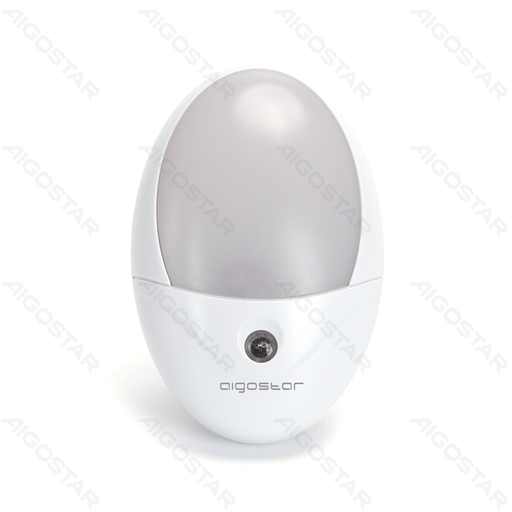
Why this product suits the profile: This compact plug-in model is suitable for hallways, bedrooms, bathrooms and stair areas where automatic warm white guide lighting is required.
The product description states that the PIR and dusk sensors are combined. The light therefore activates when movement is detected in low light, rather than staying on continuously regardless of the surroundings.
3000 Kelvin, 20 lumens, a detection range of 7 metres and a detection angle of 120 degrees according to the technical specifications; connects directly to 220–240 volts.
We have put together a complete, regularly updated list of products that fully meet these strict selection criteria and the safety regulations applicable in the EU.
A motion sensor responds when movement is detected. A dusk sensor measures the ambient light level. For automatic activation only when it is dark, a combined system is particularly useful. The exact range, detection angle and switch-off time are given in the technical product specifications.
Consumption depends on the power rating, operating time and sensor control. A 0.5-watt model uses less energy during continuous operation than a light with a higher power rating. With sensor-controlled products, you should also consider how often and for how long the light is actually activated.
Only if the manufacturer expressly permits use in damp areas and specifies a suitable protection rating. Products with IP20 are generally intended for dry indoor areas. The socket, light and installation position must also comply with the applicable safety requirements.