
Lieferung heute & morgen

Qualitätsgarantie

Willkommens-Angebote freischalten: KOSTENLOSE Lieferung | Bis zu 80 % RABATT | Kostenlose 30-Tage-JoyPlus-Testphase
App herunterladen
An LED spotlight can light a kitchen evenly, mark out a garden path or illuminate an outside wall. Yet many products aren’t suited to their intended location. Often, the problem isn’t the light output or design, but details that haven’t been checked properly, such as voltage, cut-out size, IP rating and dimmability.
This buying guide helps homeowners, tenants and DIY enthusiasts choose LED lighting based on clear, verifiable specifications.
Not every LED spotlight is suitable for the German mains supply. In Germany, permanently installed lights usually require 220–240 V AC at 50 Hz. A model marked AC 120 V, 60 Hz isn’t suitable for direct connection without further checks.
12-24 V LED spotlights also need a suitable transformer. If one isn’t included, you’ll need to buy one separately. 230 V LED spotlights, on the other hand, can be connected directly to the mains, provided the installation and technical requirements are compatible.
The term “ultra-slim” usually describes the fitting’s height, not the size of the ceiling cut-out it needs. For example, an LED recessed spotlight may need an installation depth of just 25.5 mm, but still require a cut-out of 95–110 mm or more.
Before buying, compare these three measurements:
This helps prevent a new LED ceiling spotlight from being too large for the existing opening.
An IP44 LED spotlight is protected against solid objects larger than 1 mm and water splashes. However, this rating doesn’t mean the light can be submerged in water or exposed to a direct jet of water.
Depending on where it’s installed, IP44 may be suitable for bathrooms, kitchens and covered outdoor areas. Other ratings may be needed for exposed locations, harsh weather or installations close to the ground. Always follow the product specifications and installation instructions.
Colour temperature is measured in kelvins:
Some 3CCT LED spotlights let you select from several colour temperatures using a switch. This is useful if you haven’t yet decided exactly how you’ll use the room.
Brightness is measured in lumens. Wattage, by contrast, mainly indicates energy consumption. The lumen rating is therefore a more useful way to compare different LED recessed spotlights. Beam angle matters too: a narrow beam creates more focused light, while a wider beam spreads light over a larger area.
Dimmable LED spotlights generally need a compatible dimmer. A dimmer designed for halogen bulbs won’t necessarily work with every LED light. Before installation, check that the light and dimmer use the same dimming technology.
On 3CCT models, you’ll often select the colour temperature using a switch on the light itself. This isn’t the same as adjusting the colour dynamically with a remote control or app.
Aluminium housings can help dissipate heat. Plastic housings are often lighter and suitable for certain installation settings. However, the manufacturer’s specifications, installation clearances and adequate ventilation remain essential.
230 V LED spotlights connected directly to the mains should be installed by a qualified electrician. Before working on an electrical circuit, switch off the power supply and make sure it cannot be switched back on accidentally.
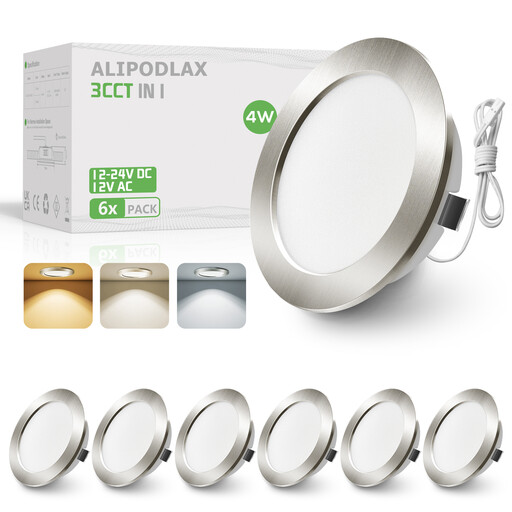
Why this product suits this profile: This compact recessed spotlight is ideal for furniture, shelving, kitchens or vehicles where a low-voltage installation is already in place or planned. Three selectable colour temperatures give you flexibility when planning your lighting.
The required voltage of 12–24 V and cut-out size of 55–58 mm are clearly specified. You’ll need to buy a suitable transformer separately; the light isn’t designed for direct connection to 230 V.
4 W, 270 lm, 3000/4000/6000 K, stated installation height of 14,5 mm and IP44 rating for suitable damp areas.
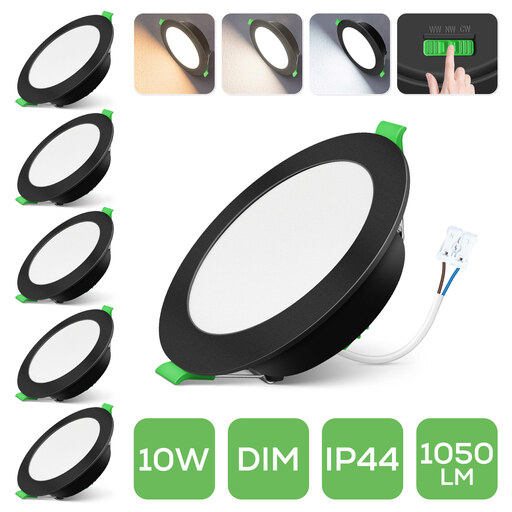
Why this product suits this profile: Ideal for bathroom, kitchen, hallway or living room renovations, this model combines direct mains connection with selectable colour temperature and dimming.
The required cut-out size of 90–100 mm and installation depth of 34 mm are clearly stated. The dimming function requires a compatible dimmer.
10 W, 1050 lm, 3000/4000/6500 K, 230 V connection, dimmable from 10–100 % with a suitable dimmer and IP44 rating.
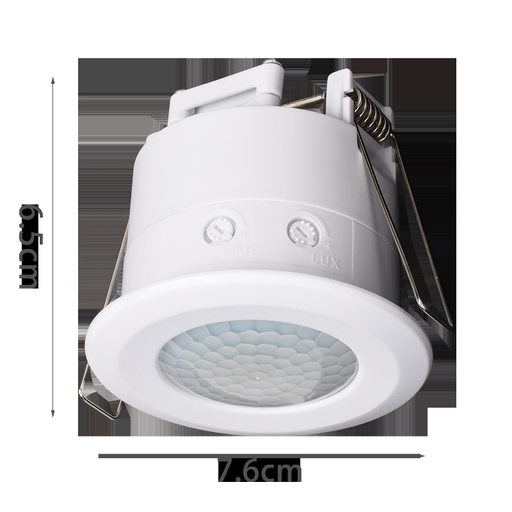
Why this product suits this profile: This solar-powered outdoor floodlight is a good option for places without easy access to mains power, such as a garden, courtyard or boundary. Its solar panel and stated IP65 rating set it apart from basic garden lights with ground spikes.
It runs on solar power, so there’s no need to check a mains connection. Before installation, however, consider the panel’s position, charging conditions and the exact location where you’ll mount the light.
60 W, 6500 K, solar-powered, PIR sensor with up to 360° detection and stated IP65 rating.
We’ve put together a complete, regularly updated list of products that meet these strict selection criteria and fully comply with the safety regulations in force in the EU.
That depends on the room size, installation height and beam angle. Lower lumen ratings are often enough for accent lighting. For general lighting, consider several lights and their combined output. Lumens are a more useful guide than wattage.
IP44 may be suitable for certain areas of a bathroom, but it only protects against water splashes. The exact position near a shower, bath or washbasin must be assessed in line with the applicable installation regulations. For a permanent mains connection, ask a qualified electrician to check that the light is suitable and install it.
The cost depends on the wattage, daily operating time and your electricity tariff. The simple calculation is: wattage ÷ 1000 × operating hours × electricity price. For example, a 10 W spotlight uses 1 kWh over 100 hours of operation. Solar lights don’t need to run directly from the mains, but how long they stay lit depends on daylight, battery condition and weather.