
Lieferung heute & morgen

Qualitätsgarantie

Willkommens-Angebote freischalten: KOSTENLOSE Lieferung | Bis zu 80 % RABATT | Kostenlose 30-Tage-JoyPlus-Testphase
App herunterladen
LED string lights add decorative lighting to bedrooms, living rooms, children’s rooms and outdoor spaces. Before you buy, though, it’s worth checking the technical details carefully. Product images often show the lights in an inviting setting, but they don’t always tell you whether a string light is suitable for indoor use or outdoor use, how much of its length is actually illuminated, or what type of power supply it needs.
A string light might, for example, be 165 cm long, with lights along just 140 cm of it. The remaining 25 cm is the power lead. So, when planning where to put it on a shelf, bed or window, the illuminated length is what matters.
For balconies, patios and gardens, the product details should state the IP rating. IP65 generally means protection against dust and water jets. It doesn’t mean that solar lights or battery compartments can be submerged, though. An IP20 string light, by contrast, is typically intended for dry indoor spaces.
A solar string light needs a spot where its solar panel can get as much direct sunlight as possible. Trees, house walls, balcony roofs and short winter days can all reduce charging performance. So, figures such as “8–14 hours of light” should be treated as estimates that depend on the weather and location, rather than a guaranteed daily run time.
For Christmas lights in the living room, warm white string lights above the bed, or a string light in a child’s room, a model designed for indoor use is usually suitable in dry conditions. For garden lighting and outdoor spaces, the product description should clearly state an appropriate IP rating.
Important: a string light described as “outdoor” isn’t automatically designed to withstand prolonged rain, frost or standing water. Check whether the protection applies only to the light cable or to the whole system, including the solar panel, power supply and battery compartment.
Different types are suited to different uses:
For battery-powered models, check whether batteries are included. For mains-powered models, the plug type, cable length and connection point are all important.
A high number of LEDs alone doesn’t tell you much about the overall effect. The spacing between the lights, their shape and the colour of the light are important too. Multicoloured string lights, for example, are great for festive occasions, while warm white light often creates a more understated look.
A string light with globe bulbs distributes light differently from a thin copper wire. Flexible wire is often easier to arrange around plants, branches and vases. Larger globes can make a more striking decorative feature above a bed, on a shelf or around a window.
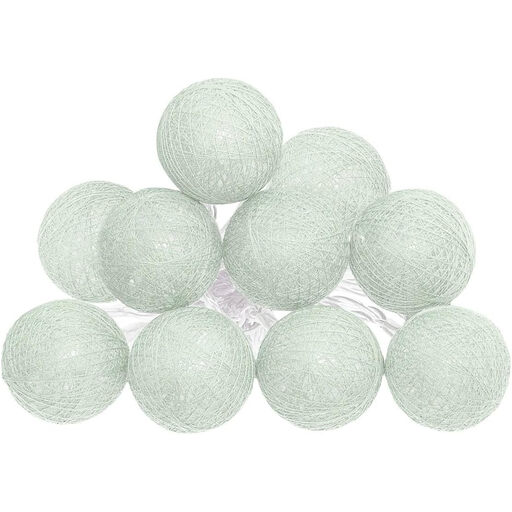
Why it suits this type of buyer: This compact indoor LED string light is suitable for dry spaces, such as a child’s room, a shelf or small party decorations. It runs on 2 AA batteries, which aren’t included.
The product details clearly state the total length, illuminated length, power lead length and IP20 rating. This makes it clear that the lights are for indoor use only.
10 globes with warm white LED light, an on/off switch on the product and 140 cm of illuminated length.

Why it suits this type of buyer: Two flexible copper-wire string lights, each 8 metres long, give you plenty of scope to decorate a balcony, patio, shrubs or smaller garden areas.
The product details specify IP65, charging time, weather-dependent lighting time and a warning not to submerge the solar panel.
80 LEDs per string, solar power, automatic switching on and off, plus 8 lighting modes with a memory function.
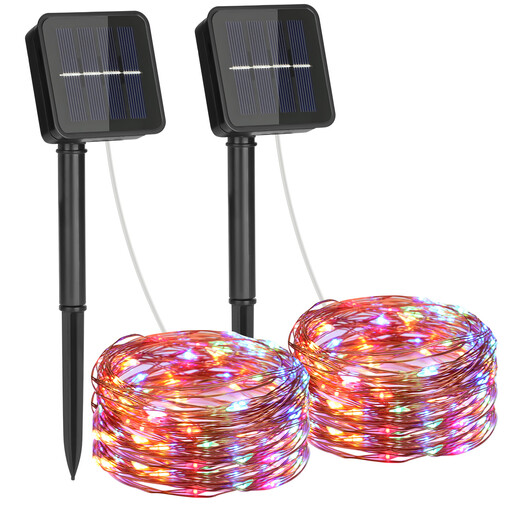
Why it suits this type of buyer: This longer version is for anyone looking to decorate trees, railings or larger patios, or create seasonal garden and party lighting.
The product description explains that run time depends on the weather, that sunlight is needed, and that the product must not be submerged.
120 multicoloured LEDs per 12-metre string, IP65 and 8 selectable lighting modes with a memory function.
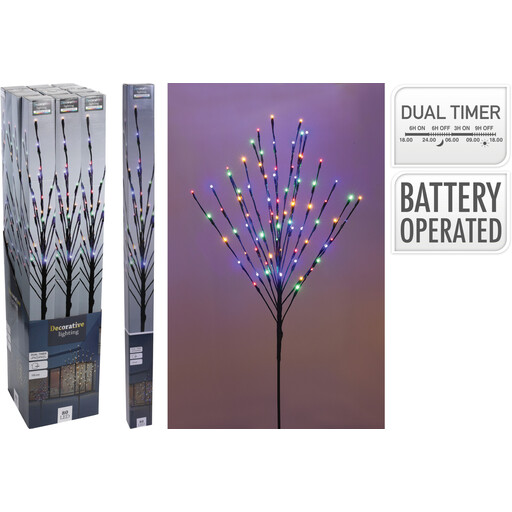
Why it suits this type of buyer: This decorative LED tree is designed to create a striking seasonal display in large planters, by an entrance or in a suitable outdoor location.
The product details specify the height, number of LEDs, battery type and cable length. Before using it outdoors, check the specific IP rating too.
110 cm tall, with 80 built-in multicoloured LEDs, powered by 3 AA batteries and featuring a dual timer.
We’ve put together a complete, regularly updated list of products that meet these strict selection criteria and the safety regulations in force across the EU.
Solar-powered models with a stated IP rating, such as IP65, are an option for a balcony, provided the solar panel gets enough sunlight. For a covered or heavily shaded balcony, a battery-powered option may be more practical. Cable length, how the lights are secured and protection for the battery compartment are all important when choosing.
Their actual lifespan depends on factors including build quality, storage, moisture, batteries and how long they’re used for. It isn’t possible to give a general lifespan without specific information from the manufacturer. Indoor models should be stored in a dry place, while solar panels and outdoor cables benefit from regular visual checks.
Energy use depends on the number of LEDs, their power rating and how many hours they’re on each day. If a product lists its power rating, you can estimate its energy use with this formula: Power in watts × hours of use ÷ 1,000 = kilowatt-hours. Solar- and battery-powered models don’t need a direct mains connection, but batteries or the built-in rechargeable battery should still be taken into account as consumable components.