
Lieferung heute & morgen

Qualitätsgarantie

Willkommens-Angebote freischalten: KOSTENLOSE Lieferung | Bis zu 80 % RABATT | Kostenlose 30-Tage-JoyPlus-Testphase
App herunterladen
LED string lights can add a decorative glow to your balcony, garden, patio or living room. However, unclear product details and choosing the wrong type can quickly lead to unnecessary costs. For example, solar string lights may not work reliably in a spot that stays in the shade. And just because a string light is advertised as weatherproof, that doesn’t mean you can leave it in water or submerge it completely.
The number of LEDs is often considered on its own, too. String lights with 80 LEDs may be enough for a small balcony, while string lights with 120 LEDs or more may be a better choice for a tree or a longer hedge. Overall length, the spacing between the lights and the power source are important factors as well.
For outdoor LED string lights, the IP rating is an important guide. In practice, IP65 means protection against dust and water jets from different directions. That makes it relevant for rain and splashes, but it doesn’t mean the lights can be submerged in water. The rating often applies only to certain components, such as the string lights themselves, and not necessarily to the solar panel, battery compartment or mains adapter.
By contrast, products with IP20 are designed for dry indoor spaces. Decorative string lights with this rating shouldn’t be used on an unprotected balcony or in the garden.
Solar string lights need direct sunlight to charge the battery via the panel. Under a dense tree, on a north-facing wall or on a covered balcony, they may stay lit for much less time. Claims such as 8 to 14 hours should therefore be understood as depending on the weather, season, panel position and charge level.
Before buying, check whether you can place the panel in an unshaded spot for several hours each day. If not, mains-powered LED string lights may be more practical for your needs.
A string with a total length of 10 metres may include a lead cable. So, when planning your display, check the illuminated length. The spacing between LEDs also affects the look: closely spaced lights create a more even glow, while wider spacing gives you individual points of light.
A compact design is often enough for a balcony. If you’re choosing string lights for a garden or balcony with a length of 12 metres, it’s also worth checking whether two separate strands would be more flexible to use.
For indoor products, the mains plug should be suitable for an EU socket. Don’t continue using a product if its cable or casing is damaged.
For outdoor use, check that the lights are explicitly designed for outdoors and have an appropriate IP rating. IP65 is listed for the products below, for example. This supports use in rain and splashes, but doesn’t replace the need for a sheltered installation spot. Follow the manufacturer’s instructions for the solar panel and battery housing.
For indoor lighting in a bedroom, living room or hallway, other factors matter more: cable length, stability, light colour and material. Premier Housewares’ LED branch lights are intended for indoor use only and must not be used in bathrooms or damp areas.
Warm white string lights tend to create a soft, understated look in living spaces and for cosy evenings. Multicoloured string lights are better suited to party rooms, birthdays or seasonal Christmas decorations. With globe lights, diameter matters too: larger globes are easier to see from a distance, but take up more space.
Multiple lighting modes can be useful for garden parties or seasonal occasions. Check whether the lights have a steady-on mode and whether they remember the last setting. These details should come directly from the product description, rather than being inferred from promotional photos alone.

Why this product suits this profile: The two solar-powered strands, each 8 metres long, are a good fit for smaller gardens and balconies, or for decorating individual plants or railings.
The product details state the charging time, lighting time and IP65 rating, and warn against submerging the solar panel.
80 LEDs per strand, 8 lighting modes, a memory function and solar power with automatic on/off.

Why this product suits this profile: This longer set of solar string lights is designed for larger spaces, such as patios, garden fences or several seating areas.
The specifications list the lead cable, string length and LED spacing separately, making it easier to estimate the actual illuminated length.
G50 globe shape, warm light, 160 LEDs, IP65 rating, 1,200-mAh battery and up to 8 lighting modes, according to the product description.
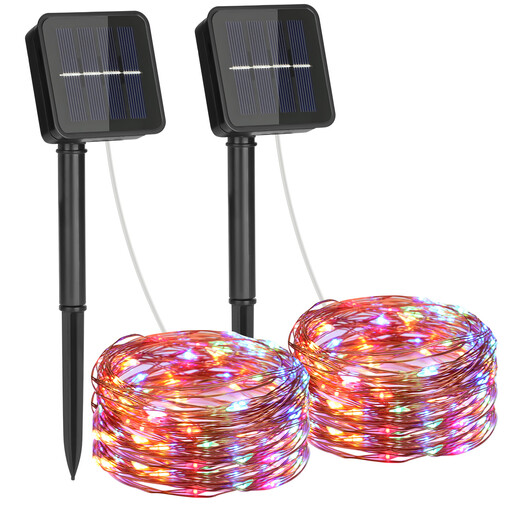
Why this product suits this profile: The two longer strands can be combined for weddings, garden parties, trees, balconies or seasonal decorations.
The product description notes that lighting time depends on the weather and that IP65 does not protect against complete immersion.
120 LEDs per 12-metre strand, multicoloured light, 8 modes, a memory function and automatic dusk control.
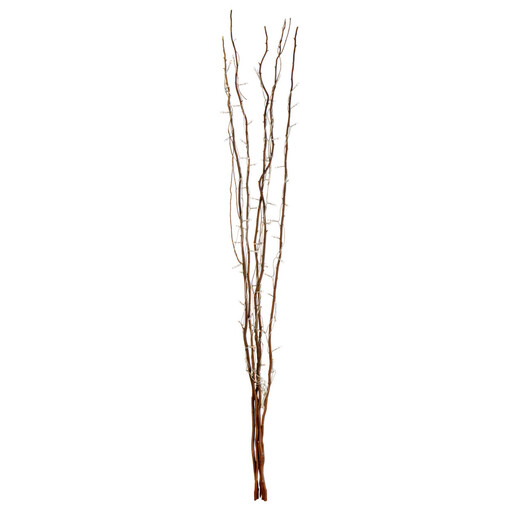
Why this product suits this profile: At around 120 centimetres tall, this branch-style light is designed for hallways, living rooms and other dry indoor spaces.
The product information clearly states that it is for indoor use and warns against moisture, bathrooms and outdoor areas.
Five connected branches, 80 lights, an EU plug and a height of around 120 centimetres.
We’ve put together a complete, regularly updated list of products that fully meet these strict selection criteria and the safety regulations applicable in the EU.
Energy use depends on the wattage, how long the lights are on and the model. For mains-powered string lights, multiply the stated wattage by the number of hours they’re used each day. A 0.9-watt string used for five hours works out at 4.5 watt-hours per day. The actual cost depends on your electricity tariff. Solar models draw power from their battery, but still need enough sunlight to charge.
There’s no single lifespan that applies to every model. It depends on operating hours, heat, moisture, physical wear and the quality of the cables, battery and casing. To help your lights last, choose a sheltered installation spot, store them somewhere dry and stay within the limits of their IP rating. These factors matter more than a general marketing claim.
Only if they’re specifically designed for outdoor use and have an IP rating suitable for the location. Weatherproof string lights with IP65 can withstand rain and splashes, but that doesn’t mean they can be left in water. Mains adapters and solar panels may have different requirements. Products with IP20 or labelled ‘indoor use only’ should be used indoors in dry conditions.