
Lieferung heute & morgen

Qualitätsgarantie

Willkommens-Angebote freischalten: KOSTENLOSE Lieferung | Bis zu 80 % RABATT | Kostenlose 30-Tage-JoyPlus-Testphase
App herunterladen
LED string lights can add decorative lighting to a Christmas tree, balcony or patio. However, the number of LEDs and the price are not the only factors to consider when buying. Unclear length specifications, an unsuitable IP rating or an incompatible power supply can often lead to the wrong purchase.
For many products, the stated length includes the connection cable. For example, a 10.3-metre string light may consist of 10 metres of illuminated length and 0.3 metres of lead cable. When planning lighting for a railing or Christmas tree, the actual LED length is therefore crucial.
The distance between the LEDs also affects the result. With an 8-centimetre spacing, a string looks denser than a model with 10-centimetre spacing, even if both are a similar length.
The term waterproof string lights is sometimes used rather broadly by retailers. The IP rating is more informative:
Outdoor LED string lights should not be placed in standing water. With IP44 products, the mains plug in particular must be protected from direct rain.
Warm white LED string lights with around 2,500 to 3,000 Kelvin create a yellowish, warm glow and are ideal for living rooms, bedrooms, Christmas trees or a cosy seating area. Cool white LED string lights with around 6,500 Kelvin appear noticeably whiter and are better suited to highlighting outlines, paths or creating bright decorative displays.
For example, string lights with 8 modes may offer steady lighting, flashing and fading effects. An integrated memory function is useful if you want the last selected setting to be retained the next time the lights are switched on. For calm, continuous lighting, however, a simple on/off switch is often sufficient.
Battery-powered string lights can be used flexibly on a balcony, in a garden shed or at a party where there is no socket available. Check whether AA or AAA batteries are included. Daily use involves ongoing costs for battery replacement.
Solar string lights require a location where the panel can receive as much sunlight as possible. Cloudy weather, short days and shade can reduce the lighting time. If a model specifies a charging time of 6 to 8 hours and a lighting duration of 8 to 14 hours, these are guideline figures that depend on the weather and the panel’s positioning.
Mains-powered models provide a more reliable operating time. For outdoor lighting, the power supply must be suitable for the intended use. For indoor areas, an RGB LED strip with a mains adaptor can be a good choice if you want colour options, adjustable brightness and dynamic effects.
For a balcony, covered patio or garden area, you should check the IP rating of the complete system. An IP44 light does not automatically make an unprotected mains plug weatherproof. Cable connections should not be left on the ground in puddles.
Secure installation is also important for an LED net light. Hooks, clips or the supplied brackets make it easier to install lights on hedges, fences and walls. Self-adhesive LED strips adhere most reliably to clean, dry and smooth surfaces. An IP20 model should only be used in sheltered indoor areas.
The number of LEDs alone is not enough for comparison. Pay attention to:
A 1 × 1 metre light net may be sufficient for a small decorative area. A large tree or long balcony railing, on the other hand, will require either several strings or a longer version with a suitable connection system.
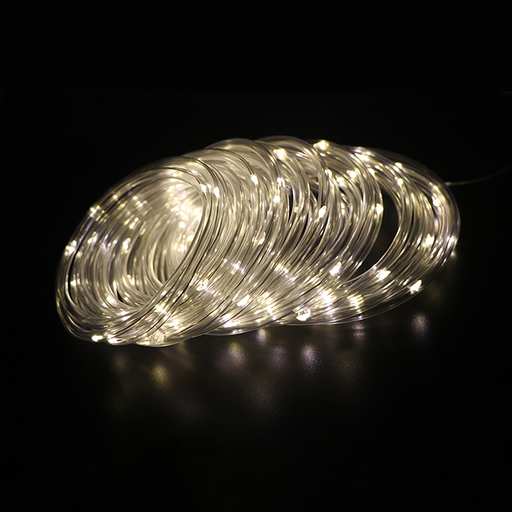
Why this product suits this profile: The battery-powered design is ideal for decorative lighting without a socket, whether on a balcony, at a party or in the garden.
The specifications distinguish 10 metres of illuminated length from 0.3 metres of lead cable. IP44 indicates protection against splashing water, not suitability for submersion.
100 warm white LEDs with 3,000 Kelvin, 8 functions and a memory function; powered by three AA batteries, which are required separately.
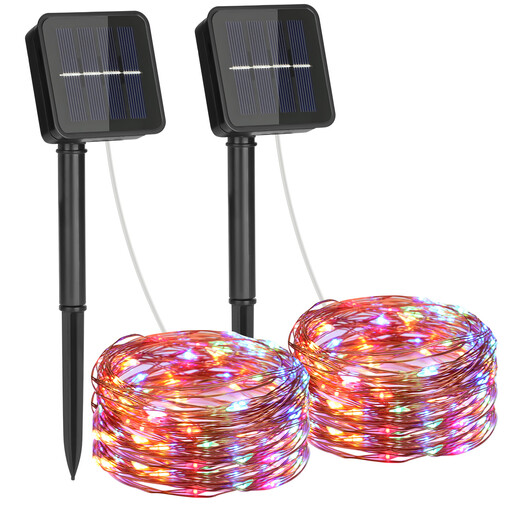
Why this product suits this profile: Two flexible solar string lights with copper wire are ideal for gardens, patios, balconies and seasonal decorations without a permanently installed power cable.
The IP65 rating is specified, while the product also expressly warns against submersion. The solar unit must be positioned in direct sunlight.
Two 12-metre strings, each with 120 LEDs, 8 lighting modes, plus stated charging and lighting times for practical planning.
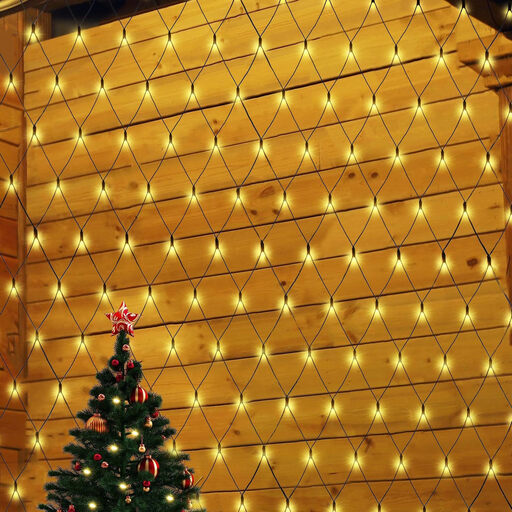
Why this product suits this profile: The LED net light is designed for hedges, fences, smaller wall areas and targeted accent lighting in the garden or on the patio.
The 1 × 1 metre net size prevents you from misjudging the coverage. The supplied hooks and brackets help ensure secure, orderly installation.
96 warm white LEDs with 2,500 Kelvin, 9 modes, memory function, IP44 and a 3-metre connection cable with a 31-volt power supply.
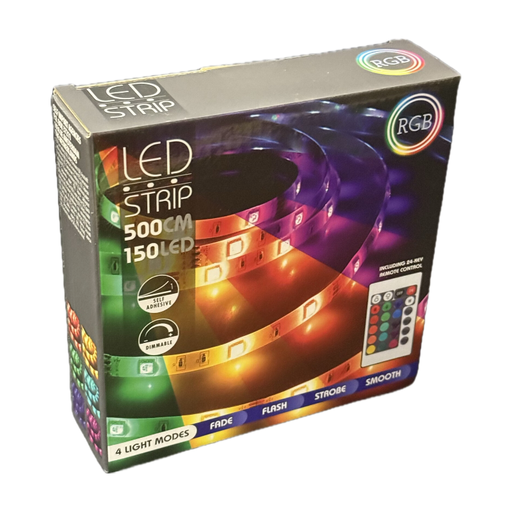
Why this product suits this profile: The RGB LED strip is designed for living rooms, bedrooms, kitchens, home bars or indoor event decorations.
The IP20 rating clearly limits use to dry indoor areas. This helps prevent unsuitable use outdoors.
5 metres long, 150 SMD LEDs, RGB colour selection, dimmable brightness, infrared remote control and 24-volt DC power via adaptor.
We have compiled a complete, regularly updated list of products that fully meet these strict selection criteria and the safety regulations applicable in the EU.
Weather-resistant cable clips, small hooks or UV-resistant cable ties are suitable for railings. The string should not be suspended under tension or create a trip hazard. With mains-powered models, the plug must remain protected from rain. Self-adhesive strips should only be applied to dry, dust-free surfaces.
The actual service life depends on operating hours, moisture, temperature, cable quality and the power supply. Indoor IP20 models should be stored in a dry place. Outdoor models should be checked after the season for damaged cables, loose connections and moisture. Without specific information from the manufacturer, it is not possible to give a reliable general lifespan.
For mains-powered products, consumption is calculated based on power, operating time and the electricity price. A model using 12 to 18 watts requires around 0.06 to 0.09 kilowatt-hours per day when operated for five hours. Battery models incur the cost of replacement batteries, while solar string lights require sunlight and a working rechargeable battery.