
Lieferung heute & morgen

Qualitätsgarantie

Willkommens-Angebote freischalten: KOSTENLOSE Lieferung | Bis zu 80 % RABATT | Kostenlose 30-Tage-JoyPlus-Testphase
App herunterladen
LED strips have transformed the way we illuminate our spaces. Whether for atmospheric indirect lighting in the living room, as dynamic gaming room decor, or as functional TV backlighting—the possibilities seem endless. However, the market is flooded with products of widely varying quality. Many buyers are left disappointed when the result doesn't live up to the marketing promises.
Before you invest, it's crucial to understand the common pitfalls. Often, it's the subtle flaws that render a product useless after a short time.
To avoid these problems, you should base your selection on objective technical parameters rather than being swayed by marketing buzzwords.
The quality of the lighting directly depends on the number and type of LEDs.
The method of control determines everyday convenience and functionality.
Depending on the intended use, other characteristics are crucial.
Here are some recommendations tailored to specific user profiles and their requirements.
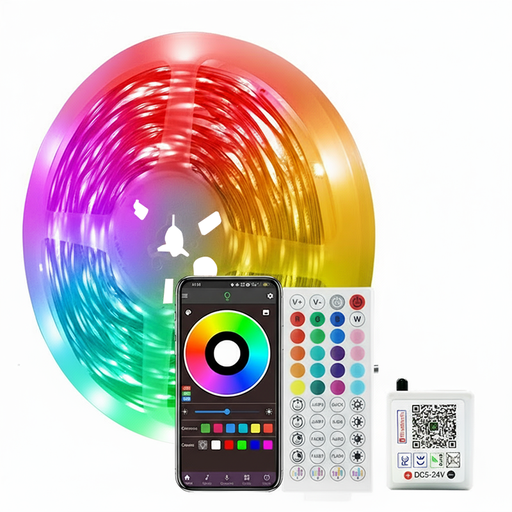
Why This Fits Their Persona: Ideal for users looking to outfit a room with colourful ambient lighting for the first time without a large budget. The 10-metre length is sufficient for most bedrooms or living rooms to illuminate an accent wall or ceiling perimeter.
This product bypasses the unreliable control trap by offering dual control options: both a Bluetooth app and a 40-key remote are included. If one method fails or is inconvenient, an alternative is readily available.
Offers a comprehensive entry-level feature set with 16 million RGB colours, music sync, and a timer function. Installation is simple via the self-adhesive backing.

Why This Fits Their Persona: Perfect for homeowners and renters seeking a practical lighting solution for dark cabinets, kitchen countertops, or hallways. The installation requires no drilling and no hardwiring, making it exceptionally flexible.
This product is a purpose-built functional light, not a decorative strip. The PIR motion sensor solves the control issue by automating it. The rechargeable battery operation makes it independent of power outlets and failure-prone power supplies.
Automatic on/off switching via the PIR motion sensor. Three selectable colour temperatures (warm, neutral, cool) adapt to any environment. Easy charging via USB.
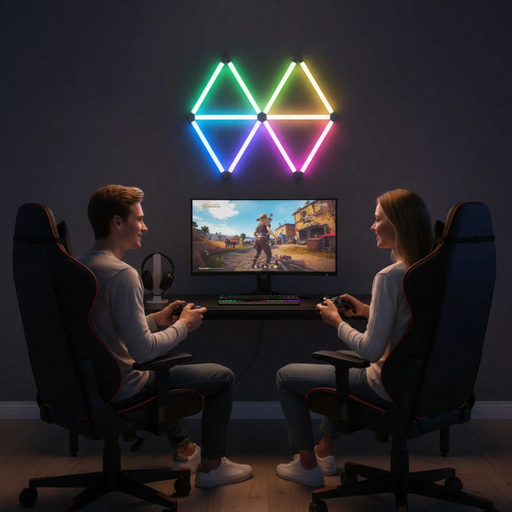
Why This Fits Their Persona: For gamers, content creators, and design enthusiasts who want to create a unique, modular light installation as a visual centrepiece. This LED panel wall goes far beyond a simple light strip and becomes a work of art.
As a modular system of rigid panels, it is immune to the problem of failing adhesive on flexible strips. Control via a dedicated app and voice assistants is designed for advanced features and is more reliable than simple IR remotes.
Fully customisable DIY design for individual patterns. Comprehensive control via app and voice command (Alexa, Google Assistant). The music sync mode creates dynamic lighting effects that match games or music.
We have compiled a complete, up-to-date list of products that fully meet these strict selection criteria and UK safety regulations.
Yes, most LED strips can be cut to size. Look for the designated markings on the strip, often indicated by a scissors icon. It is crucial to cut only at these points, as doing otherwise will interrupt the electrical circuit and render a section of the strip non-functional.
Power consumption is very low compared to traditional light sources. It depends on the length, LED density, and the set brightness level. The power is usually specified in watts per metre (W/m) in the product specifications. A typical 5-metre RGB strip often consumes between 15 and 30 watts at full brightness.
RGB strips mix red, green, and blue light to create a wide spectrum of colours. RGBW strips also feature a dedicated white LED chip, which produces a purer and brighter white light. RGBIC strips are the most technologically advanced. Their integrated chips (IC) allow for the independent control of individual segments, making dynamic, multi-colour effects like gradients or "running light" animations possible on a single strip.