
Lieferung heute & morgen

Qualitätsgarantie

Willkommens-Angebote freischalten: KOSTENLOSE Lieferung | Bis zu 80 % RABATT | Kostenlose 30-Tage-JoyPlus-Testphase
App herunterladen
The right lighting can completely transform a room. Especially in home entertainment and gaming, many people are looking for ways to create a more immersive atmosphere with dynamic light. However, with a vast array of options—from simple LED tapes to complex app-controlled systems—making the right choice can be overwhelming.
This article serves as your guide. We'll introduce different types of LED lighting and explain the key features to look for when making your selection. Our goal is to provide you with a solid basis for making an informed decision that meets your individual needs, whether it's for the perfect gaming room lighting or atmospheric TV backlighting.
Before you decide on a product, there are several technical aspects to consider. These criteria will help you find the functionality that best suits your project.
The method of control significantly determines the user experience. Basic models often come with an infrared remote that allows for fundamental colour and brightness adjustments. For deeper customisation, however, smart lighting is recommended.
Products with Wi-Fi or Bluetooth connectivity typically offer control via a smartphone app. These app-controlled LED lights enable precise colour selection, the creation of schedules, and synchronisation with other smart devices. Many of these systems are also compatible with voice assistants like Amazon Alexa or Google Assistant, allowing for convenient voice control.
The terms RGB and RGBIC are crucial for the visual effects an LED strip can produce.
The planned location determines the requirements for length, brightness, and power source. For subtle accent lighting behind a desk or shelf, a short, USB-powered LED strip may be sufficient. To illuminate an entire room or for TV backlighting on large screens, longer strips with a dedicated power adapter are necessary to ensure uniform and adequate brightness. Pay attention to the length specifications and check if the strip can be cut at marked points for a precise fit.
Based on the criteria mentioned, we have compiled a selection of products that cover various use cases—from creative decoration to immersive entertainment.
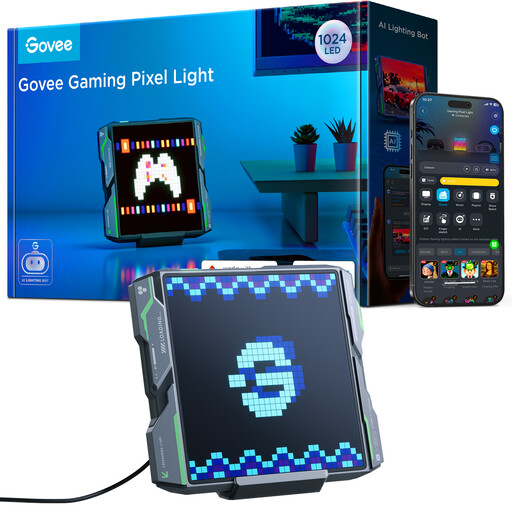
Why it stands out: The Govee Pixel Light is more than just a light source; it's an interactive display. With its 32x32 LED grid, it allows you to create and display pixel art animations. According to the manufacturer, its integrated AI function can generate designs, making it a creative tool for personalised setups.
Advantages:
Who is it for? This LED panel is aimed at gamers, streamers, and creatives who want to enhance their gaming room lighting or workspace with a unique, interactive, and customisable element.
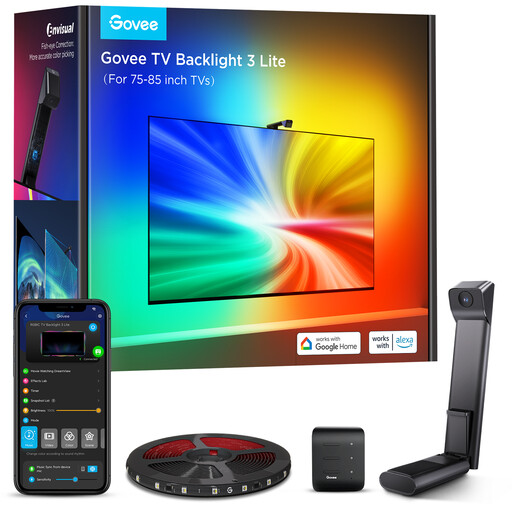
Why it stands out: This system is specifically designed for TV backlighting. Its core component is a fisheye camera that captures the colours on the screen's edge in real-time and relays them to the RGBICW LED strip. This illuminates the wall behind the TV to match the on-screen content, expanding the visual perception and potentially reducing eye strain.
Advantages:
Who is it for? Ideal for home cinema enthusiasts who want to intensify their viewing experience for films, series, and video games with dynamic and immersive ambient lighting.
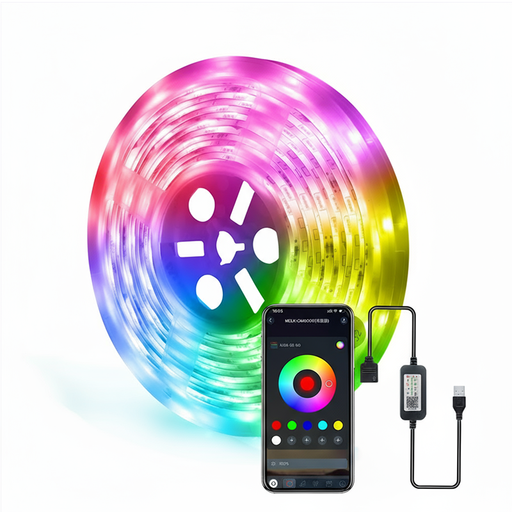
Why it stands out: This LED strip is notable for its simplicity and flexibility. With a length of 5 metres and power supplied via a standard USB port (5V), it is versatile and requires no separate power adapter. Control is managed entirely through a smartphone app.
Advantages:
Who is it for? This LED strip is an excellent choice for DIY decorators and budget-conscious users looking for a straightforward and versatile solution for accent lighting, desk setups, or indirect furniture lighting.
The products featured cover specific use cases. If you are looking for other lighting solutions, such as for decorative purposes or window displays, you may find suitable alternatives in our broader selection.
Discover more options in our Indoor Curtain Lights category.
1. What is the difference between RGB and RGBIC on an LED strip? A standard RGB strip can only display one colour at a time. An RGBIC strip has integrated chips that allow it to display multiple colours simultaneously on different segments of the strip. This enables dynamic effects like colour gradients or animations that are not possible with RGB.
2. Can you cut LED strips? Yes, most LED strips can be cut with scissors at designated markings (often indicated by a scissor symbol). However, it is important to follow the manufacturer's instructions. Note that the cut-off section cannot typically be reused without special connectors.
3. How are LED strips attached and connected? Most LED strips have a self-adhesive backing. Before applying, the surface should be clean, dry, and free of grease to ensure good adhesion. Connection is made either via an included power adapter that plugs into a wall socket or via a USB cable that connects to a 5V USB port, depending on the model.