Joybuy Insights

LED Strip Buyer’s Guide: Avoid the 3 Most Common Buying Mistakes

LED strips, often called LED tape or light ribbons, are a versatile way to add atmosphere to rooms, accentuate furniture, or create functional, indirect lighting. But the market is crowded, and not every product lives up to its promises. Before you make a decision, it's crucial to understand the common pitfalls that often only become apparent after your purchase.

As your Joybuy Product Recommendation Officer, I'm here to help you cut through the noise. In this guide, I'll show you what to look for to make an informed choice and avoid a bad investment.

The Most Common Pitfalls When Buying LED Strips

Many budget-friendly options quickly turn into a source of frustration. Pay close attention to these three points to avoid disappointment:

  1. Poor Adhesive Strength: A common issue is an LED tape whose self-adhesive backing loses its grip after just a few weeks or months. Low-quality adhesives fail quickly, especially on rough surfaces, in warm environments (e.g., behind a TV), or during vertical installation.
  2. Inconsistent Colours and Brightness: Cheap RGB LED strips often suffer from inaccurate colour reproduction. The blue selected on the remote might appear purple, or individual sections of the strip may glow dimmer than others. This points to low-quality LEDs and poor quality control.
  3. Unreliable and Limited Control: A basic infrared remote control is standard but often impractical. It requires a direct line of sight to the receiver and has a short range. Smart features are completely absent, severely limiting its usability.

What Really Matters: The Key Features for Long-Lasting LED Strips

To avoid the problems mentioned above, you should carefully examine three core aspects. These largely determine the quality, functionality, and lifespan of your new lighting.

1. Light Type and Colour Options: RGB, RGBIC, and White Tones

The type of LEDs defines what you can do with the strip.

  • RGB LED Strip: This is the standard. The entire strip can light up in one of many colours (Red, Green, Blue, and their mixtures). All LEDs display the same colour simultaneously. Suitable for simple, single-colour ambient lighting.
  • RGBIC (Independent Control): This more advanced technology allows individual segments of the strip to be controlled independently. This enables multi-colour gradients, flowing animations, and dynamic effects. This is the preferred choice for an immersive gaming room or eye-catching TV backlighting.
  • White Tones (Tunable White): If you don't need vibrant colours but require high-quality functional lighting, strips with adjustable colour temperature (from warm white to cool white) are ideal. They are perfect for indirect lighting in living rooms or as task lighting under kitchen cabinets.

2. Mounting and Power Supply

The installation method and power source should match your project.

  • Power Supply:
    • Mains Powered: For permanent installations, such as on ceilings, walls, or behind large furniture, a strip with a power adapter is the most reliable solution. It provides consistent power for maximum brightness.
    • Battery-Powered / USB: For flexible or temporary uses, like in closets, display cases, or on camping trips, a battery-powered or USB-rechargeable strip is practical. You don't need a nearby socket, but they often have lower brightness and a limited runtime.
  • Mounting: Finding a high-quality self-adhesive LED tape is crucial. Look for brand-name adhesive (e.g., from 3M) or check if additional mounting clips are included to ensure a permanent hold.

3. Control Options: From Remote Control to Smart Home

The control method determines everyday convenience and functionality.

  • Infrared Remote: The simplest method. It's inexpensive but requires a direct line of sight and offers only basic functions.
  • Bluetooth Control: Allows control via a smartphone app within a limited range (approx. 10 metres). Often offers more features than an IR remote, such as timers or music sync.
  • Wi-Fi / Smart LED Strips: The most flexible option. These strips connect to your home network and can be controlled from anywhere via an app. They are often compatible with voice assistants like Alexa or Google Assistant and can be integrated into smart home routines. Models with Matter support offer cross-platform compatibility and are particularly future-proof. Almost all smart models are also continuously dimmable.

Top Picks by Use Case

Instead of making a one-size-fits-all recommendation, we have selected products for specific user profiles and needs.
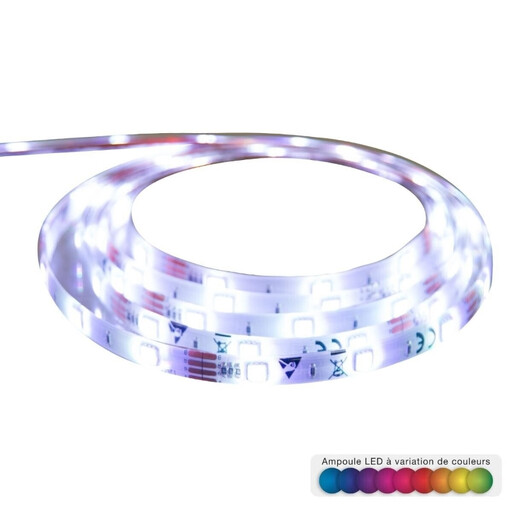
MATCH FOR: Budget-Conscious Beginners
LED Strip Light with Mains Plug 5 m Long Multicoloured Light and Remote Control

LED Strip Light with Mains Plug 5 m Long Multicoloured Light and Remote Control

Why This Fits Their Persona: Ideal for first-time decorating projects. This kit includes everything needed to get started: a 5-metre strip, a power adapter, and a remote control. It's well-suited for easily adding colourful accents behind a shelf or along a baseboard.

How It Avoids the Trap

As an all-in-one kit, it avoids hidden costs for extra adapters. The IR remote is basic, but it's functional and sufficient for fundamental colour adjustments.

Key Advantage & Pros

Convenient 5-metre length for larger areas. Simple installation thanks to the mains plug and self-adhesive back.
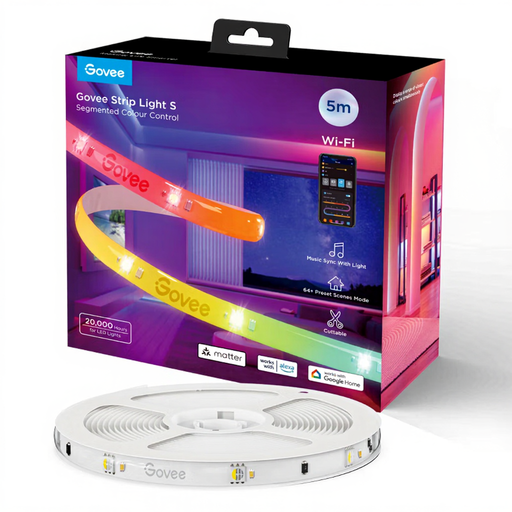
MATCH FOR: Gamers and Tech Enthusiasts
Govee RGBIC Wi-Fi + Bluetooth LED Strip Lights With Protective Coating (5M) Support Matter

Govee RGBIC Wi-Fi + Bluetooth LED Strip Lights With Protective Coating (5M) Support Matter

Why This Fits Their Persona: Perfect for an immersive gaming setup. The RGBIC technology creates dynamic, multi-colour effects that can sync with gameplay or music. Matter support ensures compatibility with all major smart home ecosystems.

How It Avoids the Trap

It solves the problem of unreliable control with a robust Wi-Fi and app connection. The RGBIC technology delivers far superior colour effects than basic RGB strips, avoiding inconsistent colours.

Key Advantage & Pros

Segmented RGBIC colour control for flowing effects. Future-proof smart home integration thanks to Matter certification.
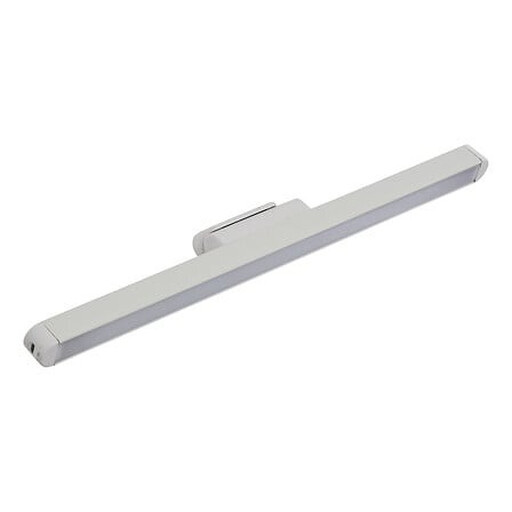
MATCH FOR: Flexible and Functional Lighting
LED strip lamp length 42 cm USB charging

LED strip lamp length 42 cm USB charging

Why This Fits Their Persona: A practical solution for places without a power socket. This compact bar is ideal for lighting closets, drawers, or as a vanity light. Since it's rechargeable, it eliminates the need for any wiring.

How It Avoids the Trap

It completely bypasses the need for a socket and the problem of failing adhesive on long strips. As a self-contained unit, it is robust and easy to install.

Key Advantage & Pros

Wireless operation thanks to an integrated battery and USB charging. The neutral white light (4000K) is very pleasant for everyday use.

Looking for more options?

Especially for functional task lighting, we have curated a selection of products that meet our criteria for quality and safety.

Frequently Asked Questions (FAQ)

How long do LED strips last?

The lifespan of LED strips is typically rated between 15,000 and 50,000 hours. The actual durability heavily depends on the quality of the components, heat dissipation, and frequency of use. Low-quality products can fail much earlier due to component failure or overheating.

Can you cut an LED tape?

Yes, most LED strips can be cut at the designated points. These cutting marks are usually indicated by a scissor icon or a line. Cutting anywhere else will damage the circuit and cause a section of the strip to stop working.

What length do I need for TV backlighting?

As a rule of thumb, you can use the following values to light up three or four sides of the back of your TV:

  • 40–55 inch TV: approx. 3 metres
  • 60–75 inch TV: approx. 4–5 metres

For a precise result, it is recommended to measure the perimeter of the back of your TV where the strip will be attached before purchasing.