
Lieferung heute & morgen

Qualitätsgarantie

Willkommens-Angebote freischalten: KOSTENLOSE Lieferung | Bis zu 80 % RABATT | Kostenlose 30-Tage-JoyPlus-Testphase
App herunterladen
By Joybuy Product Recommendation Officer, July 29, 2026
LED strips promise an easy and effective way to add a personal touch to any room. Whether as atmospheric TV backlighting, dynamic gaming room decor, or subtle accent lighting—the applications are endless. But the market is crowded, and not every product lives up to its advertising. Before you make a decision, it's crucial to know the most common pitfalls that can lead to disappointment and unnecessary expense.
This guide focuses on the objective criteria that define a high-quality LED strip, helping you separate marketing hype from genuine performance features.
Many buyers experience disappointment shortly after installation. Certain flaws are particularly common and can be avoided with careful product selection.
To avoid the problems mentioned above, you should check three core technical specifications before buying. These largely determine the quality and longevity of your lighting solution.
The number of LEDs per meter is a key quality indicator. A higher density ensures more even light distribution and prevents the unwanted spotting effect.
The type of control defines the ease of use. Check which options are relevant for your use case.
The right length is essential for a clean installation.
Based on the criteria above, we have identified some products that are well-suited for specific user groups and their needs.
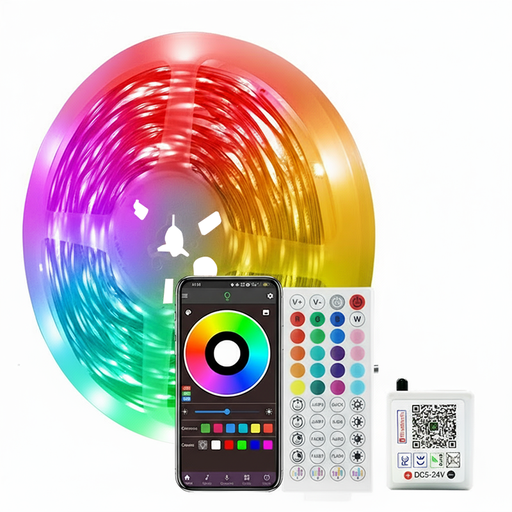
Why This Fits Their Persona: Ideal for users looking for a straightforward and functional solution for accent lighting or their first gaming setup. The 5m length is sufficient for many standard applications, like framing a desk or a smaller TV.
Offers dual control via app and remote control, reducing reliance on a single, potentially faulty method. The instruction to apply the strip to clean, dry surfaces directly addresses the weak adhesive problem.
Combines key features like RGB color-changing, dimmable brightness, and music sync in an accessible package. Installation is straightforward thanks to the self-adhesive backing.
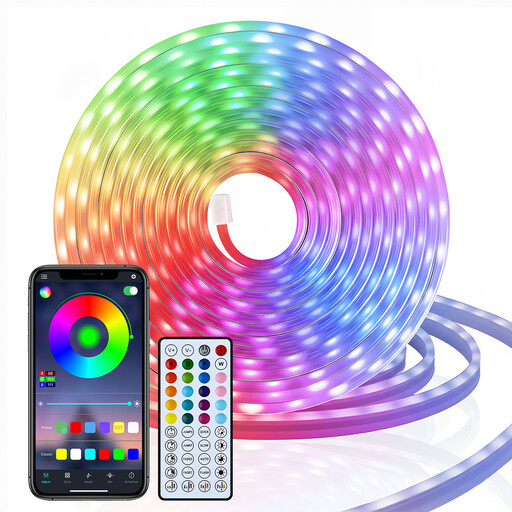
Why This Fits Their Persona: Perfect for users who want a flawless, continuous line of light with no visible dots. Ideal for architectural accents, lighting TV furniture, or creating a high-end lounge atmosphere.
The silicone diffuser completely solves the core problem of visible hotspots. It creates a homogeneous, neon-like line of light, bypassing the most common aesthetic flaw of conventional LED strips.
Creates a high-quality, continuous light effect. The material's high flexibility allows for creative shapes and installations. Control via app and remote control offers full command over colors and effects.
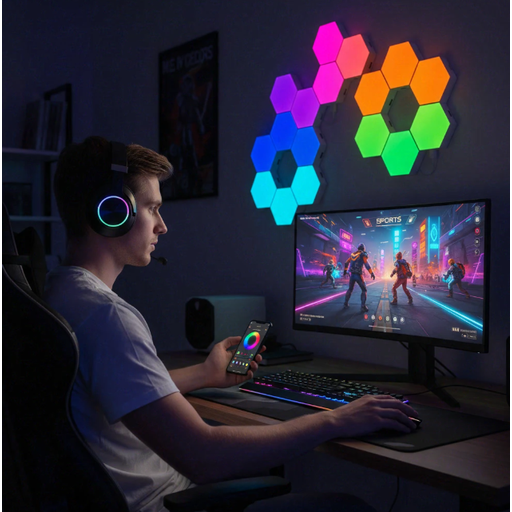
Why This Fits Their Persona: For gamers and content creators seeking unique and modular gaming room decor that goes beyond a simple light strip. The hexagonal panels can be assembled into custom patterns, becoming the visual centerpiece of the setup.
This system completely bypasses the typical problems of strips. As rigid panels, there's no uneven lighting or issues with peeling adhesive tape. The mounting is designed for solid surfaces, providing a durable solution.
Complete creative freedom through modular design. The music sync reacts to game sounds or music, creating a highly immersive experience. Control via app and remote control enables complex effects.
We've compiled a complete, real-time list of products that fully meet these strict selection criteria and safety regulations.
Most LED strips are designed to be cut to fit specific lengths. However, this is only possible at the designated cut marks, which are usually indicated by a scissor icon or a line. Cutting anywhere else will interrupt the circuit and cause the subsequent section of the strip to stop working.
The lifespan of an LED strip is specified in operating hours and is typically between 25,000 and 50,000 hours for quality products. With average use of a few hours per day, this corresponds to a lifespan of many years. Factors such as component quality, heat dissipation, and the operating environment influence the actual durability.
No, LED technology is known for its high energy efficiency. Power consumption is very low compared to traditional incandescent or halogen bulbs. The exact consumption depends on the length of the strip, the brightness setting, the color, and the LED density. A 5-meter RGB strip at full brightness often consumes only between 15 and 30 watts, making it a cost-effective lighting solution.