
Lieferung heute & morgen

Qualitätsgarantie

Willkommens-Angebote freischalten: KOSTENLOSE Lieferung | Bis zu 80 % RABATT | Kostenlose 30-Tage-JoyPlus-Testphase
App herunterladen
As a Joybuy Product Recommendation Officer, I analyse market data daily to provide you with objective and practical shopping advice. When choosing LED strips, it's easy to be blinded by marketing promises. Many products quickly prove to be unusable. This guide will show you what to look for to find a durable and functional lighting solution for your home.
Before we dive into the important features, let's highlight the three most common issues that lead to disappointment. By understanding these, you can specifically look for products that don't have these weaknesses.
To avoid the problems mentioned above, you should check three core technical parameters before buying. These are the primary determinants of the quality and functionality of your new lighting.
The number of LEDs per metre, the LED density, is crucial for uniform illumination. On strips with low density, individual light points are clearly visible, which disrupts the effect of continuous indirect lighting. A high density ensures a smooth band of light. Also, pay attention to the brightness specification in lumens (lm). This value is an objective measure of light output, whereas the wattage primarily describes energy consumption. A dimmable LED bar offers the necessary flexibility to adjust the brightness to suit the mood.
The type of control defines your everyday convenience.
This technical distinction is particularly relevant for gamers and fans of dynamic lighting effects.
Here are some product recommendations tailored to specific user profiles and their requirements.
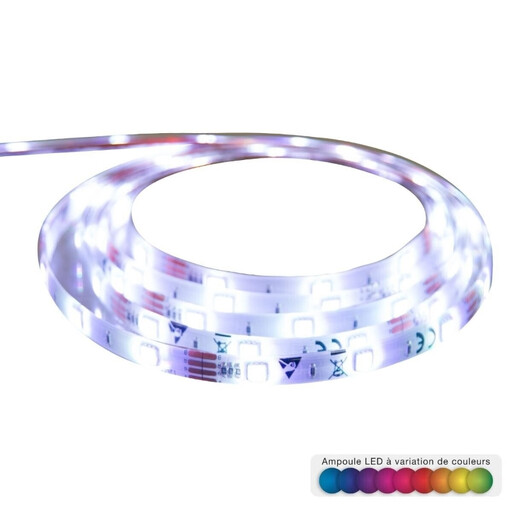
Why it's a good fit: Ideal for users looking for a straightforward and budget-friendly solution for their first room LED strip. The kit is all-inclusive and requires no technical expertise for installation.
This kit relies on a simple IR remote to keep the price down. It avoids pretending to be a complex smart home solution, instead delivering a functional, entry-level experience.
All-in-one package including a power adapter and remote. The 5-metre length with 150 LEDs is sufficient for many standard applications, such as backlighting for furniture or along ceiling edges.
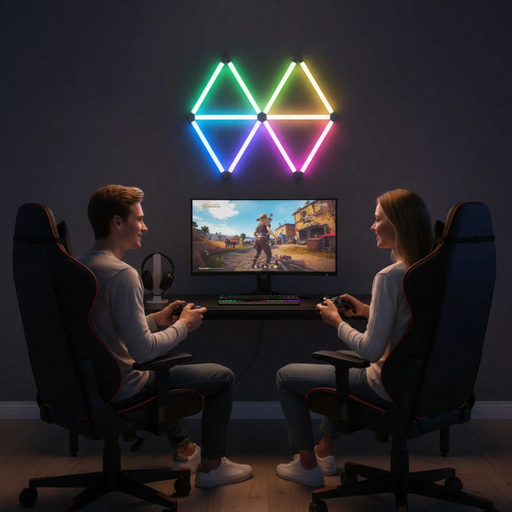
Why it's a good fit: This modular system of six light bars is designed for creative setups. It's perfect for a gaming setup, as it syncs with music and can be fully controlled via app and voice assistants (Alexa, Google Assistant).
Solves the problems of poor colour reproduction and limited control with 16 million colours, over 40 dynamic scenes, and robust app and voice control.
The lights react to music and game soundtracks, creating an immersive atmosphere. The modular design allows for custom arrangements on the wall.
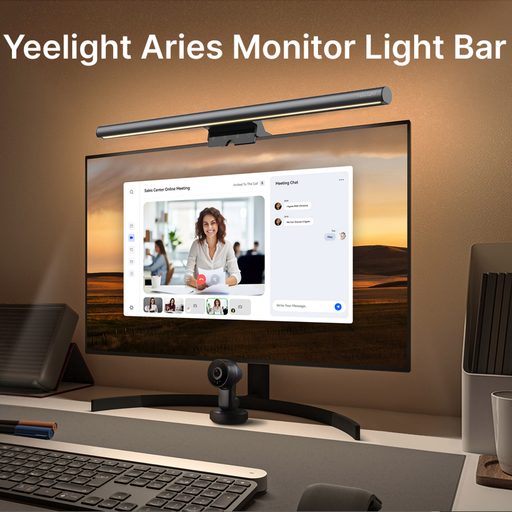
Why it's a good fit: This LED bar is specifically designed to be mounted on a monitor. It illuminates the desk without creating glare on the screen, helping to reduce eye strain during work or gaming.
This product isn't for decorative ambient lighting but is a functional light source. It solves a specific problem (glare, eye strain) rather than just promising generic effects.
The asymmetrical optical design prevents reflections on the screen. Brightness and colour temperature are adjustable to create an eye-friendly work environment.
We have compiled a complete, real-time updated list of products that fully meet these strict selection criteria and all relevant safety regulations.
The lifespan of a high-quality LED strip is typically between 30,000 and 50,000 operating hours. With eight hours of daily use, this equates to a durability of over ten years. However, factors like inadequate heat dissipation or poor manufacturing quality can significantly shorten its lifespan.
Yes, most LED strips can be shortened at designated points. These cutting marks are usually indicated by a scissor icon and are typically found after every third or sixth LED. Cutting at an unmarked spot will cause the severed segment to no longer light up.
Compared to traditional incandescent or halogen bulbs, LED strips are very energy-efficient. The exact power consumption depends on the length, LED density, and set brightness. A typical 5-metre strip often consumes only between 20 and 60 watts at full brightness, making it an economical option for accent and mood lighting.