
Lieferung heute & morgen

Qualitätsgarantie

Willkommens-Angebote freischalten: KOSTENLOSE Lieferung | Bis zu 80 % RABATT | Kostenlose 30-Tage-JoyPlus-Testphase
App herunterladen
The market is flooded with LED strips, and making the right choice can be a challenge. Whether you want to create a cozy atmosphere for your living room, set up dynamic gaming room lighting, or find functional indirect lighting for your kitchen, the requirements are diverse. This guide is designed to help you understand the technical features and make an informed decision tailored precisely to your use case.
As your Joybuy Product Recommendation Officer, I have compiled the relevant information to offer you clear and objective guidance.
To find the right solution for your project, a few technical aspects are crucial. The following points will help you narrow down your options.
The color of the light has a significant impact on the room's atmosphere. There are two basic types:
The type of control determines the convenience and functionality of your lighting system. Common options include:
Measure the area you want to illuminate accurately before deciding on a length. Standard lengths like 5m or 10m are widely available. Many strips can be cut at marked points to allow for a custom-fit installation.
The ability to adjust the brightness is another important criterion. A dimmable LED strip allows you to regulate the light intensity according to the time of day and desired mood—from bright task lighting to soft accent lighting.
Based on the criteria mentioned, we have compiled a selection of models with different specializations.
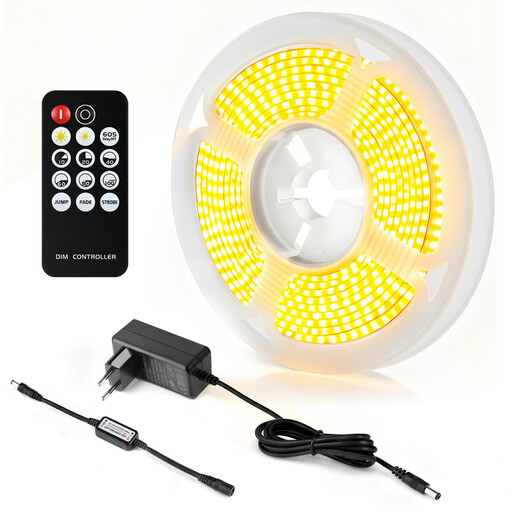
Why It Stands Out: This strip uses COB (Chip-on-Board) technology, where the LED chips are placed very close together. The result is a completely uniform band of light with no visible dots, enabling a particularly high-end and seamless indirect lighting effect. The high Color Rendering Index (CRI) of 92+ ensures that colors in the room appear natural and true-to-life.
Pros:
Who It's For: Users seeking subtle and high-quality indirect lighting with warm white light for living areas, shelves, closets, or under kitchen cabinets, and who value a uniform lighting effect.
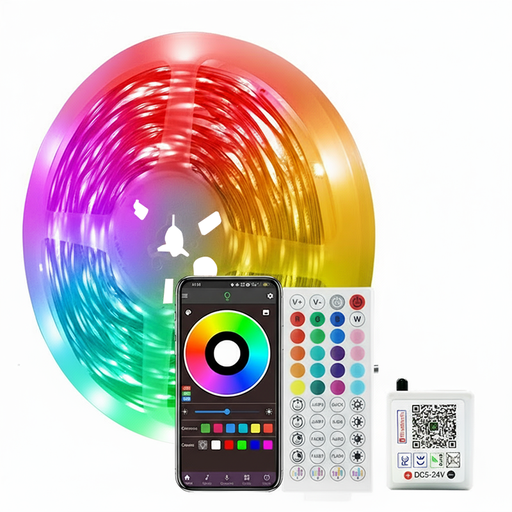
Why It Stands Out: With a length of 10m and dual control options, this strip offers maximum flexibility for larger rooms. You can control the lighting via the 40-key remote control as well as through the Vivreal app via Bluetooth. The app provides access to 16 million colors and a timer function.
Pros:
Who It's For: Users who need versatile RGB lighting for parties, holidays, or creating an atmospheric ambiance in living rooms and bedrooms, and who appreciate both quick control via remote and advanced app features.
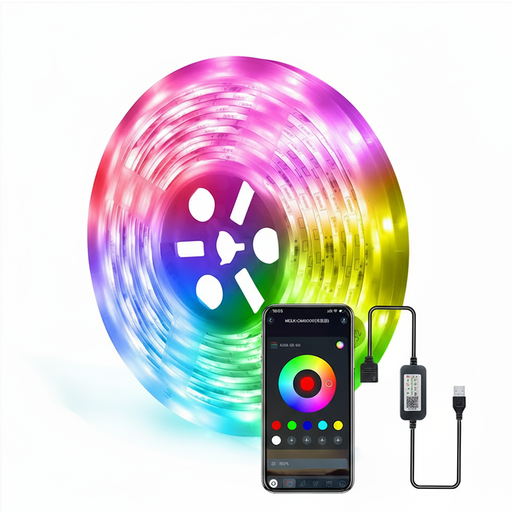
Why It Stands Out: This model is specifically designed for use on TVs and monitors. It's conveniently powered by any 5V USB port, so no separate power adapter is needed. App control and music sync make it an ideal solution for immersive TV backlighting or gaming room lighting.
Pros:
Who It's For: Home theater enthusiasts and gamers looking for an easy-to-install and dynamic backlighting solution for their screens to enhance visual immersion and reduce eye strain.
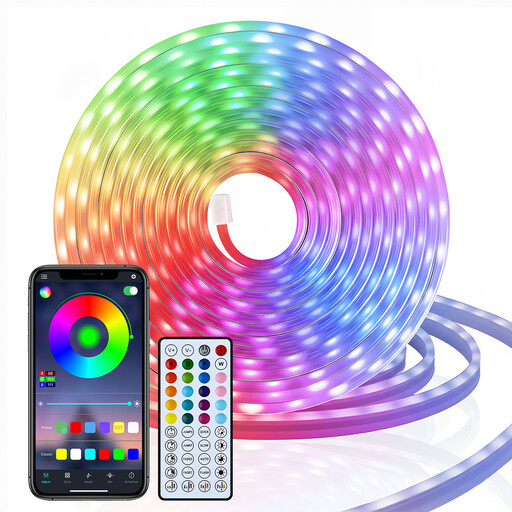
Why It Stands Out: Unlike traditional LED strips, this model features a silicone coating that diffuses the light, creating a continuous, neon-like glow. The highly flexible material can be easily bent into various shapes, making it perfect for creative DIY projects like custom light signs or accentuating furniture contours.
Pros:
Who It's For: Creative DIYers and decorators looking for a unique aesthetic. Ideal for designing gaming setups, bars, or as a striking decorative element in any room.
The products presented here cover common use cases for interior lighting. If you are looking for solutions for outdoor areas or for special seasonal decorations, you can find more options in our Outdoor Holiday Pathway Lights category.
1. How do you install LED strips correctly? Most LED strips have a self-adhesive backing. For a secure bond, the surface should be clean, dry, and smooth. Thoroughly clean the surface with a cloth before application. Press the strip down firmly and avoid sharp bends to prevent damaging the circuitry.
2. Can LED strips be cut? Yes, many LED strips can be cut with regular scissors at the designated markings (often indicated by a scissors icon). Be sure to cut only at these points, otherwise the strip will no longer work at the cut section.
3. What's the difference between COB and SMD LED strips? SMD (Surface Mounted Device) is the most common technology, where individual LED chips are mounted at regular intervals on the strip. This can lead to visible "hotspots" or dots when viewed directly. COB (Chip on Board) uses a much higher density of smaller chips covered by a layer of phosphor. This creates a continuous, uniform band of light without dots, which is often considered more aesthetically pleasing.