
Lieferung heute & morgen

Qualitätsgarantie

Willkommens-Angebote freischalten: KOSTENLOSE Lieferung | Bis zu 80 % RABATT | Kostenlose 30-Tage-JoyPlus-Testphase
App herunterladen
LED strips are a popular way to give rooms, vehicles, or workspaces a customised ambience. However, the market is saturated, and many products don't live up to their promises. Before you invest in new smart lighting, it's important to know the typical pitfalls that often lead to disappointment and unnecessary expense.
As your Joybuy Product Recommendation Officer, I'm here to help you separate marketing hype from facts. In this guide, we'll focus on the crucial features that define a quality LED strip and show you how to make an informed decision for your needs.
Many buyers experience issues with their new ambient LED lighting shortly after purchase. These three defects are particularly common and can be avoided with careful product selection.
To avoid the problems mentioned above, you should pay attention to a few technical specifications before buying. These parameters are the primary determinants of your LED strip's quality, longevity, and functionality.
The type of LEDs used is crucial for the visual result. There is an important distinction to be made here:
The control method determines how conveniently the LED strip integrates into your daily life.
Not every LED strip is suitable for every purpose. The power supply is a critical factor:
Here are some recommendations tailored to specific user profiles and their requirements.
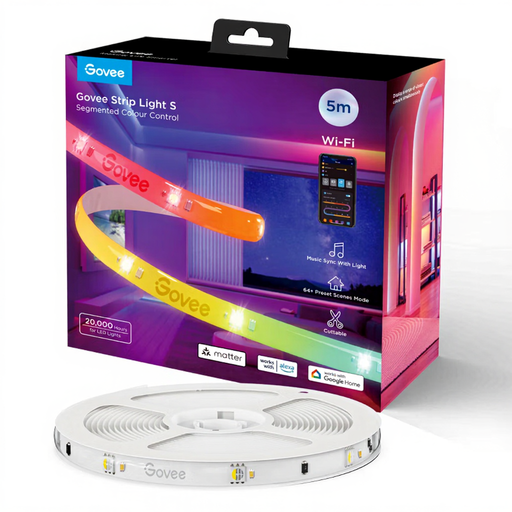
Why This Fits Their Persona: Ideal for users seeking future-proof and highly customisable lighting for their gaming room or smart home. The RGBIC technology enables impressive, flowing light effects that can sync with games and music.
Matter certification solves the problem of unstable connectivity and incompatibility. The RGBIC technology delivers far superior colour and effect quality than simple RGB strips. Govee is also known for its reliable app and durable materials.
Segmented RGBIC control for multi-colour effects and Matter support for seamless integration into all major smart home platforms.
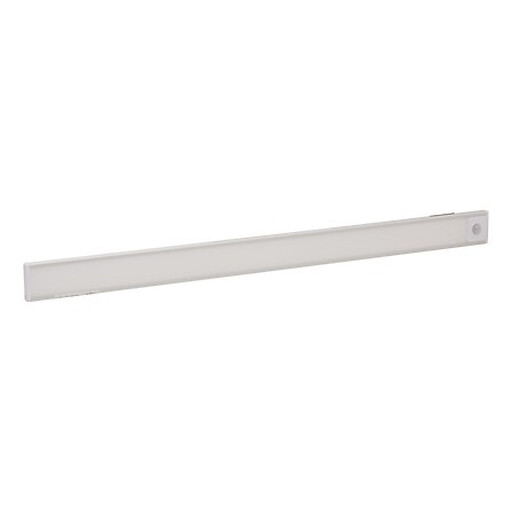
Why This Fits Their Persona: Perfect for anyone who needs straightforward, functional lighting for cabinets, kitchen countertops, or storage rooms without having to run cables. The rechargeable battery and motion sensor offer maximum convenience.
This product bypasses issues with adhesive strips by using a magnetic mount. As a self-contained unit, there are no app or connectivity problems. It focuses on a single function: providing reliable light when needed.
Wireless operation thanks to a rechargeable battery and automatic on/off switching via the integrated motion sensor. Simple, screw-free installation.
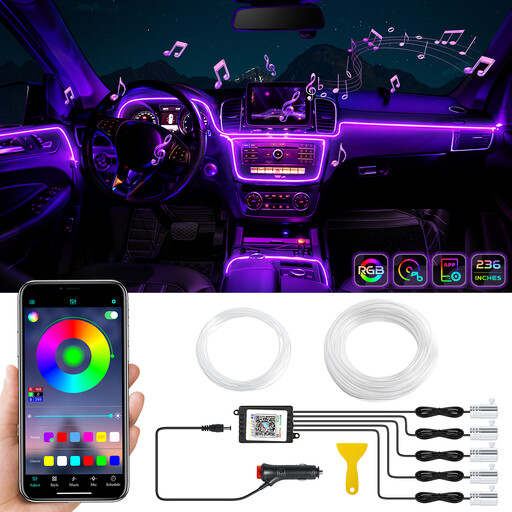
Why This Fits Their Persona: This kit is specifically designed for retrofitting ambient lighting in a car. It connects to the vehicle's 12V power supply, and the fibre optic tube is discreetly inserted into the gaps of the dashboard and door panels.
Instead of relying on unreliable adhesive strips, the fibre optic tube is mechanically fixed in crevices, ensuring a permanent hold. As a complete kit for vehicles, it avoids the voltage and compatibility issues that would arise from using household LEDs in a car.
Complete kit for vehicle installation, including a 12V adapter and installation tool. It is conveniently controlled via an app and offers music synchronisation for dynamic effects while driving.
We have compiled a complete, up-to-date list of products that fully meet these strict selection criteria and safety regulations.
Yes, most LED strips can be cut at the designated points. These are usually marked with a scissor icon or a solid line. Cutting anywhere else will interrupt the circuit and cause the subsequent section to stop working. Be sure to only cut at these markings.
This question is crucial for the desired lighting experience. An RGB strip can only display a single colour across its entire length at any given time. While you can switch between millions of colours, the whole strip will light up uniformly. An RGBIC strip, on the other hand, has additional control chips (ICs) that allow different segments of the strip to light up in different colours independently. This enables dynamic, flowing effects like colour gradients or rainbow patterns.
For voice control, an LED strip with Wi-Fi capability is typically required. The process usually involves three steps: