
Lieferung heute & morgen

Qualitätsgarantie

Willkommens-Angebote freischalten: KOSTENLOSE Lieferung | Bis zu 80 % RABATT | Kostenlose 30-Tage-JoyPlus-Testphase
App herunterladen
LED strips offer a flexible and creative way to add a personal touch to any room—whether as atmospheric TV backlighting, dynamic gaming room lighting, or a subtle accent on furniture. However, the market is saturated, and many products don't live up to their promises. Before you invest, it's crucial to understand the common pitfalls that often lead to disappointment and unnecessary expenses.
This guide will walk you through the decisive quality features and help you make an informed decision based on facts, not marketing hype.
Many buyers experience issues with their new LED strips shortly after purchase. These three defects are particularly common and can be avoided with careful product selection:
To avoid the problems mentioned above, you should carefully examine three technical parameters. These largely determine the quality, longevity, and functionality of your LED strip.
The quality of the light is directly related to the installed light-emitting diodes. Pay attention to two aspects:
The control method significantly impacts user convenience. Common options include:
Measure the intended area precisely before you buy.
Instead of making a one-size-fits-all recommendation, we have selected products for specific user profiles that meet the criteria mentioned above.
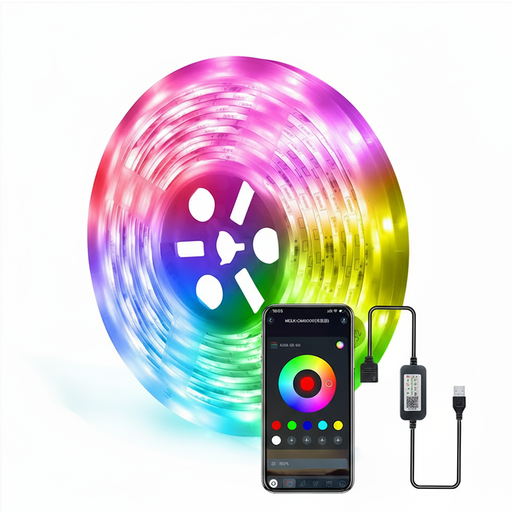
Why This Fits Their Persona: Perfect for straightforward TV backlighting or accenting small areas without breaking the bank. The USB power supply makes installation behind monitors and TVs especially easy.
The product relies on a simple but functional app control and direct USB power. This reduces complexity and, therefore, potential sources of error compared to more elaborate smart home systems.
Direct 5V USB power supply, no separate power outlet required. App control for color and brightness adjustment, as well as music synchronization.
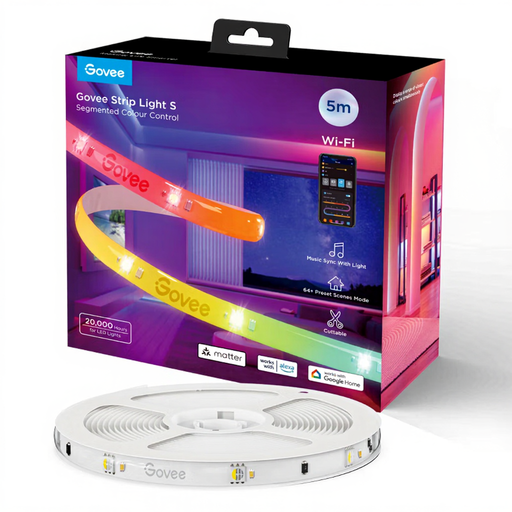
Why This Fits Their Persona: Ideal for creating an immersive atmosphere in a gaming room or home theater. The RGBIC technology allows for dynamic, multi-color light effects that intensify the visual experience.
Matter certification ensures reliable and future-proof integration into common smart home ecosystems, thus avoiding the problem of unstable, proprietary apps. The protective coating increases durability.
Segmented RGBIC color control for smooth color gradients. Matter support for universal smart home compatibility.

Why This Fits Their Persona: Specifically designed for car interior LED lighting. The kit includes everything needed for installation in the dashboard, doors, or footwell and is powered by the car's 12V electrical system.
Designed as a complete kit for vehicles, it avoids the risks associated with improperly using 230V or 5V USB strips in a car. The acrylic material ensures diffuse, glare-free illumination.
Operates on 12V power for safe use in a car. Acrylic light guides for a uniform, neon-like light distribution.
We've compiled a complete, up-to-date list of products that fully meet these strict selection criteria and rigorous safety standards.
Proper surface preparation is crucial. Clean the surface thoroughly with a suitable agent (e.g., isopropyl alcohol) to remove dust, grease, and moisture. After applying the strip, press it down firmly for a few seconds. Avoid repositioning the strip after it has been attached, as this will significantly reduce its adhesive strength.
A standard RGB LED strip can display many colors, but only one single color across its entire length at any given time. An RGBIC lightstrip, on the other hand, has integrated circuits (ICs) that allow different segments of the strip to be controlled independently. This enables the display of multiple colors simultaneously, creating dynamic effects like color gradients or chasing light animations.
Yes, most LED strips can be shortened. However, be sure to cut only at the designated cutting marks. These are usually indicated by a scissor icon or a thin line across four copper contacts. Cutting anywhere else will damage the circuit and cause a portion of the strip to stop working.