
Lieferung heute & morgen

Qualitätsgarantie

Willkommens-Angebote freischalten: KOSTENLOSE Lieferung | Bis zu 80 % RABATT | Kostenlose 30-Tage-JoyPlus-Testphase
App herunterladen
An LED strip can provide flexible lighting for furniture, TV walls, work areas or your vehicle. However, product descriptions can vary considerably. Some LED strips are designed only for dry indoor areas, while others have an ingress protection rating suitable for damp environments. Terms such as RGB, RGBIC, Matter or “self-adhesive” alone do not indicate whether a model is suitable for your intended use.
As a Joybuy Product Recommendation Officer, I have organised the most important specifications according to their practical relevance. This helps you avoid common purchasing mistakes and choose the right LED lighting with greater confidence.
An LED strip with IP20 is designed for dry indoor areas. It is suitable for shelves, furniture or TV backlighting, for example, but should not come into contact with water or high humidity.
A higher protection rating does not automatically mean that a product is completely waterproof. The Hama Neon LED Strip with IP44 can be used in areas exposed to splashing water, but it must not be submerged. For balconies, patios or gardens, check the manufacturer’s specific installation and safety instructions.
An 5 m LED strip can provide sufficient length for walls, ceilings or furniture. However, it is important to check whether the strip may be shortened at marked cutting points. The Hama RGBCCT model includes designated cut points. By contrast, the Govee Envisual TV Backlight T2 is designed for TVs measuring 55 to 65 inches and, according to the product information, is not intended to be cut.
Cutting in the wrong place can damage the circuit and LEDs. You should therefore plan the entire route and read the instructions before installation.
A Wi-Fi LED strip may require its own app and work exclusively with 2.4 GHz Wi-Fi. A Matter LED strip makes it easier to integrate the product into compatible smart home systems, but it does not automatically replace every required setup step.
Before buying, check whether Apple Home, Google Home, Amazon Alexa, Samsung SmartThings or Home Assistant are supported. It is also important to find out whether a bridge is required. Some models connect directly to Wi-Fi and do not need an additional hub.
For focused work, a more neutral or cooler white light is often more practical than purely atmospheric colour lighting. RGB and RGBIC effects can be useful for indirect lighting behind furniture or a television.
Measure the intended route before buying. Allow for corners, connectors and space for the power supply. A self-adhesive LED strip generally adheres better to dry, smooth, dust-free and grease-free surfaces. Rough walls, wallpaper or heavily textured furniture can affect adhesion.
The LED strip should be fully unrolled before switching it on. A switched-on strip that is still wound up can heat up. The power supply and control box require adequate ventilation and must not be covered.
App control, schedules, scenes, grouping and voice control vary from product to product. An LED strip with a motion sensor is particularly practical for cupboards, hallways or work surfaces. The OSRAM model measuring 60 cm has an integrated motion sensor, a rechargeable battery and an automatic lighting duration of approximately 30 seconds after motion is detected.
Cars have different requirements: an LED strip for a car should be compatible with the intended 12-volt power supply. Cables must be routed securely and must not obstruct the pedals, field of vision or airbags. Follow the vehicle’s installation instructions.
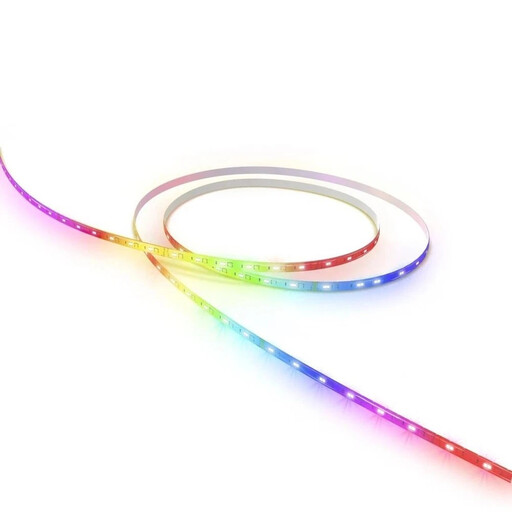
Why this product suits this profile: This model combines a 5 m length, colour selection, adjustable white light and app control in one set. Matter support enables integration with several compatible smart home platforms.
The specified cutting points make it easier to adjust the strip to size. The IP20 rating also makes it clear that use is limited to dry indoor areas.
RGBCCT, continuous dimming, Matter, Wi-Fi app and voice control; no hub is required to connect to the Hama Smart Home app.
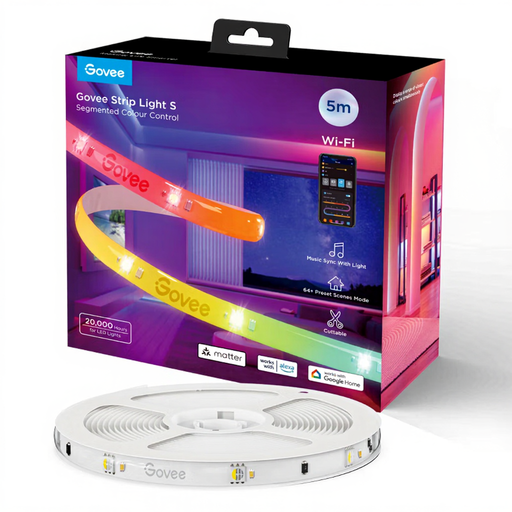
Why this product suits this profile: This strip is designed for gaming setups, home cinemas and living spaces, and supports segmented RGBIC effects, music synchronisation and Matter.
The product information explicitly states that it is intended for indoor use and 2.4 GHz Wi-Fi. This makes it easier to plan compatibility before installation.
5 m length, 24 LEDs per metre according to the product data, RGBIC segment control, Bluetooth, Wi-Fi and Matter.
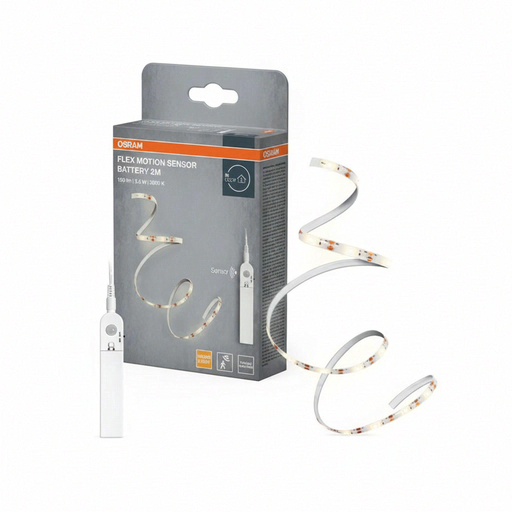
Why this product suits this profile: This battery-powered 2 m light is ideal for cupboards, shelves, hallways and work surfaces where there is no permanent power connection.
The motion sensor reduces unnecessary continuous lighting. Battery operation also avoids having an unsuitable power supply at the installation site.
2 m length, motion sensor and battery operation; suitable for dry indoor areas.
We have put together a complete, regularly updated list of products that fully meet these strict selection criteria and the safety regulations applicable in the EU.
A solar-powered string light is not automatically an alternative to an LED strip. It uses a solar panel and is mainly suitable for decorative outdoor areas. For continuous app control or TV backlighting, a mains-powered model is generally more suitable.
First, degrease and dry the surface. Then plan the route without any sharp bends, remove the protective film section by section and press the strip down firmly. For corners, gentle curves or suitable connectors are preferable.
The actual service life depends on factors including operating time, heat generation, power supply, installation and the quality of the adhesive bond. Reliable information should be taken directly from the technical specifications of the relevant product. A strip that remains switched on while wound up can heat up more than usual and should not be operated in this way.
The costs depend on power consumption, daily operating time and your electricity tariff. A 24 W model running for three hours a day uses 0.072 kWh per day in theory. For an accurate estimate, multiply this figure by your electricity rate and the intended usage period.