
Lieferung heute & morgen

Qualitätsgarantie

Willkommens-Angebote freischalten: KOSTENLOSE Lieferung | Bis zu 80 % RABATT | Kostenlose 30-Tage-JoyPlus-Testphase
App herunterladen
LED strip lights are ideal for indirect lighting behind your TV, under wall cabinets, in shelving, wardrobes or gaming areas. The range includes everything from a basic LED strip with a power supply to a smart LED strip with Matter support. However, differences in power supply, colour temperature, IP rating and installation can determine whether your lighting is practical for everyday use.
A 5 m LED strip needs a suitable power supply. With longer runs, brightness can vary if the power supply, voltage and power consumption are not compatible. A USB-rechargeable light is a good choice for a short LED strip in a wardrobe, but it may not be suitable for decorative lighting over five metres.
Check the following:
A standard RGB LED strip usually produces one colour along its entire length. An RGBIC model, on the other hand, can display several different colours at once across separate sections. So, if you want chasing lights, colour gradients or dynamic patterns, check the specific control technology.
The controls also vary. An LED strip with a remote often uses infrared. A smart LED strip with Matter, on the other hand, needs a compatible smart home system and, depending on the model, Wi-Fi, Bluetooth or a hub.
Many LED strips for indoor use have an IP20 rating. This means they are not designed for damp conditions or direct contact with water. For a bathroom, balcony or outdoor area, a model that is not specifically rated for these conditions is not suitable.
Before sticking the strip in place, make sure the surface is dry, clean, free of grease and as smooth as possible. Adhesion may be weaker on rough plaster, dusty wood or silicone-coated surfaces. At corners, guide the strip around a gentle curve rather than bending it sharply at the LEDs.
A warm white LED strip at around 2700 to 3000 K is often a good fit for living rooms and bedrooms. Neutral or cool white light is better suited to work surfaces, cupboards and areas where you need to see details clearly. An RGB model offers decorative colours, but it may not be a substitute for functional task lighting.
For white light, the Ra value may also be relevant. A higher value indicates more natural colour rendering, but it should always be considered alongside the other technical specifications.
A COB LED strip packs its light sources more closely together. This can create a more even line of light, with fewer individual points visible when the strip is installed indirectly. SMD strips, such as 5050 models, are widely available and often offer RGB colours.
For more even illumination, you can also use an LED profile with a diffuser or install the strip out of sight. Don’t judge the advertised brightness in lumens in isolation: the installation distance, cover and colour temperature all affect the result.
A dimmable LED strip lets you adjust the light to suit different situations. If you’re considering a model with a motion sensor, check its detection range, switch-off time and battery life. In a wardrobe, hallway or beside your bed, automatic activation may be more convenient than using a remote.
Before buying a smart product, check:
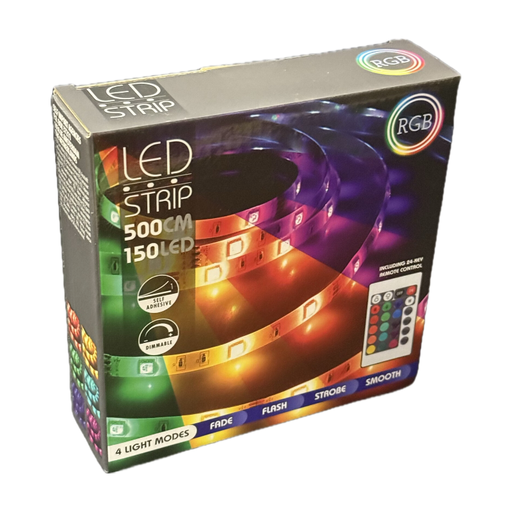
Why this product suits this use: This 5 m RGB strip offers a choice of colours, dimming and infrared remote control, making it suitable for TV walls, shelving or parties.
The specifications state the 5 m length, 24 V output, IP20 rating and IR remote control. This makes the usage limitations and controls clear before you buy.
150 SMD LEDs, RGB colours, dimmable brightness and a power supply included.
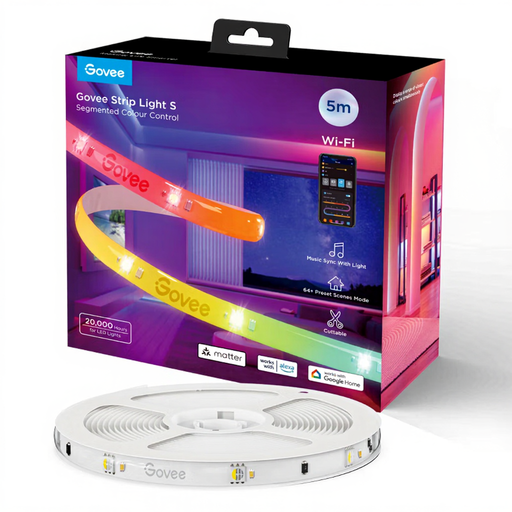
Why this product suits this use: For smart home users, this model offers Matter support, RGBIC segment control, and Wi-Fi and Bluetooth connectivity.
The product specifications state 24 W, 24 V DC, indoor use and a protective coating. However, the strip should not be used in damp areas or while still wound up.
5 m length, 24 LEDs per metre, Matter support and segmented RGBIC colour control.
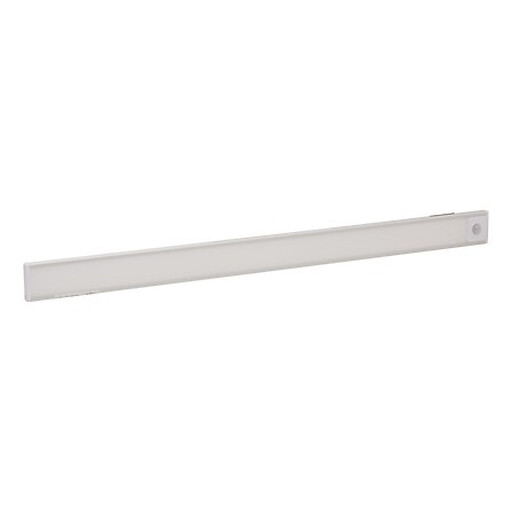
Why this product suits this use: This compact LED light is designed for cupboards, shelving, work surfaces and hallways, and runs on a rechargeable battery with a motion sensor.
The rechargeable battery, USB charging and automatic shut-off after around 30 seconds are all clearly specified. So you won’t assume that a permanent mains connection is required.
60 cm length, 6000 K cool white light, 2200-mAh battery and motion detection up to around 2 m.
We’ve put together a complete, regularly updated list of products that meet these strict selection criteria and fully comply with the safety regulations in force in the EU.
First, clean and dry the surface thoroughly. Measure the length you need and cut the strip only at the marked points. Then connect the strip, controller and power supply as instructed. If it runs from the mains, don’t switch it on while it is still on the reel, as heat can build up.
Its lifespan depends on factors including how long it is used, heat dissipation, the power supply and how it is installed. A lifespan stated by the manufacturer is a guide, not a guarantee of a specific period of use. Regular use with sufficient ventilation can help limit heat stress.
Energy use depends on the wattage and how long the strip is on each day. A 24 W model running for one hour uses 0,024 kWh. To work out the running cost, multiply this figure by your electricity price. Dimming the strip or setting it to switch off automatically can reduce energy use in everyday use.