
Lieferung heute & morgen

Qualitätsgarantie

Willkommens-Angebote freischalten: KOSTENLOSE Lieferung | Bis zu 80 % RABATT | Kostenlose 30-Tage-JoyPlus-Testphase
App herunterladen
LED strips are ideal for creating indirect lighting on furniture, behind the TV, at your desk or in your car. Options range from simple warm-white LED strip lights to app-controlled RGBIC systems that sync with music. However, differences in power supply, installation and suitability for different settings aren’t always obvious from product descriptions.
Many LED strips can be cut at marked points, but they can’t be extended indefinitely. The key factors are voltage, wattage and the maximum length supported by the power supply. Using an unsuitable power supply with a 24-volt strip can cause flickering, reduced brightness or damage.
Another common mistake is leaving the strip wound up while it’s switched on. This prevents heat from dissipating properly. Always fully unroll LED strips before switching them on, and attach them only to suitable, clean surfaces.
Some listings use terms such as water-resistant or protected without clearly stating the IP rating. An indoor LED strip with an IP20 rating isn’t designed for splashes, bathrooms or outdoor use. Even a model described as coated should only be used as specified by the manufacturer.
For kitchens, bathrooms or balconies, check the IP rating, permitted ambient temperature and installation position. Moisture or excessive heat can cause the adhesive and electronics to come loose or become damaged more quickly.
RGB LED strips with app control, voice control or music synchronisation offer plenty of customisation options. However, they often require Bluetooth, 2.4 GHz Wi-Fi or a specific app. Before buying, decide whether a remote control will do or whether you want to connect the strip to a smart home system.
Car interior lighting also requires you to consider 12-volt compatibility, cable routing and installation position. A product designed for indoor use isn’t necessarily suitable for a vehicle.
For living rooms and bedrooms, a warm-white LED strip with a colour temperature of around 2,700 to 3,000 kelvin is a popular choice. At 3,000 kelvin, the light is warm with a yellowish-white tone. Neutral or cool white is better suited to worktops, wardrobes and areas where you want clear, bright lighting.
Brightness is measured in lumens, while wattage mainly indicates power consumption. For practical wardrobe lighting, the beam angle and light distribution also matter. For example, the Aigostar model is listed as providing 1,800 lumens at 3,000 kelvin, with an 18-watt rating and a 140-degree beam angle. The product information gives a colour rendering index of Ra ≥ 80.
Common LED strips run on 5, 12 or 24 volts of DC power. The power supply must match the strip’s voltage and total wattage. With longer strips, a 24-volt system can offer advantages for power distribution, while short USB models are easier to use with suitable connections.
Check for:
For longer installations, aluminium profiles can help secure the strip and dissipate heat. Adhesive alone may not hold reliably on every wall, wallpaper or rough surface.
A dimmable LED strip with a remote control is enough for simple accent lighting. App control adds features such as timers, scenes and brightness adjustment. Depending on the model, RGBIC systems can display several colours in different sections of the strip at the same time. This can work well in gaming set-ups or behind a TV, but not every product offers this feature.
LED strips with motion sensors are useful in wardrobes and hallways. Key factors include detection range, how long the light stays on and battery capacity. According to the product information, a 60 cm LED strip light runs on a 3.7-volt, 2,200 mAh battery, detects movement from around two metres away and switches off again after about 30 seconds.
The recommendations below group specific models by intended use and verifiable product details.
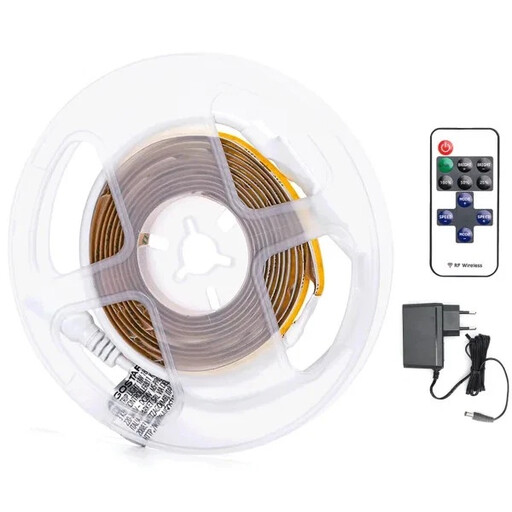
Why it suits this profile: This 2-metre warm-white COB strip is designed for shelves, furniture and indirect lighting in dry indoor spaces. The product description states that the power supply and controller are included.
The stated DC 24-volt voltage, strip length and 18-watt power consumption make it easier to check compatibility with your power supply. The strip can only be cut at the marked points.
COB technology, 3,000 kelvin, 1,800 lumens and dimmable controller functions, according to the product information.
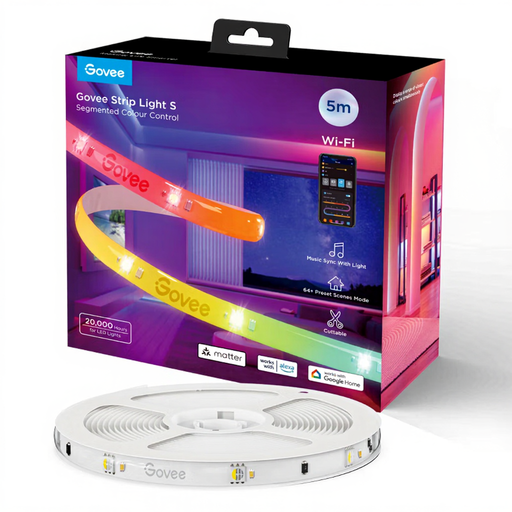
Why it suits this profile: This 5-metre system is for anyone looking to combine app control, segmented colours and smart home compatibility for living spaces, gaming or TV set-ups.
The product description specifies 24 volts, 24 watts, indoor use and 2.4 GHz Wi-Fi. This makes it easier to check power and network requirements before installation.
RGBIC segment control, Matter support, Bluetooth, Wi-Fi and built-in music synchronisation, according to the product information.
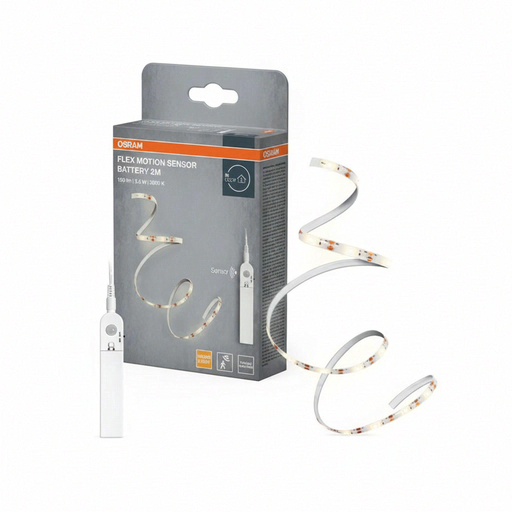
Why it suits this profile: An LED strip with a motion sensor is ideal for wardrobes, hallways or storage areas where you only need the light to come on when movement is detected.
The motion sensor means you don’t need to leave the strip switched on all the time. Before buying, check the product details for battery operation, sensor range and how long the light stays on.
2-metre version with an integrated motion sensor, according to the product name.
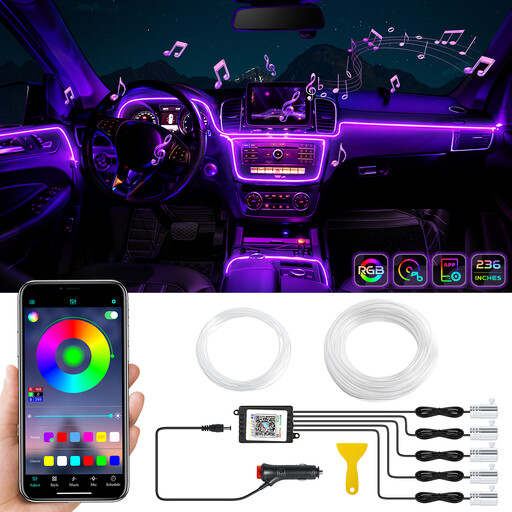
Why it suits this profile: This 12-volt kit is designed for car interiors and combines Bluetooth app control with RGB colours and a sound-activated function.
The stated DC 10–16-volt voltage is suited to the described use in a vehicle. Before installation, check compatibility with the specific connection and plan the cable routing.
6 metres of optical fibre, app control, 29 preset modes and an integrated sound sensor, according to the product information.
We’ve put together a comprehensive, regularly updated list of products that meet these strict selection criteria and fully comply with the safety regulations in force in the EU.
For TV backlighting, choose a strip that suits the size of your screen. According to the product description, the Govee Envisual TV Backlight T2 is designed for 55- to 65-inch TVs and must not be cut. In vehicles, don’t install the strip in the driver’s field of vision or near moving parts, and always check your vehicle’s manual first.
Their lifespan depends on how long they’re used, heat dissipation, the power supply and installation. The Aigostar model is rated for up to 20,000 hours of use. This is a manufacturer’s figure, not a guarantee for every installation. Leaving a strip wound up while it’s on, using the wrong voltage or exposing it to moisture can shorten its lifespan.
Consumption depends on wattage and how long the strip is switched on. A strip rated at 18 watts uses 0.018 kilowatt-hours in one hour of operation. RGB modes, brightness and the length of strip in use all affect actual consumption. For an accurate estimate, check the wattage and power supply details for the specific model.
Many self-adhesive models can be installed without tools. You’ll need a suitable, dry surface and the correct power supply. Take extra care with long installations, vehicle wiring or power supplies that are permanently connected. Work on fixed electrical wiring should be carried out by a suitably qualified professional.