
Lieferung heute & morgen

Qualitätsgarantie

Willkommens-Angebote freischalten: KOSTENLOSE Lieferung | Bis zu 80 % RABATT | Kostenlose 30-Tage-JoyPlus-Testphase
App herunterladen
LED strip lights are ideal for adding indirect lighting behind your TV, under wall-mounted cupboards, inside wardrobes or around your workspace. However, they vary considerably in their power supply, light quality, IP rating and controls. An attractive product image or an “RGB” label alone won’t tell you whether a strip light is right for the space you have in mind.
A 5 m LED strip isn’t automatically suitable for every surface. Before you buy, measure the area you want to cover and check whether the strip can be cut at the points you need. The power supply rating matters too. With a 24-volt system, the power supply, controller and LED strip all need to be compatible.
A strip that’s too long can suffer from voltage drop, which may cause the far end to look dimmer. Running an LED strip while it’s still wound up can also cause heat to build up. Always read the product information and safety instructions before installation.
A classic RGB LED strip mixes red, green and blue, usually displaying the same colour along its entire length. An RGBIC LED strip, on the other hand, can show different colours in different sections at the same time. This is useful for gaming setups, TV areas and decorative lighting effects, but it usually places greater demands on the app, controller and compatibility.
If you only need even background lighting, you may not need zoned controls. For smart LED lighting, also check whether the strip supports Wi-Fi, Bluetooth, Matter or a particular smart home system.
The IP code indicates the level of protection. IP20 is generally intended for dry indoor spaces and offers no protection against moisture. IP44 provides protection against splashes, but is not suitable for immersion in water. For a balcony, garden or covered outdoor area, you need to consider the whole installation: the LED strip, connectors, controller, power supply and battery box.
So, only use indoor and outdoor string lights in places where their stated IP rating is sufficient. An exposed outdoor area has different requirements from a dry balcony beneath a roof.
Colour temperature is measured in kelvin:
A warm-white LED strip gives a different effect from a cool-white LED strip at 6,000 K. For practical lighting, the colour rendering index Ra is also worth considering. A value of Ra ≥ 80 is a useful benchmark for many indoor applications, but it doesn’t replace checking the specific product description.
Check the stated voltage, such as 5 V via USB or 24 V via a power supply. A USB LED strip is suitable for a desk, shelf or portable use, as long as the power source provides enough power. Models with a power supply are generally better suited to longer installations and permanent fitting.
A remote control usually lets you choose the colour, brightness and effects. An LED strip with a motion sensor, by contrast, switches on automatically when it detects movement. This is particularly handy in cupboards, hallways and kitchens, while an app or remote control offers more options for decorative lighting effects.
Self-adhesive backing sticks most reliably to clean, dry and smooth surfaces. Dust, grease and rough walls can reduce adhesion. Check the required length before fitting, as LED strips should only be cut at the marked points.
For longer or more powerful strips, it’s a good idea to fit them to a surface that dissipates heat. Aluminium profiles can help draw heat away and provide more even light distribution. Only bend the strip within the radius specified by the manufacturer, and avoid sharp folds around the LED sections.
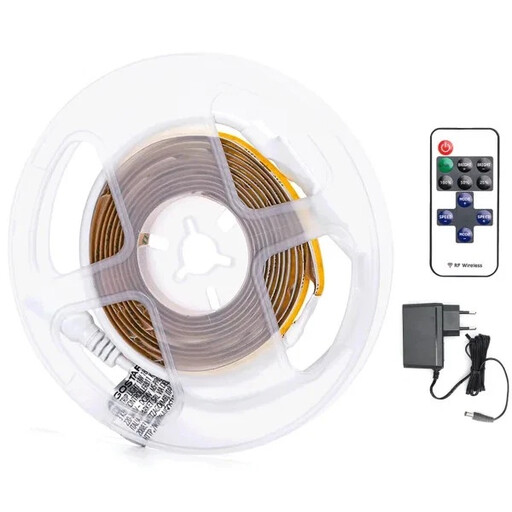
Why it suits this need: This 2 m COB LED strip is designed for dry indoor spaces and, according to the product information, provides warm-white light at 3,000 K.
The stated length, 18 W power rating, 24 V voltage and IP20 rating make its intended use clear.
COB technology, a 140-degree beam angle, controller and power supply, according to the product description.
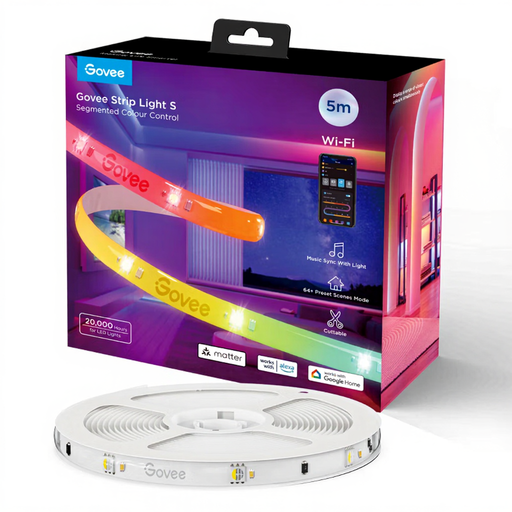
Why it suits this need: App control, RGBIC zones and Matter support make this a great option for a TV wall, gaming setup or smart lighting scheme.
The product description specifically states that it is for indoor use and is rated at 24 W and 24 V, so you won’t mistake it for an outdoor product.
5 m length, Wi-Fi, Bluetooth, Matter, zoned RGBIC control and 2.4 GHz Wi-Fi, according to the product information.
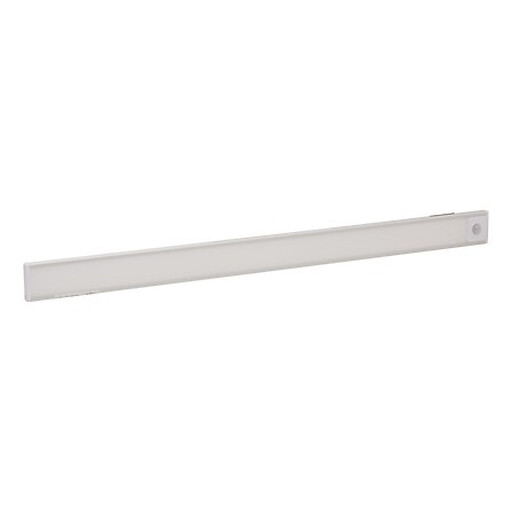
Why it suits this need: With USB charging, a motion sensor and magnetic mounting, this light is designed for cupboards, shelves, kitchens and workspaces.
The product information specifies indoor use, a detection range of around 2 m and a light duration of about 30 seconds after movement is detected.
60 cm length, 6,000 K, 2,200 mAh battery, USB charging and tool-free installation, according to the product description.
We’ve put together a complete, regularly updated list of products that meet these strict selection criteria and fully comply with the safety regulations in force in the EU.
Their lifespan depends on LED quality, how long they’re used, heat dissipation and the power supply. Aigostar states that one of its models can last up to 20,000 hours. This is the manufacturer’s claim, not a guarantee for every installation. Good ventilation and using a suitable power supply can help create the right conditions.
Power consumption depends on the wattage and how long the strip is used. A model rated at 18 W uses 0.18 kWh over ten hours. With RGB and RGBIC products, consumption can vary depending on the colour, brightness and effects. To estimate running costs, check the wattage stated for the strip or per metre.
Many LED strip lights can be cut at the marked points, but not just anywhere. After cutting, you’ll need to consider the connection, polarity and, where necessary, a suitable connector. Before installation, also check that the length, light colour and power supply are right for the intended location.