
Lieferung heute & morgen

Qualitätsgarantie

Willkommens-Angebote freischalten: KOSTENLOSE Lieferung | Bis zu 80 % RABATT | Kostenlose 30-Tage-JoyPlus-Testphase
App herunterladen
An LED strip can provide decorative and functional lighting under wall cabinets, behind the television, inside wardrobes or in a gaming room. However, LED light strips vary considerably in terms of power supply, installation, control and intended use. The wrong choice often only becomes apparent after installation: the strip does not stay securely attached, the length is unsuitable or the desired smart home function is missing.
An LED strip 5 m is suitable for long wall areas, shelving or the back of a television. For wardrobes and individual compartments, however, this length is often unnecessary. Before buying, check the area to be lit as well as the position of the power supply and control box.
Not every LED light strip can be cut or extended at any point. Information about cut marks, connectors and compatible extensions should be clearly stated in the product description.
A classic RGB LED strip mixes red, green and blue, usually offering various individual colours and effects. This does not necessarily mean that individual sections can be controlled independently. An RGBIC model can display segmented colours, provided that the controller and app support this function.
If you only need neutral light for work surfaces, you should instead pay attention to the light colour and colour temperature. For example, an LED strip with 6000 K produces cool white light. A warmer light colour can feel more pleasant in living rooms or bedrooms, provided the model offers this option.
An LED strip with a mains plug requires a socket and is suitable for permanent installation near one. An LED strip USB or a battery-powered model can be installed more flexibly, but must be recharged regularly. Motion sensors can make operation inside a wardrobe or hallway easier, but they do not replace checking the battery capacity and charging time.
Also pay attention to the IP protection rating. IP20 is intended for dry indoor areas and should not be understood as protection against water. For kitchens, bathrooms or outdoor areas, the manufacturer’s specifications must explicitly match the intended location.
The number of LEDs per metre affects the distribution of light. When comparing products, you should check not only the wattage but also whether the manufacturer specifies lumens, LED spacing and the type of LED used. A higher wattage alone does not reliably indicate perceived brightness.
For indirect lighting behind furniture or a TV, decorative lighting modes are often sufficient. Under a kitchen cabinet or at a workstation, even light distribution and a suitable colour temperature are more important than a wide range of colour effects.
Depending on the model, operation may be via:
An LED strip with remote control is straightforward to use, but requires a clear line of sight to the IR receiver. A Wi-Fi LED strip or smart LED strip can be operated via an app and, in some cases, voice control. Before buying, check whether the system you want is compatible with your smart home hub. Matter support can make integration with several platforms easier, but it still requires the right setup.
Self-adhesive LED strips adhere more reliably to clean, dry and smooth surfaces. Dust, grease, textured wallpaper or heat can impair adhesion. The surface should be cleaned and allowed to dry completely before installation.
Avoid tight bends directly around the LEDs. For longer installations, the strip should not be operated while still wound up, as this can cause heat to build up. Additional brackets may be useful for heavier or coated light strips.
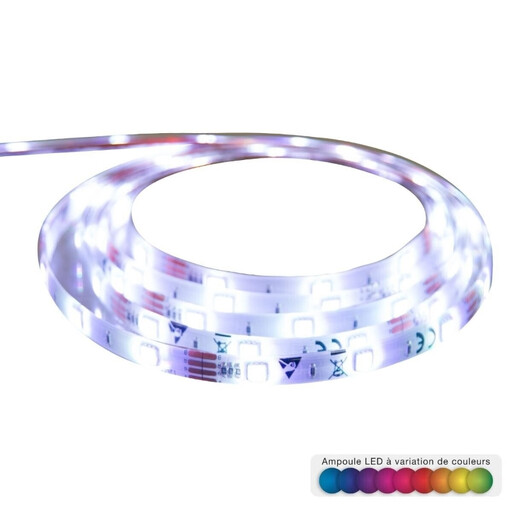
Why this product suits this profile: The 5-metre light strip is designed for decorative indoor lighting on shelves, stair railings or behind a TV and is powered via a mains adapter.
The specified length, mains operation and IR remote control make the basic installation requirements clear. With IP20, it is intended for dry indoor areas.
5 m length, 150 LEDs, remote control and included adapter; according to the product details, it is designed for indoor use.
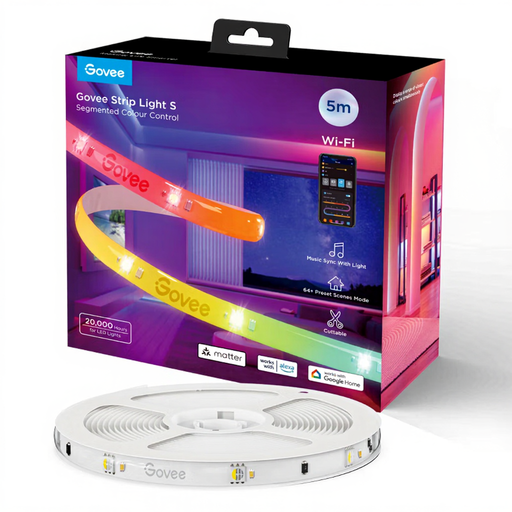
Why this product suits this profile: This model is aimed at smart home users looking for app control, Matter support and segmented RGBIC effects for the living room, gaming room or home cinema.
The specifications state 2.4 GHz Wi-Fi, Bluetooth, Matter and suitability for indoor use. This means you can check compatibility and usage limits before buying.
5 m length, protective coating, RGBIC segment control and support for Matter, Apple Home, Google Home, Alexa and Samsung SmartThings, according to the product description.
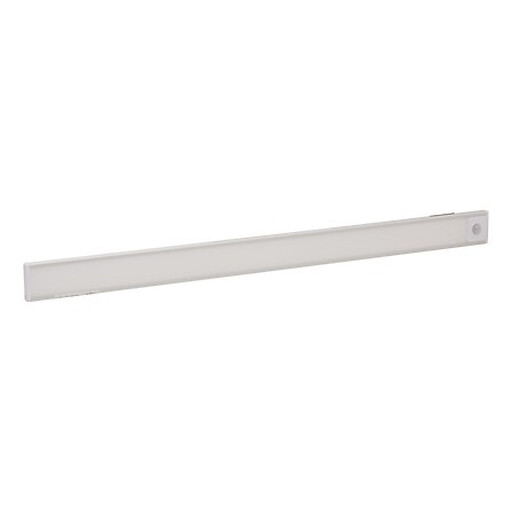
Why this product suits this profile: The 60-cm light bar is designed for wardrobes, shelves, worktops and other areas where cordless supplementary lighting with a motion sensor is needed.
The product details specify the battery capacity, charging time, detection range and operating time. This helps you better assess the maintenance required for the intended use.
6000 K, 3,7 V and 2200 mAh, USB charging, automatic activation by movement up to approximately 2 m away, and magnetic, screw-free installation, according to the product details.
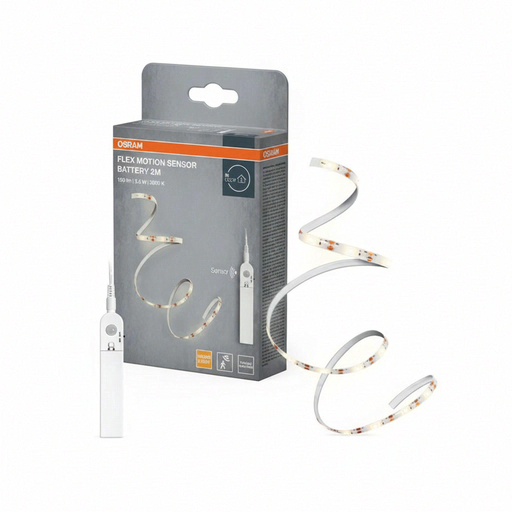
Why this product suits this profile: The OSRAM FLEX MOTION SENSOR BATTERY LED light strip is ideal for users looking for a white, battery-powered solution with motion detection for indoor areas.
The product name explicitly indicates a motion sensor, battery operation and a length of 2 m. This distinguishes it from mains-powered RGB models in terms of intended use.
2 m length, white light and motion sensor; according to the description, it is designed for battery-powered installation.
We have put together a complete, regularly updated list of products that fully meet these strict selection criteria and the safety regulations applicable in the EU.
Consumption depends on the length, LED density, brightness and operating time. Some product specifications state the power consumption in watts as a reference value. To calculate the running costs, you can multiply the wattage by the daily operating time and the unit rate of your electricity tariff. Dimming the lights or using them for less time can reduce consumption.
This is only possible if the manufacturer specifies designated cutting points. Cutting outside these markings can make individual segments or the entire strip unusable. Also check whether a suitable connector is required after cutting.
The actual service life depends, among other things, on heat dissipation, the power supply, operating time and installation. Free-standing installation and operation in accordance with the manufacturer’s instructions can reduce the strain on the strip. Check the technical service-life specifications and keep the installation and safety instructions.