
Lieferung heute & morgen

Qualitätsgarantie

Willkommens-Angebote freischalten: KOSTENLOSE Lieferung | Bis zu 80 % RABATT | Kostenlose 30-Tage-JoyPlus-Testphase
App herunterladen
An LED strip can add a targeted splash of colour to furniture, TVs, shelves or your gaming set-up. But when choosing one, the number of colours or the advertised app isn’t all that matters. Unclear information about length, IP rating and power supply can mean the LED strip won’t fit where you intended, or quickly proves impractical.
A 5 m LED strip isn’t always illuminated along its entire length. With string lights, the total length, lead-in cable and illuminated length are often listed separately. Before buying, check:
You can’t fold an LED strip just any way you like, either. Tight bends can damage the circuit tracks and LEDs.
The IP rating describes how well a product is protected against the ingress of solid objects and water. A model rated IP20 is intended for dry indoor spaces only. IP44 offers protection against splashes, but the product isn’t suitable for immersion. The same applies to IP65: rain and splashes are not the same as prolonged immersion.
If you’re using a strip in the garden, on a balcony or on a terrace, check the IP rating of the power supply and control box too. A solar-powered string light needs a different installation from a mains-powered LED strip.
An RGB LED strip typically produces colours using red, green and blue. Depending on the model, white may be created by mixing these colours. RGBIC LED strips can display different colours in individual sections, making colour gradients and flowing light effects possible. RGBCCT adds adjustable white to RGB, with options ranging from warm to cooler shades of white.
If you mainly want indirect lighting for watching TV or working at your desk, you may not need the most advanced effects controls. But segmented RGBIC effects can be useful for lighting scenes, music synchronisation or gaming.
A mains-powered LED strip needs a suitable socket and enough room for the adaptor or control box. If you’re installing a self-adhesive LED strip, the surface should be smooth, dry and free from dust and grease. Adhesion may be reduced on rough plaster, dusty wood or silicone-coated surfaces.
It’s a good idea to test the strip before installation. This lets you check that the connection cable, controller and socket will all reach the chosen spot. Don’t leave the strip tightly coiled while it’s switched on, as heat can build up.
An LED strip with a remote control is easy to use without setting up an app. Wi-Fi models also let you set schedules, groups and scenes. If you’re considering a Wi-Fi LED strip, check which Wi-Fi band it requires. According to the product information, the Hama model described here is set up using 2.4 GHz Wi-Fi.
A Matter LED strip can be connected to compatible platforms. However, how you control it still depends on the app, smartphone, voice assistant and smart home hub you use. Before buying, check whether Apple Home, Google Home, Alexa, Samsung SmartThings or Home Assistant is actually supported.
“Dimmable” doesn’t automatically mean that every control method offers stepless adjustment. On compatible models, you can adjust the brightness using an app, remote control or voice command. Colour temperature matters if you want functional white light. An RGBCCT model with a range of 2,700 to 6,500 K can produce warmer and cooler shades of white. For purely decorative lighting, colour modes, flowing effects and the number of LEDs per metre are more important.
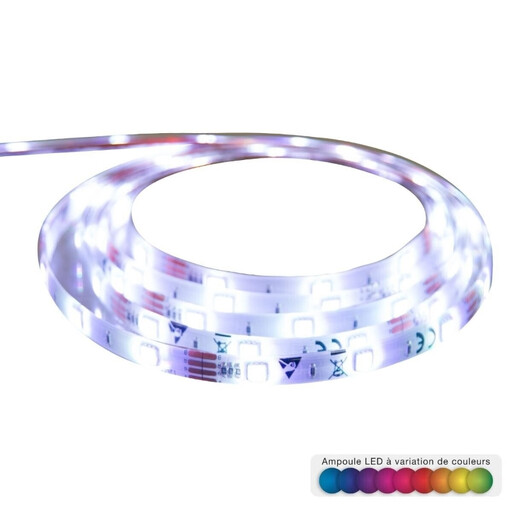
Why this product suits this profile: For simple decorative lighting behind the TV, on shelves or in the bedroom, a remote control is all you need – no app set-up required.
The product information specifies a 5 m length, 150 LEDs, an IR remote control and IP20. This clearly rules out outdoor use.
5 m length, self-adhesive backing, mains power and remote control.
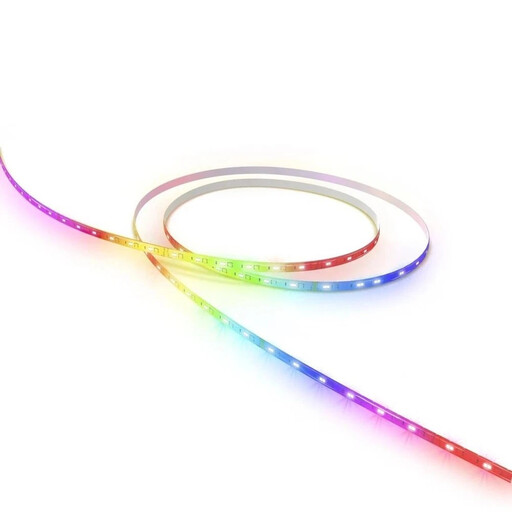
Why this product suits this profile: A good choice if you want to combine app and voice control with integration across several smart home systems.
The specifications clearly distinguish between RGBCCT, Matter, Wi-Fi, dimming and IP20. The strip is intended for dry indoor spaces, not patios or bathrooms without suitable protection.
5 m, 2,700–6,500 K, stepless dimming, cuttable at marked points and Matter compatible.
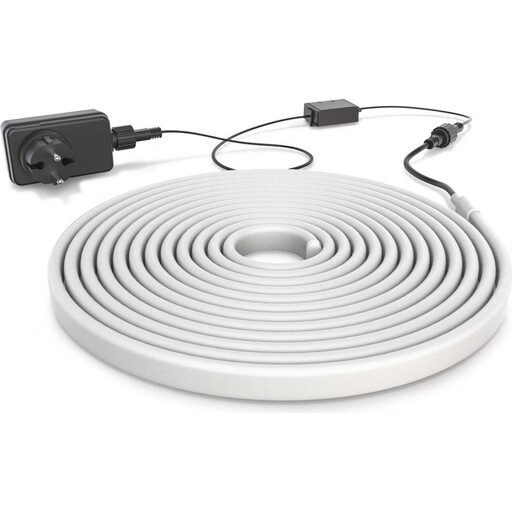
Why this product suits this profile: An option for changing up the lighting in living spaces, kitchens, bathrooms or sheltered outdoor areas exposed to splashes.
The stated IP44 rating isn’t confused with complete waterproofing. The product must not be immersed in water.
RGBIC effects, 5 m length, 300 lm, 24 W maximum power consumption, Matter, app and remote control.
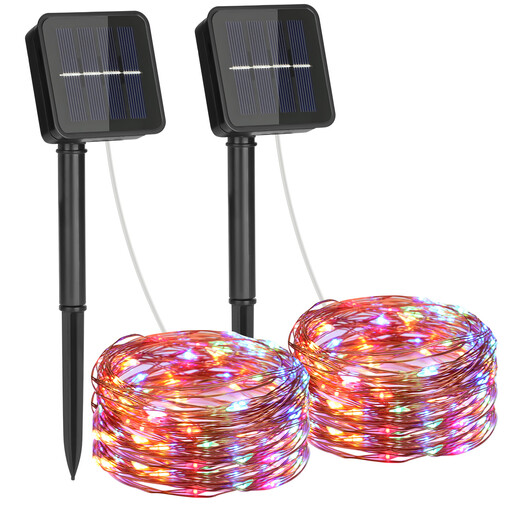
Why this product suits this profile: For gardens, balconies, terraces and seasonal decorations, without needing a permanent power cable running to a socket.
The product information gives the string lights an IP65 rating and notes that the solar panel and battery case must not be immersed.
Two strings, each 12 m long, with 120 LEDs, eight light modes and automatic dusk-to-dawn control.
We’ve put together a complete, regularly updated list of products that meet these strict selection criteria and fully comply with the safety regulations in force in the EU.
First, measure the area you want to cover and unroll the strip fully. The surface must be dry, smooth and free from dust or grease. You can then gradually peel off the backing from the adhesive. Only cut the strip at the marked points. Keep the power supply and control box uncovered and well ventilated.
Its lifespan depends on factors including how long it’s used, heat dissipation, the power supply, installation and surroundings. Don’t leave an LED strip tightly wound while it’s switched on. For outdoor models, you’ll also need to consider moisture, temperature and direct exposure to the elements. Always check the product information for specific lifespan details.
Running costs depend mainly on power consumption, daily usage and your electricity tariff. A 24 W model used for ten hours would theoretically consume 0.24 kWh per day. For a more accurate estimate, multiply the wattage listed on the power supply or product by the actual running time. Lower dimmer settings and shorter usage times can help reduce consumption.