
Lieferung heute & morgen

Qualitätsgarantie

Willkommens-Angebote freischalten: KOSTENLOSE Lieferung | Bis zu 80 % RABATT | Kostenlose 30-Tage-JoyPlus-Testphase
App herunterladen
An LED strip can provide flexible lighting for furniture, worktops and living areas. However, LED strips, LED light bars and decorative light strips can differ considerably in their power supply, light distribution, controls and installation. If you focus only on length or a low price, you could end up with a product that isn’t right for your space or intended use.
A 5 m LED strip will generally need more power than a short light bar for a wardrobe. Check whether a power supply is included and what voltage the strip requires. Battery-powered models don’t need fixed wiring, but their operating time is limited.
A common mistake is switching on an LED strip while it’s still wound up. This can cause heat to build up. Unroll the strip fully before use, and don’t exceed the stated power supply rating.
A traditional RGB LED strip usually mixes red, green and blue across the entire strip. An RGBIC LED strip, by contrast, can display several colours at once in different areas, depending on the model. So if you’re looking for dynamic colour effects for gaming, home cinema or parties, check the controls and how the strip is divided into segments.
Many models are designed for dry indoor spaces. A rating such as IP20 isn’t suitable for areas exposed to splashes. For a kitchen, bathroom or area above a sink, check the specific protection rating in the product description. The self-adhesive backing will also only stick reliably to a clean, dry, smooth surface.
Warm white LED strips of around 2,700 to 3,000 Kelvin are often used in living rooms and bedrooms. Neutral or cool white light may be more suitable for a wardrobe, work area or kitchen worktop. The Kelvin rating describes the light colour, not the brightness.
Brightness is measured in lumens. If a product description states 1,800 lumens, check what length this figure applies to. A high lumen rating alone doesn’t tell you whether the light will be distributed comfortably. With COB LED strips, the light points are often closer together, which can create a more even line of light. Colour rendering figures such as Ra ≥ 80 are worth considering for worktops.
Check the combination of voltage in volts, power in watts and the power supply included. For example, an Aigostar model is listed as having a 24 V DC supply and 18 W of power for 2 m. A 5 m RGB model is described as having a 24 V power supply and a power consumption of around 12 to 18 W.
USB models have different requirements: a USB LED light bar can be powered by a compatible power supply, power bank or battery. The connection must provide the power required. USB-C or USB-A shouldn’t be treated as a quality indicator on its own.
Depending on how you plan to use it, there are several options:
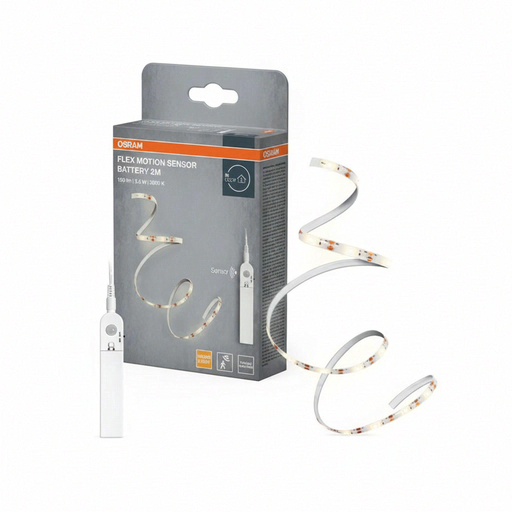
Why this product suits this profile: This 2 m white LED strip with motion sensor is designed for simple indoor lighting without the need to operate a switch, for example in a wardrobe or hallway.
The motion sensor means you don’t need to rely on a switch being within easy reach. Battery power also avoids the need for fixed wiring.
2 m length, white finish and integrated motion sensor, according to the product description.
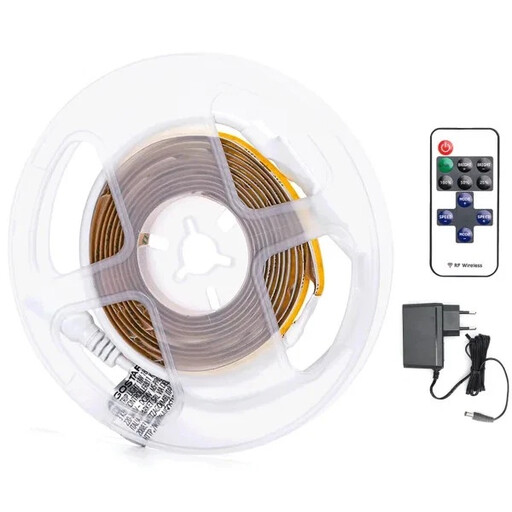
Why this product suits this profile: The specifications—24 V, 18 W, 3,000 K, 1,800 lumens and Ra ≥ 80—make it easier to assess whether it’s suitable for work areas and indirect room lighting.
The product details list the voltage, power, colour temperature, light output and IP20 rating. This makes it easier to plan its use in dry indoor spaces.
COB technology, 2 m length, warm white 3,000 K lighting and included power supply, according to the product description.
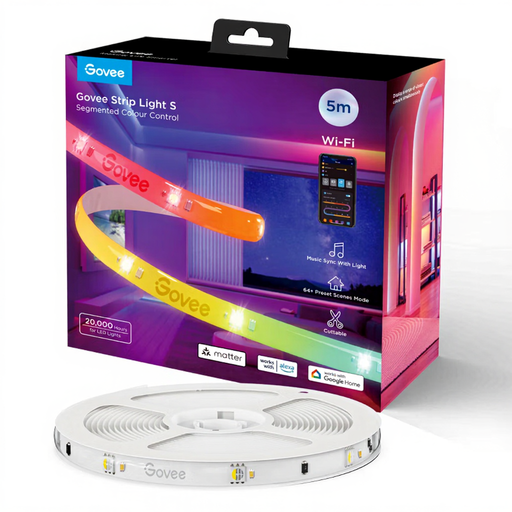
Why this product suits this profile: This 5 m strip with Wi-Fi, Bluetooth and Matter support is aimed at smart home users, gaming setups and home cinema systems.
Compatibility with several smart home platforms is clearly specified. However, the protective coating doesn’t remove the need to check whether the product is suitable for damp areas.
5 m length, RGBIC segment control, app features, plus Wi-Fi, Bluetooth and Matter support, according to the product description.
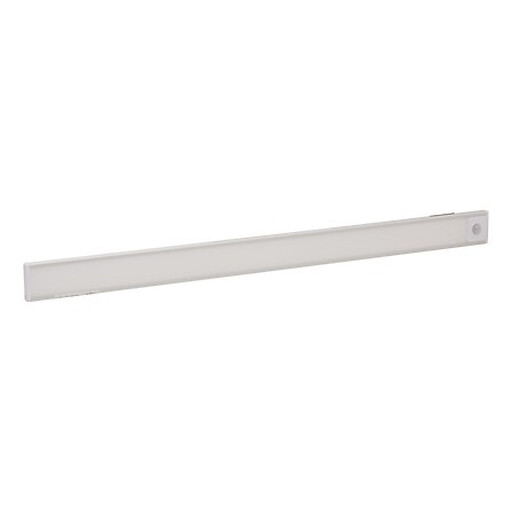
Why this product suits this profile: This 60 cm light bar with a rechargeable battery, USB charging and motion detection is designed for indoor use in wardrobes, on shelves, in coat cupboards and above kitchen worktops.
Details of the battery, charging time, detection range and automatic lighting duration help set clear expectations about its limited operating time. The light bar doesn’t need a permanent mains connection.
3.7 V battery with 2,200 mAh capacity, USB charging, an approximate 2 m detection range and magnetic, screw-free installation, according to the product description.
We’ve put together a comprehensive, regularly updated list of products that meet these strict selection criteria and fully comply with the safety regulations in force in the EU.
The surface should be free of dust, grease and moisture. Check the required length before sticking the strip in place. Only cut at the marked points, and connect the power supply, controller and strip according to the instructions. Avoid sharp bends around corners.
Its actual lifespan depends on how long it’s used, heat dissipation, the power supply and how it’s installed. The lifespan stated by the manufacturer is a guide, not a guarantee for every situation. Don’t leave the strip running while wound up, and protect it from excessive heat.
Power consumption depends on the wattage and how long the strip is used. An 18 W model running for one hour uses 0.018 kWh. With RGB and smart models, controllers, Wi-Fi features and different brightness settings can affect consumption. For a realistic estimate, check the wattage stated for the specific product.