
Lieferung heute & morgen

Qualitätsgarantie

Willkommens-Angebote freischalten: KOSTENLOSE Lieferung | Bis zu 80 % RABATT | Kostenlose 30-Tage-JoyPlus-Testphase
App herunterladen
LED strips are ideal for furniture, shelves, stairs, TV areas and ambient lighting. The range runs from a simple LED light strip with remote control to a Matter-compatible system with app and voice control. But the colours and length advertised aren’t the only things that determine how well a strip works day to day.
Three common buying pitfalls are worth watching out for:
Before you buy, it’s worth checking the technical specifications, power supply and installation requirements.
Measure the area before ordering, and allow for corners, connectors and space for the power supply and controller. Don’t bend a self-adhesive LED strip around sharp edges while it’s switched on. Many models can only be cut at the marked cut points.
For example, a 5 m LED strip can cover longer edges of furniture, walls or the back of a TV. For shorter runs, 2 m may be easier to manage. Check the electrical power rating too: a 24 W product needs a suitable power supply. Don’t cover power supplies, and make sure they have enough ventilation.
With low-voltage models, such as those using 24 V DC, make sure the polarity is correct when connecting the strip. Always follow the manufacturer’s specifications for maximum length and the adapter.
Colour temperature is measured in kelvins:
The lumen figure indicates the light output. Consider it alongside the strip’s length: a high total figure on a short strip won’t necessarily provide even lighting. A COB LED strip can create a more uniform line of light thanks to its closely spaced light sources. For example, the Aigostar model is listed as providing 1,800 lm at 3,000 K, with a colour rendering index of Ra ≥ 80.
A self-adhesive LED strip is handy for smooth, dry and grease-free surfaces. Dust, textured walls and untreated wood can affect how well it sticks. Clean and dry the surface before installation, and check the position before removing all the backing paper.
Depending on your needs, you could choose one of the following control options:
The IP rating is also important. For the products mentioned here, IP20 is intended for dry indoor spaces. A model rated IP44 offers greater protection against splashes, but still isn’t suitable for immersion in water. Always check the manufacturer’s specific guidance for your intended installation location.
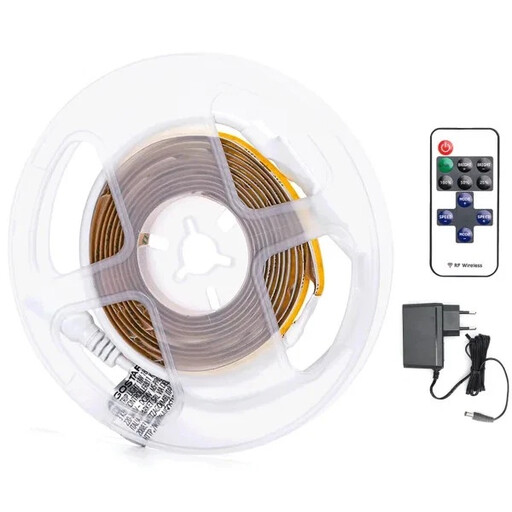
Why it suits this user: This 2 m COB LED strip, with a colour temperature of 3,000 K, is ideal for shorter runs on furniture, shelves or decorative alcoves indoors. A power supply is included.
The specified length helps avoid buying more strip than you need. You’ll still need to follow the marked cut points and use the 24 V power supply.
COB technology, 1,800 lm, 3,000 K, 18 W and a stated colour rendering index of Ra ≥ 80.
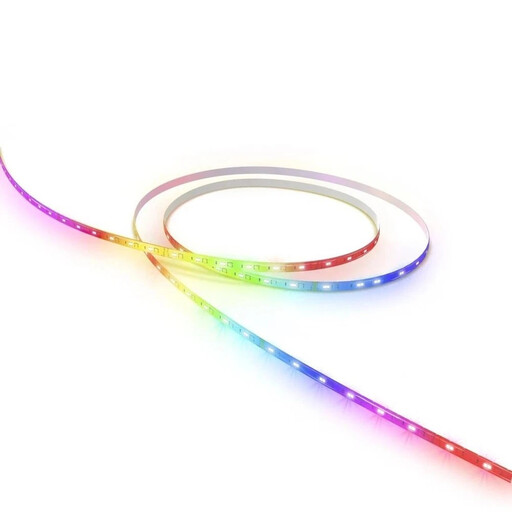
Why it suits this user: This 5 m model combines RGB colours with adjustable white light from 2,700 to 6,500 K, as well as app, voice and Matter control.
The product details clearly state that it is rated IP20 for dry indoor spaces and can only be cut at marked points. This makes it easier to check that the location and installation method are suitable in advance.
Matter, Wi-Fi, stepless dimming, timers, scenes and support for multiple smart home platforms, according to the product description.
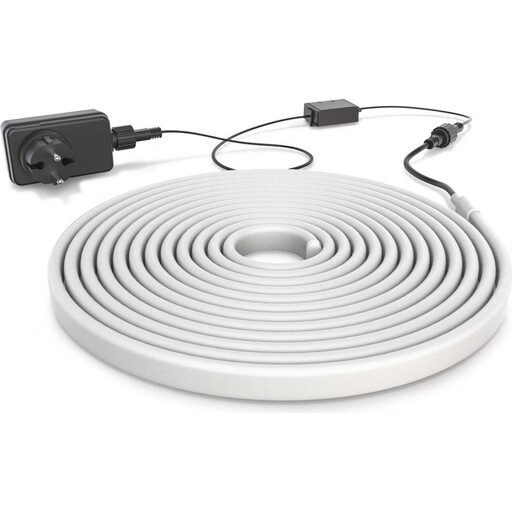
Why it suits this user: This 5 m strip offers RGBIC effects, app and voice control, plus an IP44 rating for locations where occasional splash protection is useful.
The IP44 rating makes it clear that this is different from IP20 models. The strip still isn’t designed to be immersed in water.
RGBIC, Matter, dimmable, remote control, 300 lm and a maximum power consumption of 24 W, according to the product specifications.
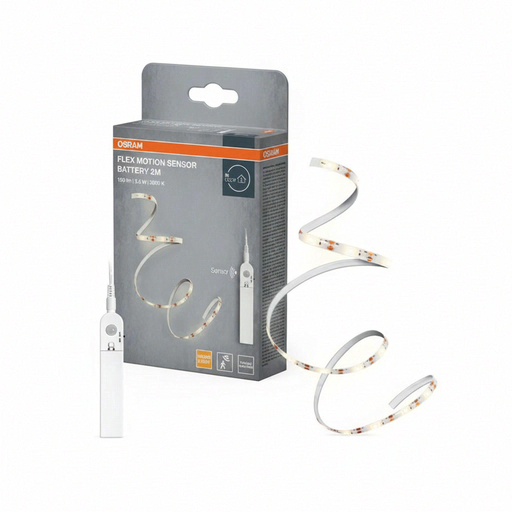
Why it suits this user: The built-in motion sensor is useful in areas where you want the light to switch on automatically, such as inside cupboards or in passageways.
The motion sensor means you don’t need to leave the light on all the time. Before installation, check the sensor’s range, battery requirements and position.
Automatic sensor activation and a design suited to practical indoor lighting.
We’ve put together a complete, regularly updated list of products that meet these strict selection criteria and fully comply with the safety regulations in force in the EU.
First, measure the area and check where the strip can be cut. The surface must be clean, dry and smooth. Only connect the strip once it’s installed, and don’t leave it coiled while it’s switched on, as heat can build up. The power supply and controller need adequate ventilation.
Lifespan depends on product quality, how long the strip is used, heat dissipation and whether it has the correct power supply. The Aigostar COB model’s product details state a lifespan of up to 20,000 hours. This is a manufacturer’s figure, not a guarantee for every installation. Avoiding tight bends and allowing heat to dissipate properly can help improve operating conditions.
Power consumption depends on the strip’s wattage and how long you use it. An 18 W model uses about 0.18 kWh over ten hours. A 24 W model uses about 0.24 kWh over the same period. To work out the running cost, multiply this figure by your electricity tariff. Dimming, schedules and motion sensors can help reduce the time the strip is actually on.