
Lieferung heute & morgen

Qualitätsgarantie

Willkommens-Angebote freischalten: KOSTENLOSE Lieferung | Bis zu 80 % RABATT | Kostenlose 30-Tage-JoyPlus-Testphase
App herunterladen
LED strips are ideal for indirect lighting behind the TV, under wall cabinets, on shelves or in a gaming room. Depending on the model, they can provide decorative RGB lighting, practical task lighting or smart lighting controlled by an app or voice commands. Choosing one may seem straightforward, but some product claims can lead to the wrong purchase.
A 5 m LED strip can cover a large area, but brightness also depends on LED density, power and light output. A long strip with fewer LEDs may look less even than a shorter, denser model. So check more than just the length: look at details such as watts, lumens and the number of LEDs per metre.
The adhesive backing works best on clean, dry and smooth surfaces. Dust, grease, textured wallpaper and heat can all affect how well it sticks. If you’re fitting a strip under kitchen cabinets or along furniture edges, clean and degrease the surface first. Uneven surfaces may need additional clips or brackets.
A standard RGB LED strip produces coloured light using red, green and blue LEDs. RGBIC can display several colours in different sections of the same strip, while RGBCCT also offers adjustable shades of white. If you mainly want to use an LED strip for reading or working, look for a suitable white-light setting and enough brightness, rather than focusing only on the number of colours.
Colour temperature is measured in kelvin (K):
For example, a warm white LED strip with a colour temperature of 3,000 K can create a cosy feel. The Aigostar model is listed as producing 1,800 lumens, with a power rating of 18 W and a colour temperature of 3,000 K. The Ra ≥ 80 rating indicates colour rendering and may be relevant for everyday indoor lighting. Whether it’s right for you depends on the distance from the surface, where it’s fitted and how you plan to use the light.
LED strips commonly run on 12 V or 24 V DC. The power supply must match the voltage and maximum strip length. A 24 V system may be designed to provide a more even power supply over longer runs, but you should still check the manufacturer’s specifications.
Important: don’t leave the strip rolled up while it’s switched on, as heat can build up. The power supply also needs good ventilation and must not be covered. For an Aigostar LED strip rated at 24 V DC and 18 W, use only the specified power supply or the one supplied with the product.
The level of protection is shown by an IP code. IP20 is intended for dry indoor areas and is not suitable for splashes. For bathrooms, kitchens or covered outdoor areas, a model with a higher rating, such as IP44, may be more suitable. Even with IP44, the product must not be submerged, and the manufacturer’s guidance must be appropriate for the specific installation location.
Also check where the cut marks are. A self-adhesive LED strip should only be cut at these points. After cutting, there’s no guarantee that each section can still be used on its own.
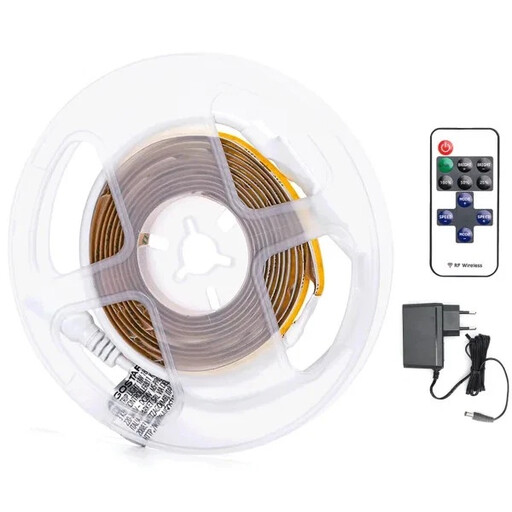
Why this product suits this profile: At 2 m long, this strip is designed for smaller areas, shelves or indirect lighting behind furniture. Its warm white light is suitable for dry indoor spaces.
The product details specify the length, power, light output, colour temperature and 24 V voltage. This makes it easier to plan where to use it than with listings that lack detailed technical information.
COB technology, 1,800 lm, 3,000 K, dimmable brightness and a power supply included. IP20 rating for dry indoor spaces.
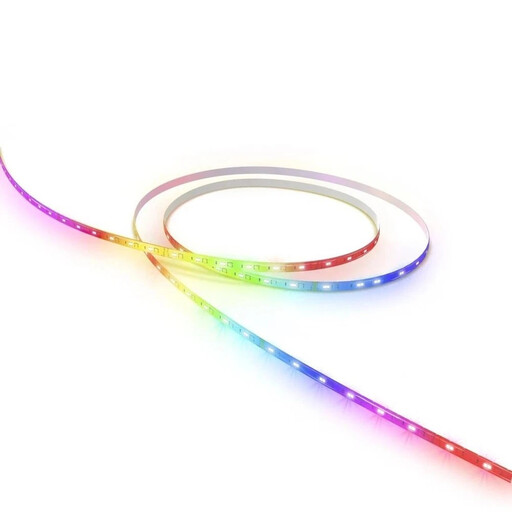
Why this product suits this profile: This model is designed for smart home users who want to combine colour changes, adjustable white light and automation in one app.
The specifications clearly list RGBCCT, stepless dimming, marked cut points, and Matter and Wi-Fi compatibility. This makes it easy to check the features before you buy.
5 m long, 2,700–6,500 K, app and voice control, Matter support, scenes and schedules. The IP20 rating limits use to dry indoor spaces.
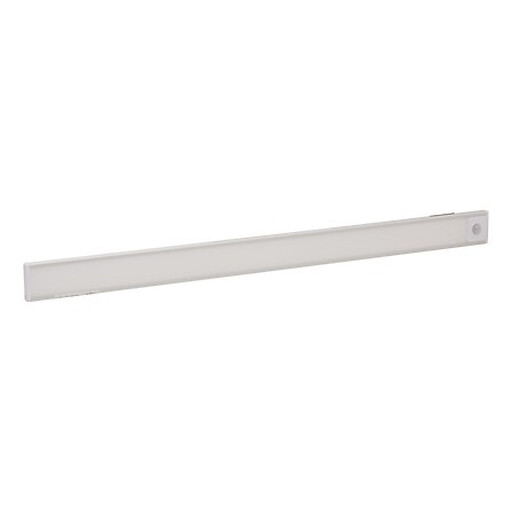
Why this product suits this profile: This LED light bar with a motion sensor is designed for cupboards, shelves, wardrobes and work surfaces where automatic lighting is useful.
The light needs no fixed wiring and charges via USB. Its stated detection range of around 2 m and automatic lighting time of around 30 seconds make it clear what it’s designed for.
60 cm long, 6,000 K, 2,200 mAh battery, magnetic mount and 3M adhesive strips. Designed for dry indoor areas.
We’ve put together a complete, regularly updated list of products that meet these strict selection criteria and fully comply with the safety regulations in force in the EU.
For products with Wi-Fi, Matter or app control, also check whether a 2.4 GHz Wi-Fi connection is required and which platforms are supported. Not every product with a remote control can automatically be integrated into a smart home system.
Lifespan depends on quality, how long the strip is used, heat dissipation and a suitable power supply. Some product specifications quote a lifespan of up to 20,000 hours. This is a manufacturer’s estimate, not a guarantee for every installation. Leaving a strip switched on while rolled up or in a poorly ventilated area can put it under greater strain.
Energy use depends on the power rating and how long the strip is used. A model rated at 18 W running for ten hours would use 0.18 kWh. RGB effects, maximum brightness and additional controls can all affect actual consumption. Your running costs therefore depend on the wattage, daily usage and electricity tariff.
Yes, provided the surface is dry, clean and smooth, and heat can dissipate sufficiently. Flexible RGB or RGBCCT models are suitable for lighting behind a TV. Under cabinets, a warm white LED strip or a motion-sensor LED light bar may be a better choice. The IP rating must be suitable for the installation location.