
Lieferung heute & morgen

Qualitätsgarantie

Willkommens-Angebote freischalten: KOSTENLOSE Lieferung | Bis zu 80 % RABATT | Kostenlose 30-Tage-JoyPlus-Testphase
App herunterladen
LED strips create indirect lighting behind your TV, under kitchen cabinets, in a gaming room or inside your car. Choosing one may seem straightforward at first: pick the length and colour, choose a remote control, stick it on and switch it on. In practice, however, a few common buying mistakes can lead to unnecessary extra costs.
A standard RGB LED strip usually displays one colour along its entire connected length. RGBIC models, on the other hand, can show different colours in several sections at the same time. If you’re looking for chasing effects, colour gradients or segmented patterns, check specifically for terms such as RGBIC, Smart IC or segmented control.
Many LED light strips for living spaces have an IP20 rating. This means they’re intended for dry indoor areas and offer no protection against water. For a bathroom, balcony or other damp area, you’ll need a product with a suitable IP rating. A coated LED strip isn’t automatically suitable for outdoor use, either.
A 5-metre LED strip needs enough space as well as a suitable power supply. If you use the strip while it’s tightly wound, heat can build up. With longer installations, brightness and colour may also vary towards the end of the strip. The surface should be clean, dry and as smooth as possible. Adhesive strips may not hold as securely on porous walls or dusty furniture backs.
Before buying, check the stated operating voltage. A model that runs on 24 V DC must not be connected to an unsuitable power source. LED strips for vehicles, by contrast, are often designed for a 12 V supply. The power supply should match the strip’s power consumption and be used only as described in the product information.
The number of LEDs per metre affects how evenly the strip appears to glow. For example, a standard 5-metre LED strip with 150 LEDs has 30 LEDs per metre. For ambient lighting behind a TV, a decorative glow is often enough. If you want to light a shelf, worktop or cabinet, brightness, distance from the edge and colour temperature matter more.
An LED strip with remote control is ideal for simple colour and brightness adjustments. App control, Wi-Fi, Bluetooth and Matter are better suited to smart home users. LED lighting with music control usually uses a microphone or audio signal to make the colours change in response to sound. It’s a feature for creating atmosphere, rather than precisely synchronising with every beat of a song.
Also consider:
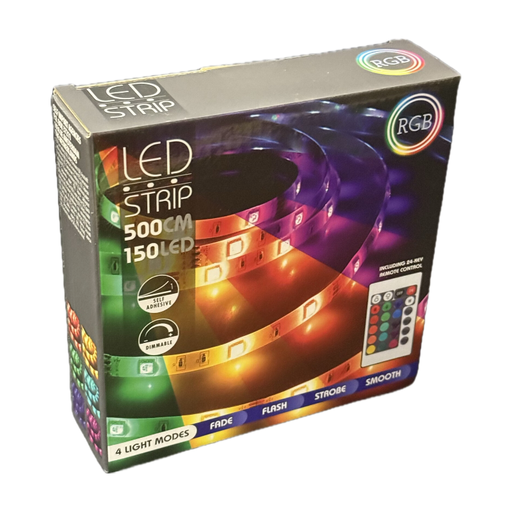
Why it suits this profile: This 5-metre strip is designed for dry indoor spaces. It offers RGB colours, dimming and an infrared remote for effortless ambient lighting.
The product information specifies 24 V, 150 LEDs over 5 m and an IP20 rating, making it easy to check whether it’s suitable for your chosen location before installation.
5 m length, 5050 SMD LEDs, adjustable brightness and remote control; suitable for behind TVs, shelves and living spaces.
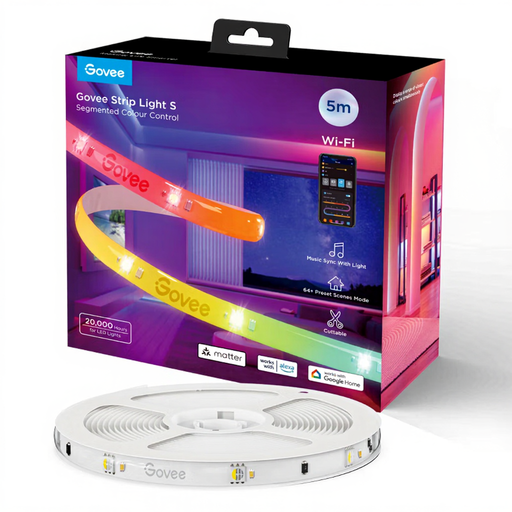
Why it suits this profile: RGBIC segment control, app connectivity, Wi-Fi, Bluetooth and Matter make this a good choice if you want to integrate your LED strip into a smart home setup.
The product information clearly distinguishes between indoor use and the protective coating. It also warns against moisture, sharp bends and using the strip while rolled up.
5 m length, 24 W at 24 V, 24 LEDs per metre, RGBIC segment control and Matter support.
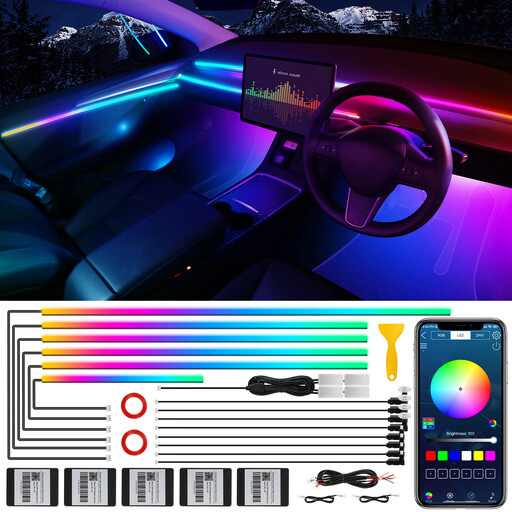
Why it suits this profile: This 12 V kit is designed for a customised lighting setup inside your vehicle. It offers app and music control, as well as two independently controlled zones.
The instructions specify the required 12 V supply and warn against bending the acrylic light guides too sharply. They also explicitly recommend testing the product before installation.
600 LEDs, 10-in-1 kit, Bluetooth app for iOS and Android, touch button, sound function and dual-zone control.
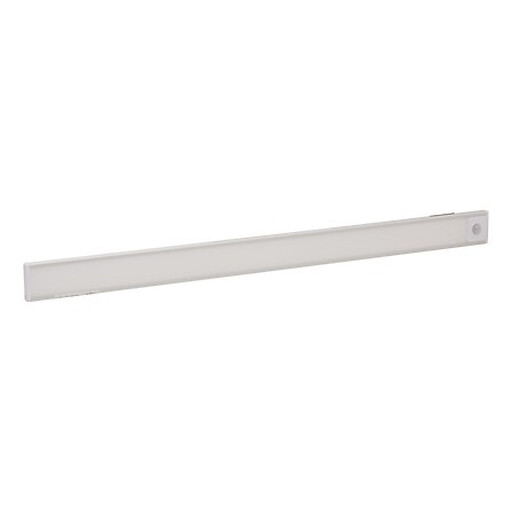
Why it suits this profile: This 60 cm light is designed for cabinets, shelves, dressing areas and work surfaces, where automatic activation is more practical than coloured decorative lighting.
This light is designed for indoor use and has a built-in motion sensor, rather than relying on a light that stays on all the time.
6000 K, 2200 mAh battery, USB charging, motion detection up to around 2 m and automatic lighting for approximately 30 seconds.
We’ve put together a complete, regularly updated list of products that meet these strict selection criteria and the applicable EU safety regulations.
Their actual lifespan depends on factors such as how long they’re used, heat dissipation, the power supply and installation. Don’t leave an LED strip switched on while it’s rolled up, or bend it too sharply. For models with an adhesive backing, installing it on a clean, dry surface will help the adhesive last longer.
Consumption depends on the strip’s power rating and how long you use it each day. A 24 W model uses 0.024 kWh for one hour of operation. To calculate the running cost, multiply this figure by your electricity tariff and the number of hours it’s used. Control boxes may still draw a small amount of power in standby mode.
Many LED strips can be cut at the marked points. Before doing so, check whether you’ll need a new connector or a suitable joining piece afterwards. Cutting outside the marked points can damage individual sections. If your vehicle kit includes several separate sections, make sure you also follow the recommended wiring layout.