
Lieferung heute & morgen

Qualitätsgarantie

Willkommens-Angebote freischalten: KOSTENLOSE Lieferung | Bis zu 80 % RABATT | Kostenlose 30-Tage-JoyPlus-Testphase
App herunterladen
An LED table lamp should provide the right light for its intended use, stand securely and be easy to operate. In practice, unclear product specifications, missing accessories or an unsuitable beam of light can quickly lead to a disappointing purchase. This is particularly worth bearing in mind when choosing a wireless LED table lamp, a USB table lamp or a decorative model: it pays to look at the technical specifications rather than focusing solely on design and marketing claims.
Power consumption in watts indicates how much electrical power the lamp requires. On its own, it does not tell you how brightly the lamp shines. The key figure here is the luminous flux in lumens. For example, a 1 W lamp may produce 105 lm, making it more suitable for accent or orientation lighting than for illuminating a large desk.
A rechargeable table lamp should explicitly list an integrated battery, including its capacity and charging time. Some models are powered solely via USB and require a cable while in use. You should also check whether a mains adapter is included. The Aigostar ambient lamp lists a USB cable, but not a USB mains adapter.
Bluetooth speakers, Qi charging surfaces and changing lighting effects can be useful, but they also increase complexity. If you are looking for a reading lamp for focused work, assess the light distribution, brightness and adjustability first. A decorative table lamp, on the other hand, can deliberately be chosen with a lower luminous flux and a stronger emphasis on creating atmosphere.
For a desk, a directional beam is generally more suitable than purely ambient lighting. The lumen (lm) value helps you compare brightness. Less light may be sufficient for a bedside table or living room, particularly if the lamp emits warm white light.
Colour temperature is measured in Kelvin (K):
A dimmable LED lamp offers greater flexibility. Check whether the brightness can be adjusted in steps or continuously. Changing the colour temperature is not the same as dimming the light.
A battery-powered table lamp should specify its battery capacity, charging connection and operating time. The Aigostar LED clip lamp lists a 3.7 V, 1200 mAh battery, with operating times of 3, 7 or 30 hours depending on the setting. Actual battery life depends on the selected brightness level.
For a USB table lamp, 5 V DC and the appropriate power source are important. A computer, power bank or USB mains adapter may be suitable, provided the voltage and current match the product specifications. For example, an 8 W monitor lamp is listed as requiring a 5 V, 2 A USB power supply.
Measure the available space before buying. A compact lamp measuring 90 mm in diameter and 260 mm in height takes up little desk space, but may appear taller than expected on narrow shelves or surfaces. A clip lamp is worth considering for small desks because it leaves part of the desktop free. Key factors include the maximum clamping thickness, a secure grip and protection against scratches.
For lights used in the bathroom, on a balcony or on a terrace, you should check the IP rating. A specification such as IP20 indicates use in dry indoor areas and does not mean that the lamp is protected against water.
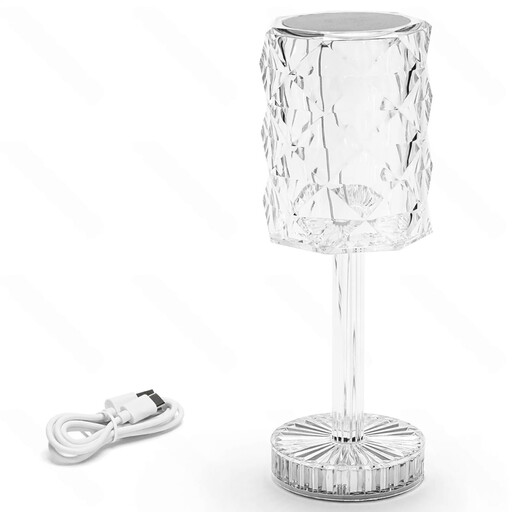
Why this product suits the profile: This compact ambient lamp uses 1 W, provides 105 lm and operates via USB at 5 V. Three adjustable colour temperatures between 2700 and 6500 K allow it to be used in a range of situations.
The product data lists both the luminous flux and the power consumption. This makes it easier to assess the lamp realistically as an accent or bedside lamp, rather than expecting powerful desk lighting.
105 lm, USB cable and adjustable colour temperature; dimensions of 90 mm diameter and 260 mm height.
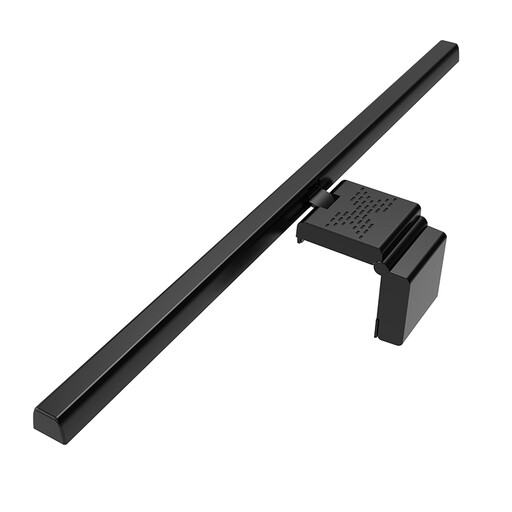
Why this product suits the profile: This monitor lamp is designed for home-office users with large or dual screens. The 50 cm light attaches to the top of the monitor and requires no additional desk space.
The asymmetrical light distribution is designed to illuminate the desk surface. Even so, adjust the position so that the light does not shine directly into your eyes or create distracting reflections on the screen.
Three colour temperatures of 3000, 4500 and 6500 K, plus continuous brightness adjustment; USB operation at 5 V and 2 A.

Why this product suits the profile: This clip lamp is suitable for desks, shelves or reading situations where flexible positioning is important. Its integrated 1200 mAh battery allows you to use it without a permanently connected cable.
The specifications list the battery, charging method and several operating times. Check the desk edge before fitting it; the lamp has a flexible, adjustable holder.
160 lm, three brightness levels and a stated operating time of 3, 7 or 30 hours depending on the setting.

Why this product suits the profile: This compact lamp features touch control, an integrated lithium battery and warm white light. It is designed for indoor use on a dining table, side table or bedside table.
Its feature limitations are clearly defined: this model is neither dimmable nor adjustable. If you need these functions, choose a different type of lamp.
Wireless operation, touch switch, USB charging cable and compact dimensions of 14 × 14 × 21.2 cm.
We have put together a complete, regularly updated list of products that fully meet these strict selection criteria and the safety regulations applicable in the EU.
On a desk, the beam should reach the work surface without shining directly into your eyes or onto the monitor. Right-handed users generally place an LED desk lamp on the left, while left-handed users place it on the right. This helps prevent your hand from casting a shadow over the writing area. A monitor lamp should be attached securely in the centre of the screen.
For a bedside table, a low, warm white lamp with an easily accessible switch is often sufficient. Cables should not trail across walkways. For battery-powered models, it is advisable to choose a permanent charging spot so that the lamp is sufficiently charged before its next use.
Consumption depends on the lamp’s power rating and how long it is used each day. A 1 W lamp running for ten hours uses 0.01 kWh in theory. With dimmable models, actual power consumption may be lower depending on the setting. For an exact cost comparison, you need the local electricity price and the stated wattage.
Many models have a permanently integrated LED. If it cannot be replaced, the entire lamp must be replaced when the light source fails. Some products specify an LED lifespan; this should be understood as the manufacturer’s technical specification. For battery-powered lamps, charging cycles, heat and the selected brightness level affect practical service life.
Not automatically. Check the required voltage and current. A lamp designed for 5 V can be operated from a suitable USB port. For higher requirements, such as 5 V and 2 A, the power source should be able to provide these values. Do not use an unsuitable or damaged cable.