
Lieferung heute & morgen

Qualitätsgarantie

Willkommens-Angebote freischalten: KOSTENLOSE Lieferung | Bis zu 80 % RABATT | Kostenlose 30-Tage-JoyPlus-Testphase
App herunterladen
An LED table lamp can brighten your desk, serve as a bedside lamp or add a decorative touch to your living room. But looks aren’t the only thing to consider when buying one. Many products claim to offer “eye protection”, an extra-long battery life or a range of features, without clearly setting out the technical details that matter most.
Three common buying pitfalls are worth watching out for:
Brightness is measured in lumens (lm). As a rough guide:
The effect also depends on the lampshade, distance and beam angle. A reading lamp should direct the light onto your work area as precisely as possible. A decorative table lamp, on the other hand, can be deliberately softer and less bright.
Colour temperature is measured in kelvin (K). A warm white table lamp at around 2700 to 3000 K usually feels subtle in a living room or bedroom. More neutral or cooler settings can make things easier to see at your desk.
Models with a CCT function let you switch between several colour temperatures. According to the product details, the Aigostar Light07 covers a range of 2700 to 6500 K. For a touch-control table lamp, check that the controls are clearly explained: does a short tap switch it on and off, while a longer touch adjusts the brightness?
Size matters on a bedside table or a small shelf. A compact lamp saves space, but may have a smaller illuminated area. For a battery-powered table lamp or cordless table lamp, check that the stated run time suits how you plan to use it.
For USB models, check whether the package includes just a cable or a mains adaptor as well. The Aigostar Ambient table lamp runs on DC 5 V via USB; according to the product description, the adaptor isn’t included. For a desk lamp, a stable base, a neatly routed cable and an adjustable head are also practical features to look for.
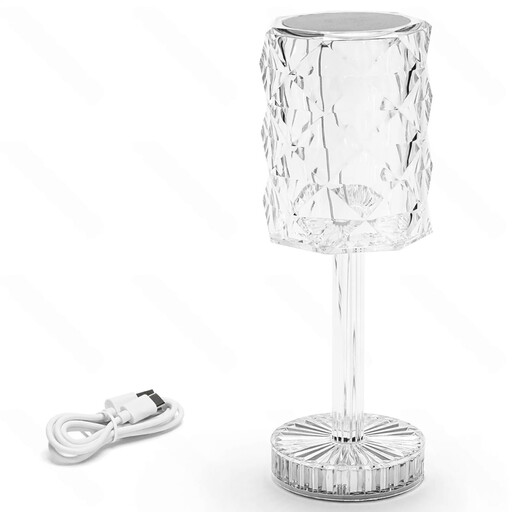
Why it suits this profile: This compact LED table lamp is ideal for shelves, small bedside tables and decorative lighting. USB power means you can connect it to a computer, power bank or USB mains adaptor.
The product details specify a luminous flux of 105 lm and three colour temperatures from 2700 to 6500 K. This makes it easier to see that the lamp is better suited to accent lighting than as a full-strength task light.
1 W power, 105 lm, three colour temperatures and a compact size of Ø 90 × 260 mm.
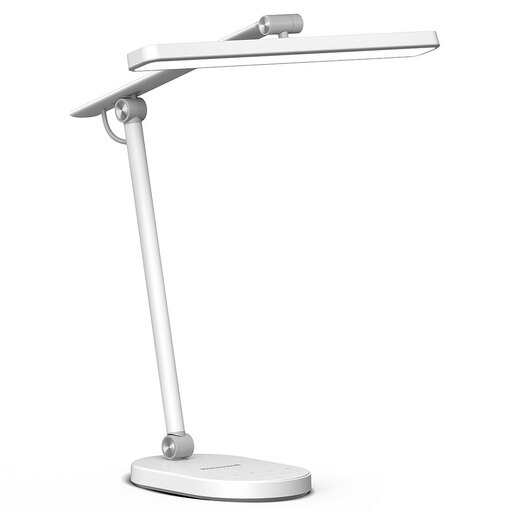
Why it suits this profile: With several brightness settings, three colour temperatures and an adjustable arm, this LED desk lamp is well suited to longer periods of work or study.
The listed specifications include 700 lm, five brightness levels and a colour temperature range of 3000 to 5000 K. Claims about RG0 and glare reduction should be understood as manufacturer product claims.
700 lm, touch controls, a sensor for automatic brightness adjustment, a memory function and a 60-minute timer, according to the product description.
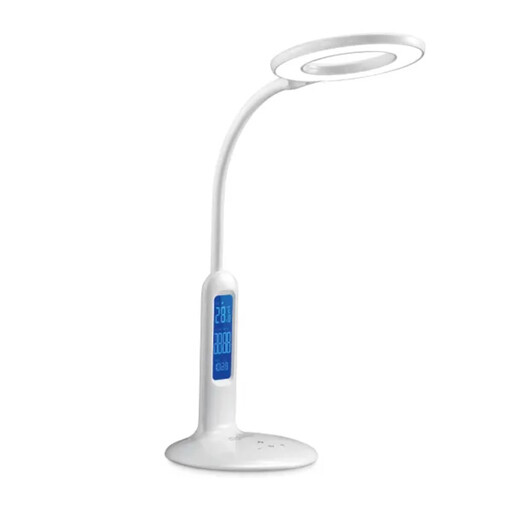
Why it suits this profile: This lamp combines task lighting with calendar, temperature and alarm displays. That makes it a useful option for a home office, studying or a bedside table.
The product specifications clearly state 360 lm, 7 W, touch dimming and the colour temperature range. This makes it easier to assess the extra features separately from the lamp’s lighting performance.
Adjustable arm, 2700 to 6500 K, 360 lm and a digital display for the time, date and temperature, according to the product description.

Why it suits this profile: This battery-powered USB table lamp is designed for dining tables, side tables and small rooms where you want to keep cables out of sight.
The product description clearly states that the lamp is neither dimmable nor adjustable. This helps you factor in its limitations before buying.
Built-in battery, USB charging cable, touch switch, warm white light and an IP20 rating for indoor use.
We’ve put together a complete, regularly updated list of products that meet these strict selection criteria and fully comply with the safety regulations in force in the EU.
For reading and focused work, around 300 to 500 lm is often a useful guide. Positioning, beam angle and the size of your work area matter too. A lamp with 105 lm is better suited to accent or mood lighting.
That depends on the battery capacity, charging time and run time. Before buying, check the charging connection and what’s included in the package. A cordless table lamp is convenient, but needs to be recharged regularly. A mains-powered lamp, by contrast, provides continuous light as long as it’s within reach of a socket.
Running costs depend on the lamp’s power, how long you use it and your electricity tariff. A 8 W lamp used for five hours a day consumes around 1.2 kWh per month. To work it out for yourself, use: Power in watts × hours of use ÷ 1000 = kilowatt-hours. The actual cost depends on your electricity price per kilowatt-hour.