
Lieferung heute & morgen

Qualitätsgarantie

Willkommens-Angebote freischalten: KOSTENLOSE Lieferung | Bis zu 80 % RABATT | Kostenlose 30-Tage-JoyPlus-Testphase
App herunterladen
An LED table lamp should not only look good, but also work reliably in everyday use. Many products appear similar at first glance: warm white light, touch controls, battery operation or a modern design. However, differences become apparent in the power supply, dimming technology, materials, protection rating and ease of use.
Three common buying misconceptions are particularly likely to lead to the wrong choice:
A mains-powered table lamp is suitable for fixed locations such as a bedside table, sideboard or desk. It provides continuous light, but requires a spare socket and remains tied to its intended location.
A wireless table lamp or rechargeable table lamp offers greater flexibility. Check the following before buying:
With a rechargeable USB-C table lamp, you can often use existing charging accessories more easily. However, actual runtime depends on brightness, lighting mode and battery condition.
Light colour is measured in Kelvin. Warm white light of around 3,000 Kelvin is commonly used in bedrooms, living rooms and decorative areas. A table lamp with several colour temperatures may also offer neutral white light for reading or working.
Pay attention to the type of control:
An LED bedside table lamp with a memory function can be convenient if you regularly use the same light level in the evening. For workspaces, you should also consider the lamp’s height, light distribution and glare.
Metal, aluminium, glass, acrylic, ABS and silicone are combined differently depending on the product. A heavy or non-slip base can provide greater stability on a bedside or dining table. Transparent or multi-layered shades often distribute light more softly than a completely exposed light source.
For an outdoor table lamp, the rule is simple: only models with an explicitly stated protection rating should be used in sheltered outdoor areas. Even with IP44 protection, you should not expose the lamp to continuous rain, standing water or a high-pressure jet. In children’s bedrooms and bedrooms, you should also avoid sharp edges, hot surfaces, damaged cables and loose small parts.

Why this product suits this profile: This compact, mains-powered bedside lamp is designed for fixed locations such as bedside tables, shelves and small desks.
The mains power supply avoids reliance on battery charge. Four touch dimming levels and a memory function are clearly specified.
LED light with 3,000 Kelvin, 6 watts and a transparent double-globe shade made from glass and acrylic.

Why this product suits this profile: At 15.7 inches high, this model is aimed at users who want to combine design, variable light control and an additional charging function.
The specifications distinguish between three colour temperatures and continuous dimming. This provides a more precise description than a generic label such as “dimmable lamp”.
Touch control, three light colours and an integrated USB port in the base; the product description states that the construction is made from steel and aluminium.

Why this product suits this profile: This portable lamp is designed for bedside tables, camping, dining tables and sheltered outdoor areas when there is no socket nearby.
The IP44 protection rating is clearly stated, but should still be understood as protection against splashing water. According to the product specifications, the quoted runtime of up to 80 hours applies at the lowest brightness setting.
4,000-mAh battery, four touch dimming levels, 360-degree light distribution and rechargeable, wireless use.
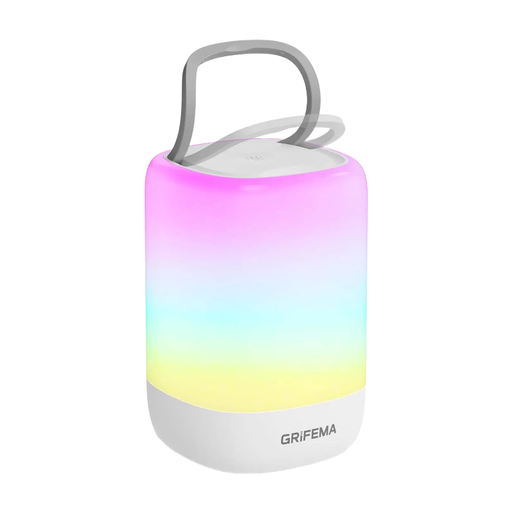
Why this product suits this profile: This compact night light can be used in bedrooms, children’s rooms, while camping or as coloured accent lighting.
According to the product description, dimming is controlled by holding the touch button, from 100 to 5 per cent. USB-C charging and an automatic switch-off after 30 minutes are also specified.
Warm white light, seven RGB colours, touch control and a stated 1,500-mAh lithium-ion battery offering up to 15 hours of use.
We have put together a complete, regularly updated list of products that fully meet these strict selection criteria and the safety regulations applicable in the EU.
Consumption depends on the power rating and how long the lamp is used each day. For a mains-powered lamp, you will find the wattage in the technical specifications. Rechargeable models also require energy to charge. A lower dimming level generally reduces power consumption, although the precise figure may vary depending on the design.
The lifespan of the LED light source is often specified in operating hours. Some products, for example, are rated for up to 50,000 hours. This manufacturer’s figure describes the light source under specific conditions and does not automatically correspond to the lifespan of the battery, touch sensor or charging electronics.
Yes, provided the brightness, colour temperature and controls suit the intended use. A rechargeable table lamp is particularly practical if you do not want a cable on your bedside table. If you regularly read, you should also check that the lamp is bright enough and that the desired light level remains available without frequent recharging.