
Lieferung heute & morgen

Qualitätsgarantie

Willkommens-Angebote freischalten: KOSTENLOSE Lieferung | Bis zu 80 % RABATT | Kostenlose 30-Tage-JoyPlus-Testphase
App herunterladen
An LED table lamp with a touch dimmer should be easy to use, take up little space and suit its intended location. In practice, however, poor purchases often happen not because of the lighting technology itself, but because of unclear information about the battery, brightness and controls. So before you buy, it's worth looking at the actual specifications rather than generic marketing claims.
A cordless table lamp needs a battery. That's why the key details aren't just the words "rechargeable" or "portable" – you also need to check the charging method, the stated battery capacity and how the lamp performs at low or high brightness. Some models only work with a mains plug and are therefore designed for a fixed spot on a bedside table.
Also check whether a USB cable, charging adapter or charging station is included in the box. For a rechargeable table lamp, a USB-C port can be more practical for everyday use than a proprietary charging cable.
The number of dimming levels alone tells you very little about the actual light output. Much more meaningful are lumens (lm) and the colour temperature in Kelvin (K). A lamp with 210 lm, for example, is better suited to a bedside table, sideboard or decorative lighting than to a large desk.
The control logic should also match how you'll use it: depending on the model, you might tap to switch between levels, touch and hold for stepless dimming, or use a rotary control. These differences matter if you need to operate the lamp at night without fumbling around.
An RGB night light or a colour-changing table lamp offers extra design possibilities. For a hallway, however, a table lamp with a motion sensor can be more practical. A timer is useful in a children's room or with a dimmable bedside lamp, while in an office, a constant, warm white or neutral light colour is usually more important.
Look for specific details about the switch-off time, sensor range, colour temperature and battery. If this information is missing, it's hard to judge whether the lamp is suitable.
For a decorative table lamp or a children's night light, a lower light output is often sufficient. A lamp for reading or working, on the other hand, should offer enough lumens and distribute the light evenly. Warm white light is typically in the range of around 2,700 to 3,000 K and is often chosen for bedrooms and living areas. The exact suitability depends on the room size, the lampshade and your personal needs.
Mains-powered models provide continuous light but need a socket. Battery-powered lamps are more flexible to position but need to be charged regularly. With a battery-operated table lamp, you should pay attention to the battery capacity, charging port and a realistic runtime estimate. The actual usage time changes depending on the brightness level you select.
Check the height and footprint, especially on small bedside tables. Metal, ABS, PC, glass or acrylic all affect weight, appearance and maintenance. Electrical lamps should only be used in dry indoor spaces unless the manufacturer states otherwise. A damaged lamp must not be used. For products intended for children, always follow the age recommendations and supervision instructions.
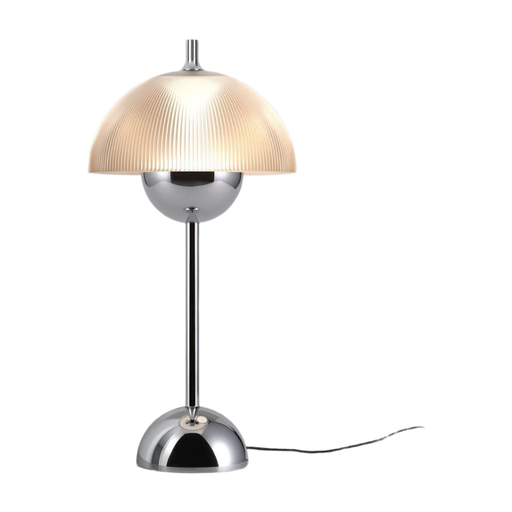
Why this product fits the profile: This compact LED table lamp runs on mains power and offers four touch dimming levels. It's ideal for a bedside table, shelf or desk if you don't need a battery-powered solution.
The product details clearly state the four dimming levels, warm white light at 3,000 K and the fixed mains operation.
LED light source, four-level touch control and memory function; no assembly required according to the product description.

Why this product fits the profile: This 21 cm tall battery-powered table lamp combines cordless placement with three touch dimming levels and warm white light.
The battery, USB charging capability, 210 lm and 3,000 K are all listed as concrete product specifications.
Integrated rechargeable battery, 2 W LED and compact dimensions of 9 × 9 × 21 cm.
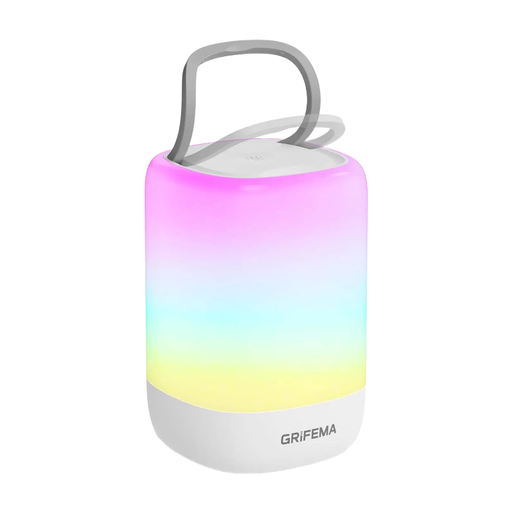
Why this product fits the profile: This model is designed for bedrooms, children's rooms or camping and combines touch dimming, RGB colours and a timer.
The specifications mention the USB-C port, a 1,500 mAh battery, dimming down to 5% and automatic switch-off after 30 minutes.
Warm white light, seven RGB colours and a static or automatically changing colour mode.
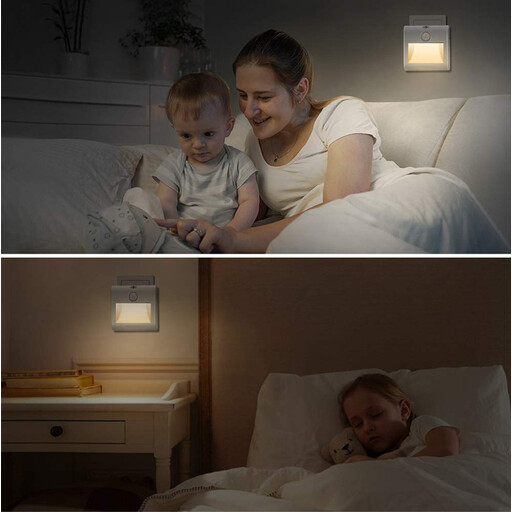
Why this product fits the profile: Two plug-in lights with motion and dusk sensors are ideal for hallways, stairs, bedrooms or bathrooms.
The technical specifications state a detection range of 3 to 5 m, activation in darkness and touch dimming with a memory function.
Two lights in a set, 1 W power consumption per lamp and constant or sensor-based operating mode.
We've put together a full, regularly updated list of products that fully meet these strict selection criteria and the safety regulations in force across the EU.
A touch-sensitive sensor detects contact on the designated surface. Depending on the model, a quick tap turns the lamp on or off, while further touches change the brightness level. Some lamps dim when you touch and hold. The exact operating sequence is given in the instruction manual.
The consumption depends on the power, operating time and brightness level. A lamp with 2 W uses 20 Wh over ten hours of operation. To work out the running costs, you can convert the power into kilowatts and multiply it by your electricity tariff. With battery-powered lamps, you also need to factor in the energy needed for charging.
For a bedside table, compact dimensions, an easy-to-reach touch control and several low brightness levels are important. Warm white light around 3,000 K is often chosen for bedrooms and living areas. If you want to position the lamp flexibly, you can choose a rechargeable table lamp. For a hallway or stairs, on the other hand, a model with a motion sensor is more practical.