
Lieferung heute & morgen

Qualitätsgarantie

Willkommens-Angebote freischalten: KOSTENLOSE Lieferung | Bis zu 80 % RABATT | Kostenlose 30-Tage-JoyPlus-Testphase
App herunterladen
A sophisticated LED TV backlight can fundamentally transform the viewing experience. It visually extends the picture beyond the screen, creates an immersive atmosphere, and can help reduce eye strain in dark rooms. However, with the multitude of technologies and features on the market, making a choice can be complex. This guide offers objective orientation to help you decide on the right system for your needs.
Before you make a decision, several technical aspects should be considered. These criteria will help you find the functionality that meets your requirements for a home theatre or gaming room lighting setup.
The ability to dynamically adapt the lighting colours to the on-screen content is a central feature of modern systems. There are two primary approaches to retrofitting an Ambilight-like effect:
User-friendliness depends heavily on the available control options. Basic models often come with only an infrared remote. More advanced systems offer an LED strip with app control via Bluetooth or Wi-Fi. This allows for more detailed customisation of colours, brightness, and effects. For smart home users, compatibility with voice assistants like Amazon Alexa or Google Assistant is a relevant factor. Another popular feature is LED lights with music sync, where an integrated microphone picks up the rhythm of music or game audio and translates it into light effects.
The type of LEDs used determines the visual capabilities of the light strip:
Based on the criteria mentioned, we have compiled a selection of products that cover different use cases and requirements.
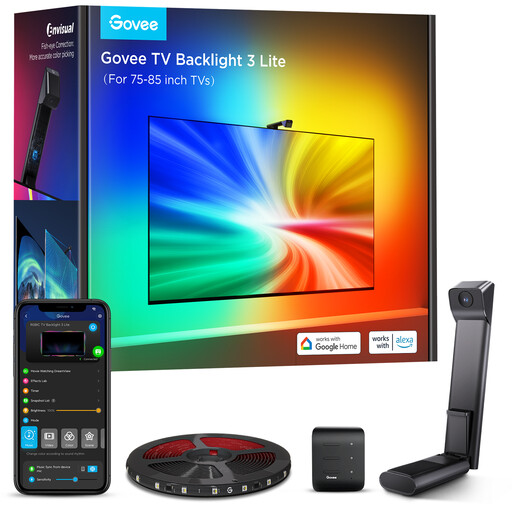
Why it stands out: This system is specifically designed to create highly immersive ambient lighting for large televisions. It uses an upgraded fisheye camera and RGBICW technology to project screen colours onto the wall behind the TV with precision and fluidity. The "W" in RGBICW stands for an additional white LED chip, which enables purer and brighter white light.
Pros:
Who it's for: Owners of large TVs who are looking for a high-performance, responsive system to retrofit dynamic backlighting and who value seamless smart home integration.
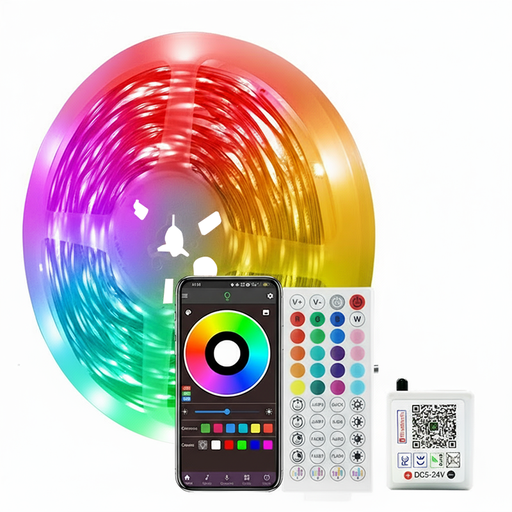
Why it stands out: With a length of 10 metres, this LED strip offers great flexibility for room design. It's suitable not only as a TV backlight but also for accenting entire rooms, such as for wrap-around gaming room lighting. The dual control via app and remote offers convenience for various situations.
Pros:
Who it's for: Users looking for a versatile and long LED solution that can be used for both TV backlighting and general ambient lighting in the room, while also being easy to control.
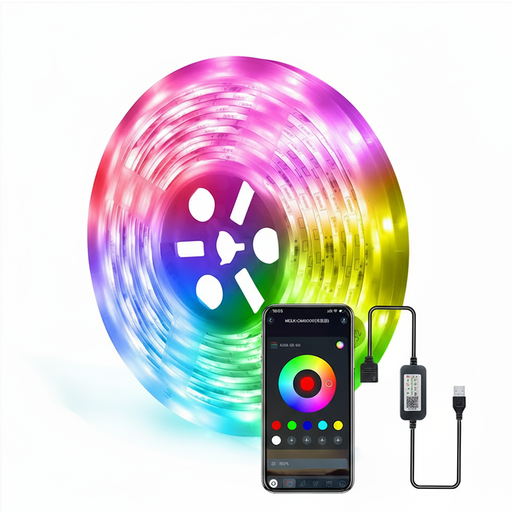
Why it stands out: This model is distinguished by its simple power supply via a standard 5V USB port. This allows it to be powered directly from the TV, a monitor, or a power bank without needing an extra power adapter. At just under 3 metres long, it is ideal for small to medium-sized screens.
Pros:
Who it's for: Users looking for a simple and cost-effective solution for smaller TVs or PC monitors. The USB power supply makes it particularly practical for desk setups and gaming nooks.
The products presented cover common use cases. However, if you are looking for lighting with different specifications or for other purposes, a wider range of options is available.
Explore our entire selection of Noise-Reactive LED Lighting to compare more models.
Indirect TV lighting can reduce the harsh contrast between a bright screen and a dark environment. This effect, known as "Bias Lighting," can be perceived as more comfortable by many people and can potentially lead to less eye fatigue during long movie or gaming sessions. However, this is not a medical application.
The abbreviation RGBIC stands for "Red, Green, Blue + Independent Control." Unlike conventional RGB strips that can only display one colour at a time, an RGBIC LED strip has integrated circuits (ICs). These allow individual segments of the strip to be controlled independently. The result is smooth colour gradients, rainbow effects, and a much more precise representation of dynamic content, as required for syncing with a TV picture.
The most common method for retrofit systems is the use of a camera. It is attached to the TV and continuously films the screen content. Software analyses the dominant colours at the edges of the picture and sends the corresponding colour commands to the LED strips in real-time. This creates the illusion that the image extends beyond the physical frame of the television onto the wall behind it.