
Lieferung heute & morgen

Qualitätsgarantie

Willkommens-Angebote freischalten: KOSTENLOSE Lieferung | Bis zu 80 % RABATT | Kostenlose 30-Tage-JoyPlus-Testphase
App herunterladen
An LED under-cabinet light with a motion sensor can illuminate a kitchen, wardrobe, shelving unit or hallway without permanent wiring. Wireless models with a rechargeable battery and adhesive mounting are particularly practical for rented homes and retrofitted installations. However, products differ significantly in terms of dimensions, sensor behaviour, light colour and charging intervals.
If you focus only on a high number of LEDs or a particularly low price, you can easily overlook important details. Three common misconceptions occur particularly often with this product category:
Before buying, measure the available space precisely. An LED light strip 40 cm long, for example, is suitable for longer wall units or shelves. For narrow compartments, 20 or 30 cm may be a better fit.
According to the product details, the 40 cm light from the selection measures 400 × 38 × 10 mm. Its slim housing can be mounted under cabinets, on shelves or inside cupboards. The 20 cm version has stated dimensions of 200 × 38 × 10 mm, while the 30 cm version measures 300 × 38 × 10 mm.
For an under-cabinet light without drilling, the mounting materials are crucial. Clean the mounting surface before applying the light and allow it to dry completely. An additional mechanical fixing may be required on rough, heavily textured or damp surfaces. The product must not be mounted above hobs, sinks or other areas regularly exposed to water or intense heat unless the manufacturer expressly permits this.
A USB rechargeable LED lamp does not require a permanent power socket. Nevertheless, check the following:
According to the product description, the 40 cm and 30 cm models are fitted with a 1100 mAh lithium battery and DC 5 V at 0.5 A. The 20 cm model uses a stated 800 mAh battery. Actual operating time depends on how often the sensor is triggered, how long the light remains on and which brightness setting is used. A blanket runtime figure would therefore be misleading.
According to the product details, suitable USB chargers, power banks or computer ports can be used for charging. Only use compatible power sources, and do not continue charging a damaged or swollen battery.
With a PIR motion sensor light, the stated range should suit the intended location. The PIR lights presented here specify a detection range of approximately 3 to 5 metres. This range is generally sufficient inside a deep wardrobe; in a long hallway, the positioning should be planned more carefully.
An LED strip with 3 colour temperatures offers more choice than a light with just one fixed colour. According to the product data, the models listed provide:
Colour temperature does not describe brightness. You should also check the stated luminous flux in lumens, where available. For comparison, the separate 42 cm LED strip specifies approximately 150 lumens, 4000 K and around 2.5 W, according to the product description. However, the listed specifications do not mention a built-in PIR sensor, so it is more suitable as manually operated supplementary lighting.

Why this product suits the profile: The compact 20 cm length is suitable for small cupboards, shelf compartments and short work areas. Two lights allow you to use them in separate locations.
The product details specify PIR detection, USB charging and adhesive mounting without drilling. This means the sensor and mounting method are clearly defined before purchase.
2-piece set, 21 LEDs, 800 mAh battery and three stated colour-temperature ranges.
Why this product suits the profile: The 40 cm design is suitable for longer wall units, wide shelves and wardrobes where a shorter light would cover only part of the area.
The dimensions, PIR range of 3 to 5 m and charging specification of DC 5 V/0.5 A are clearly stated. This makes it easier to compare the light with the installation location and available USB chargers.
61 LEDs, 1100 mAh battery, ABS plastic and metal, plus three colour-temperature ranges according to the product description.
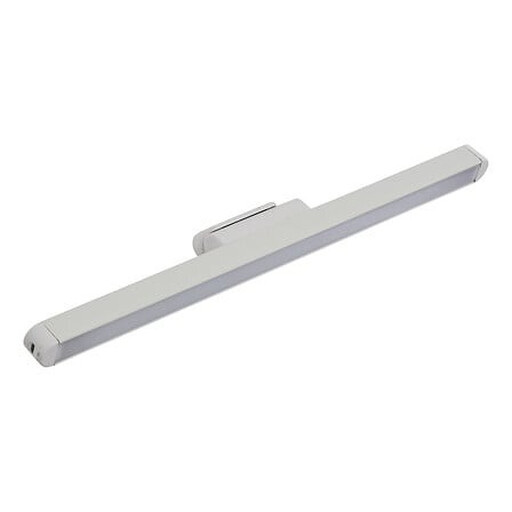
Why this product suits the profile: Suitable for mirrors, dressing areas, shelves and work surfaces where constant supplementary lighting is preferred without automatic motion activation.
The product description explicitly states that the strip can be removed for charging and that the light direction is adjustable. This makes regular recharging more convenient.
42 cm length, approximately 150 lumens, 4000 K, integrated 2000 mAh battery and USB charging according to the product details.
We have put together a complete, regularly updated list of products that fully meet these strict selection criteria and the safety regulations applicable in the EU.
For safe use, do not install the light directly in damp or hot areas. When using an LED cupboard light in a wardrobe or hallway, choose a position where the sensor will not be obstructed by doors, clothing or decorations.
Also bear the following in mind:
An LED kitchen under-cabinet light is only suitable if its technical specifications match the installation location. For directly illuminating a work surface, you should also look for even illumination and sufficient distance from splashing water.
Many wireless models are attached using adhesive strips and, according to the product description, do not require drilling. The surface must be clean, dry and able to support the light. On sensitive surfaces, tenants should first check whether the adhesive strip can be removed without leaving residue.
It is not possible to give a reliable fixed runtime without information about switch-on time, brightness and activation frequency. A larger battery, such as 1100 mAh instead of 800 mAh, only indicates the capacity. Frequent sensor activations and long switch-on times increase the need for recharging.
While operating, LED lights generally require less electrical power than many older light sources. With a battery-powered light, electricity consumption mainly comes from regular recharging. For a reliable assessment, compare the stated power rating in watts with the actual usage duration.