
Lieferung heute & morgen

Qualitätsgarantie

Willkommens-Angebote freischalten: KOSTENLOSE Lieferung | Bis zu 80 % RABATT | Kostenlose 30-Tage-JoyPlus-Testphase
App herunterladen
An LED under-cabinet light with a motion sensor can illuminate dark worktops, cupboard interiors or hallways without a fixed electrical installation. For tenants and DIY enthusiasts in particular, a wireless under-cabinet light, USB charging and drill-free installation are practical features. However, unclear product specifications and exaggerated advertising claims often lead to unsuitable purchases.
Many listings simply say “sensor light”. What matters is whether a PIR motion sensor is actually integrated. A PIR sensor responds to changes in the infrared radiation emitted by people. It therefore does not detect every small movement equally reliably and can be obstructed by furniture, doors or unsuitable installation.
Look for specific information about the detection range, detection angle and activation logic. The lights presented here, for example, specify a range of 3 to 5 metres. This is sufficient for a small kitchen cupboard, but the position should be planned more carefully for a long hallway.
The number of LEDs alone says little about the actual lighting performance. Information such as lumens, power consumption and light distribution is more meaningful. A 20-centimetre-long light with 21 LEDs is suitable for a small cupboard, while a longer version with 61 LEDs can cover a larger area.
If the lumen rating is missing, you should not assume a particular level of brightness. A kitchen cupboard light is generally intended as supplementary lighting and does not automatically replace compliant general or task lighting.
A rechargeable LED cupboard light needs to be charged regularly. Check the following:
Adhesive tape does not automatically make a magnetic LED light with no drilling: for the products mentioned, the product description states that installation is carried out using adhesive tape. Magnetic mounting is only provided if magnetic brackets or a magnetic back are explicitly included. In the kitchen and bathroom, the light should also not come into contact with water or high levels of humidity.
First, measure the available space. Common sizes in this selection include:
An LED light bar with a motion sensor should be positioned so that the sensor is not directly blocked by a side wall or door. In wardrobes, mounting it towards the upper front section may be sensible; beneath a kitchen wall unit, a position close to the front edge is often more practical.
The terms warm white, neutral white and cool white describe the colour temperature:
Models with three colour temperatures can be used more flexibly in kitchens, bedrooms or hallways. A dimmable cupboard lamp, on the other hand, is only available if a dimming function is explicitly stated. Choosing the light colour does not replace a dimming function.
According to the product specifications, the 20-centimetre models in this selection have an integrated 800-mAh battery. The 30- and 40-centimetre versions are specified as having 1,100 mAh. Each is charged via USB at 5 V and 0.5 A. Actual operating time depends on how often the sensor is triggered, how long the light remains on and which brightness level is used.
For regular use, a convenient charging point is recommended. An LED cupboard light with USB can, for example, be charged via a laptop, power bank or suitable USB charger. Only use compatible power sources and do not open the housing.

Why this product suits this profile: Its short design is ideal for small cupboard compartments, shelves and narrow recesses. The two lights can be used in different locations.
The PIR sensor, USB charging and the three specified light colours are clearly stated. Installation is drill-free and uses adhesive tape.
20 cm length, 21 LEDs, 800-mAh battery and 2-piece set.
Why this product suits this profile: The technical specifications make planning straightforward: 30 cm length, 41 LEDs, PIR detection from 3 to 5 m and three colour temperatures.
The specifications state more than just “bright light”: they also include the number of LEDs, a battery capacity of 1,100 mAh and the USB charging specification.
Slim 300 × 38 × 10 mm format, 2-piece set and three light colours.
Why this product suits this profile: The 40 cm length is designed for longer shelves, kitchen areas or wide wardrobes where a compact light is not sufficient.
The dimensions and the number of 61 LEDs are specified. This makes it possible to compare the required length with the available space before installation.
400 mm length, 61 LEDs, 1,100-mAh battery and 2-piece set.
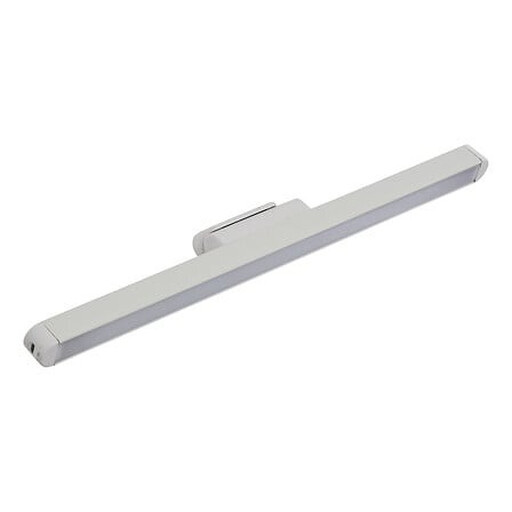
Why this product suits this profile: For mirrors, dressing areas and storage surfaces, the 42 cm light bar with neutral white light is an alternative when a PIR sensor is not required.
The product specifications explicitly state 4000 K, USB charging and approximately 150 lumens. No motion sensor is specified, so one should not be expected.
42 cm length, 2,000-mAh battery, detachable light bar and adjustable direction.
We have put together a complete, regularly updated list of products that fully meet these strict selection criteria and the safety regulations applicable in the EU.
Clean the surface before fixing the light and allow it to dry completely. Adhesive tape generally adheres more reliably to smooth, dust-free surfaces than to rough plaster or greasy kitchen surfaces. After installation, check that the light is securely held and cannot fall onto worktops or people.
Test the sensor function before permanently fixing the light in place. Also make sure that the LEDs and PIR sensor are not covered. The lights are intended for indoor use and, according to the product specifications, should be protected from water and excessive moisture.
Depending on the model, the light is fixed using adhesive tape or a designated bracket. According to the product specifications, drilling is not required for the PIR lights mentioned. The installation surface should be clean, dry and stable. Before fitting the light, check the length, sensor position and access to the charging port.
It is not possible to give a reliable general operating time. This depends on battery capacity, brightness, activation time and the number of triggers. The models mentioned have capacities of 800 and 1,100 mAh respectively. When the brightness starts to fade, the battery should be charged using a compatible USB power source.
While operating, an LED light requires comparatively little electrical power; actual consumption depends on the model. A PIR sensor can reduce everyday power usage because the light does not remain switched on continuously. With a battery-powered light, there are also charging losses, which depend on how frequently it is used and on the charger.