
Lieferung heute & morgen

Qualitätsgarantie

Willkommens-Angebote freischalten: KOSTENLOSE Lieferung | Bis zu 80 % RABATT | Kostenlose 30-Tage-JoyPlus-Testphase
App herunterladen
Choosing the right LED wall light can fundamentally transform an indoor or outdoor space. But the market is flooded with products whose descriptions often over-promise and under-deliver. Misleading material claims, unsuitable lighting moods, or a lack of weather resistance can quickly lead to disappointment and wasted money. As your Joybuy Product Recommendation Officer, I'm here to help you spot these pitfalls and make an informed decision that perfectly blends function and aesthetics.
We'll focus on the three most common buying mistakes and how you can specifically avoid them:
To sidestep these mistakes, it's important to understand a few technical parameters. This isn't complex science, but rather a set of practical tools for your purchasing decision.
The IP Rating (Ingress Protection) indicates how well a light is protected against the ingress of solid objects (first digit) and water (second digit). This is the most critical criterion, especially for an outdoor LED wall light.
Light colour is measured in Kelvin (K) and significantly defines the mood of a room.
A dimmable wall light offers extra flexibility to adjust the brightness according to the time of day and your needs. Pay attention to whether a compatible dimmer is required (e.g., a trailing-edge dimmer).
Modern LED wall lights offer more than just illumination. An LED outdoor light with a motion sensor automatically turns on when someone approaches, which increases convenience and can act as a deterrent. Smart lighting can be controlled via an app or voice command (e.g., through Alexa or Google Assistant), allowing for colour changes and the creation of light scenes—ideal for tech-savvy users.
Here are some recommendations tailored to specific user profiles that take the aforementioned criteria into account.
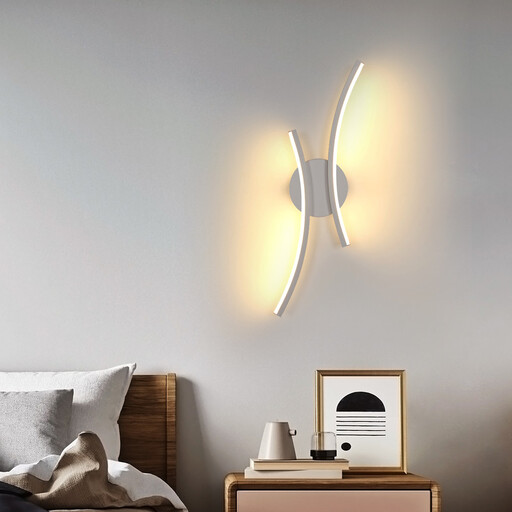
Why This Fits Their Persona: Ideal for users who see a light not just as a source of illumination, but as a modern art piece. The curved design makes a clear aesthetic statement in living rooms or hallways.
Avoids the Ambience Trap by specifically using 3000 K warm white light, which creates an inviting mood. The aluminium body prevents the material trap for indoor lights.
Combines up and down lighting for a versatile light effect. Flicker-free LED chips with a high colour rendering index are easy on the eyes.
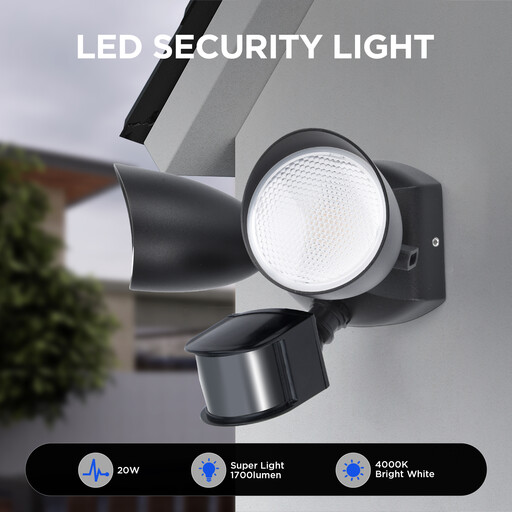
Why This Fits Their Persona: Perfect for homeowners who want to reliably illuminate and secure driveways, gardens, or entryways. Functionality is the clear priority here.
Escapes the Weather Trap by being explicitly designed as an outdoor light with a robust housing. The integrated motion sensor solves the Functionality Trap by providing reliable automation.
High light output of 1700 lumens for wide-area illumination. The two swivelling heads allow for targeted light direction.
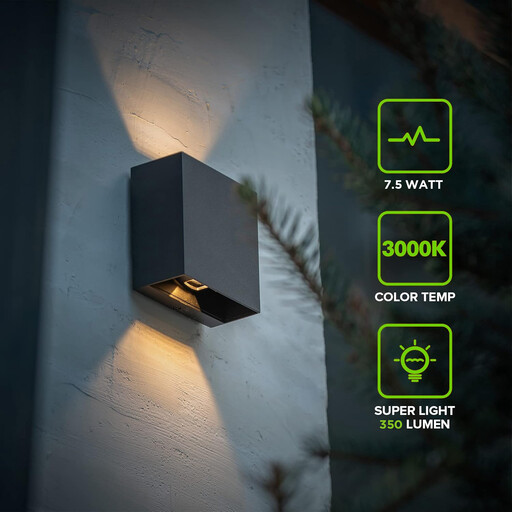
Why This Fits Their Persona: For creative users who want to design with light. This Up and Down Wall Light allows you to create custom light cones on a fa?ade or interior wall.
Its weather resistance and rustproof aluminium housing bypass the Weather Trap. The main feature, its adjustable beam angle, prevents you from buying a rigid light that doesn't meet your design needs.
The beam angle is continuously adjustable from 0 to 106 degrees. Thanks to its weatherproof construction, it can be used flexibly both indoors and outdoors.
We've compiled a complete, up-to-date list of products that fully meet these strict selection criteria and safety regulations.
As a general guideline for interiors, a mounting height of about 1.70 to 1.80 metres above the floor is recommended. This prevents you from looking directly into the light source. For stairway lighting, the lights are often placed lower (approx. 30-40 cm above the steps) to safely illuminate the treads. With an Up and Down Wall Light outdoors, the height affects the size and shape of the light cones on the fa?ade.
The IP rating (Ingress Protection) is an international standard that classifies the protection of electrical devices against the ingress of foreign objects and water. For an outdoor LED wall light, this is crucial. IP44 means the light is protected against splashing water from all directions, making it sufficient for covered areas. IP65 means it is dust-tight and also protected against powerful water jets (e.g., from a garden hose), which qualifies it for unprotected areas.
No, compatibility is key here. Many modern LED lights require a specific type of dimmer, often a trailing-edge dimmer. Using the wrong dimmer can lead to flickering, buzzing, or even damage to the light. Therefore, always check the manufacturer's product description for recommendations on the correct dimmer type.