
Lieferung heute & morgen

Qualitätsgarantie

Willkommens-Angebote freischalten: KOSTENLOSE Lieferung | Bis zu 80 % RABATT | Kostenlose 30-Tage-JoyPlus-Testphase
App herunterladen
An LED wall light can help you find your way along a hallway, illuminate your front door or improve visibility on a patio or balcony. Choosing one might seem straightforward, but certain details in product descriptions can easily lead to the wrong purchase. Design and wattage aren’t the only things to consider: colour temperature, IP rating, installation method, voltage and sensors are important too.
Wattage mainly tells you how much energy a light uses. For its actual brightness, look at the luminous flux, measured in lumens. For example, a 4-watt light with 300 lumens may be better suited to providing guidance or lighting a small area. A larger driveway or an extensive outside wall may need a much higher lumen output.
An outdoor wall light should have a clearly stated IP rating. On an IP44 outdoor light, the first digit indicates protection against solid objects, while the second indicates protection against splashing water. IP44 is suitable for many sheltered outdoor areas, but it doesn’t replace proper installation in exposed locations or places that are constantly wet.
The word ‘weatherproof’ on its own may not be enough. If there’s no specific IP code, check the technical details or contact the seller before buying.
A motion-sensor wall light can be useful if you want the light to switch on automatically as you approach. However, its detection angle, range and on-time need to suit the installation position and surrounding conditions. A sensor next to a busy road may be triggered frequently, while one mounted too low may detect people too late.
A sensor wall light doesn’t necessarily combine motion detection with a dusk sensor. Check that both functions are specifically listed in the product details.
Colour temperature is measured in kelvins:
Your choice should also work with your existing lighting. A very cool outdoor LED light next to warm-white lights can make the overall look feel inconsistent.
Light distribution matters as well as lumen output. A directional spotlight illuminates a specific area, while a wide-beam garden wall light can spread light more evenly over a larger space. Adjustable heads are useful when you want to direct light towards a garage, gate or front door.
Also watch out for glare. A bright light shouldn’t shine directly into windows, neighbouring properties or people’s eyes. A black wall light may blend in during the day, but at night, positioning the light source is what matters most.
Lights connected directly to the mains should be installed and connected by a suitably qualified professional. Always switch off the circuit before carrying out work on the electrical installation. During renovations in particular, check that the wall construction, cable route and existing connection box are suitable for the light.
A solar or rechargeable wall light can be a good option where there’s no mains connection. You’ll need to consider the charging time, battery capacity and available location. A portable light with USB charging is flexible, but needs to be recharged regularly.
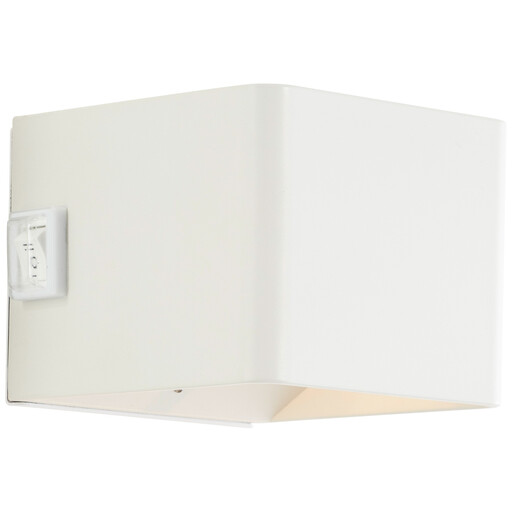
Why it suits this profile: This compact light charges via USB and doesn’t need a permanent power connection. With 300 lumens, a colour temperature of 3000 kelvins and a built-in motion sensor, it’s suited to smaller entrance areas, patios or temporary lighting.
The technical details include the lumen output, colour temperature and IP44 rating. This makes it easier to check whether this portable option is suitable for the intended location.
Built-in battery, USB cable, magnetic fixing, rocker switch and motion sensor.
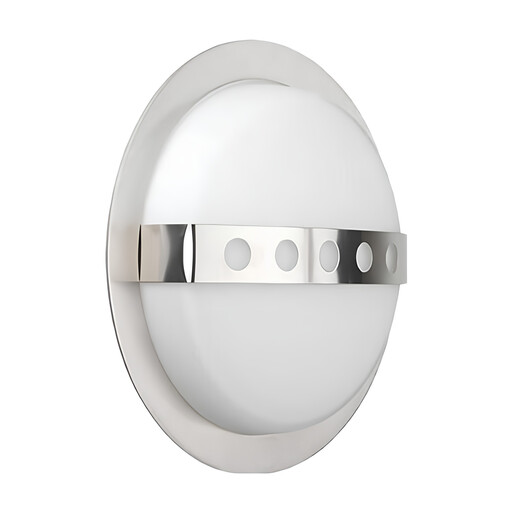
Why it suits this profile: This outdoor wall light combines a matt nickel housing with a satin glass shade. With 2050 lumens, it’s designed for larger outdoor areas such as a front entrance, patio or driveway.
The product details clearly state the 2050-lumen output and IP44 rating. This makes it easier to assess whether the light is suitable for the intended outdoor area.
IP44, 2050 lumens, 230 volts, matt nickel and satin glass.
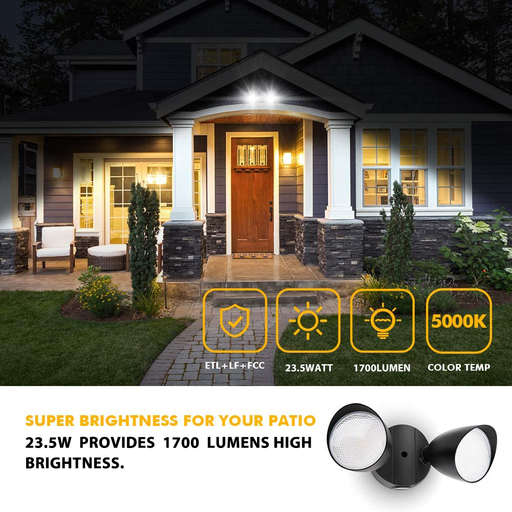
Why it suits this profile: The two adjustable heads let you direct the light where it’s needed around a garage, shed, garden or driveway. The stated 5000-kelvin light is clear and functional.
The colour temperature and 180-degree adjustability are clearly stated. Important: this model is rated for AC 120 V, 60 Hz, so check that it’s compatible with the UK mains supply before installation.
Two adjustable heads, aluminium housing, toughened glass panels and 5000 kelvins.
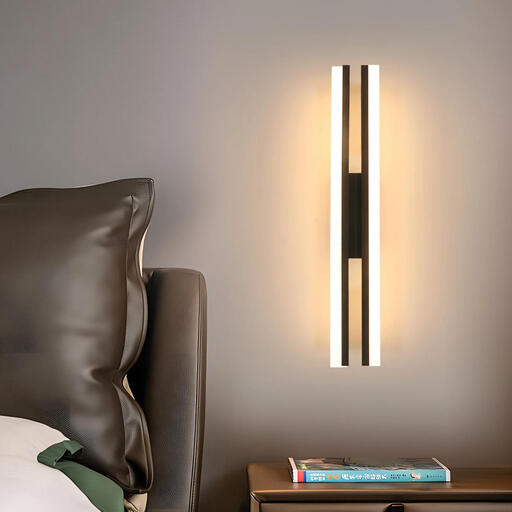
Why it suits this profile: This indoor wall light is designed for living rooms, bedrooms and stairways. It can be installed vertically or horizontally, making it suitable for different wall spaces.
Its intended use indoors is clearly stated. This helps prevent a decorative light without a specified outdoor rating from being used as a garden or balcony light.
16 watts, 3000 kelvins, black acrylic design and flexible positioning.
LED lights usually use less power when switched on than many older types of bulbs. For a fair comparison, though, consider wattage, daily running time and your electricity tariff together. A sensor light can reduce the time it stays on, provided the motion sensor and switch-off delay are set correctly.
Clean outdoor lights with a soft, slightly damp cloth. Abrasive cleaners can damage surfaces and seals. For permanently installed models, check the fixings, cable entry and visible seals regularly. Only quote a specific lifespan if it’s stated in the technical details for that product.
We’ve put together a complete, regularly updated list of products that meet these strict selection criteria and fully comply with the safety regulations in force in the EU.
For a front entrance, lumen output, glare control, mounting height and IP rating are all important. An IP44 outdoor wall light may be suitable for a sheltered area. If there’s no mains connection, consider a rechargeable or solar option. For automatic lighting, the motion sensor should reliably detect anyone approaching the entrance.
Lifespan depends on the LED module, heat dissipation, usage, ambient temperature and the quality of the power supply. Check the technical data sheet for reliable figures. With integrated LEDs, you often can’t replace the light source as you would a conventional bulb, so it’s worth checking this before you buy.
No. A dimmable wall light needs a compatible LED module and a suitable dimmer. Check that the light is specifically listed as dimmable and find out which types of dimmer it supports. Without this information, you may experience flickering, buzzing or a limited dimming range.