
Lieferung heute & morgen

Qualitätsgarantie

Willkommens-Angebote freischalten: KOSTENLOSE Lieferung | Bis zu 80 % RABATT | Kostenlose 30-Tage-JoyPlus-Testphase
App herunterladen
An LED wall light can illuminate a room precisely, mark out pathways in a hallway, or serve as decorative wall lighting. However, it's often not just the design that determines how practical it is for everyday use. An unsuitable colour temperature, a lack of dimming functionality, or a complicated installation can mean the light barely gets used after purchase.
This buying guide shows you which specifications matter before you buy, and which models suit different living situations.
Wattage primarily describes the electrical power consumption. For actual brightness, the lumen value is far more important. A light with 12 W can produce very different amounts of light depending on the LED technology used. So always compare the stated lumens, not just the wattage.
A warm white LED wall light generally feels cosy and inviting. For living areas, values around 3000 K are commonly used. A 3000K wall light produces a warm, slightly yellowish light and is suitable for living rooms, bedrooms or hallways. For focused work, a more neutral colour temperature may be more appropriate.
A dimmable and non-dimmable wall light differ significantly in daily use. If a model is explicitly marked as non-dimmable, it should not be used with an external dimmer. For hardwired lights, installation by a qualified electrician may be required. Check before you buy whether the connection, wall bracket and existing wiring are compatible.
Look out for the following values:
For an LED wall light for a living room or bedroom, warm white light with moderate brightness may be sufficient. In a long hallway or on a staircase, even illumination and the correct mounting height are more important.
An aluminium wall light is lightweight and can dissipate heat through its housing. However, the material specification alone is not a guarantee of quality. Also check whether the surface is powder-coated, what the dimensions are, and whether the light is suitable for the intended indoor area.
For damp rooms or sheltered outdoor areas, the IP rating is crucial. A light without a suitable IP rating should not be used in areas exposed to splashing water. Even with a decorative light, remember: ventilation openings must not be covered.
Measure the available wall space before you buy. Particularly in narrow hallways or next to doors, a slim wall light can be a good choice. Also check:
With integrated LEDs, if a fault occurs, the entire light often needs to be replaced. This factor should be considered in your long-term buying decision.
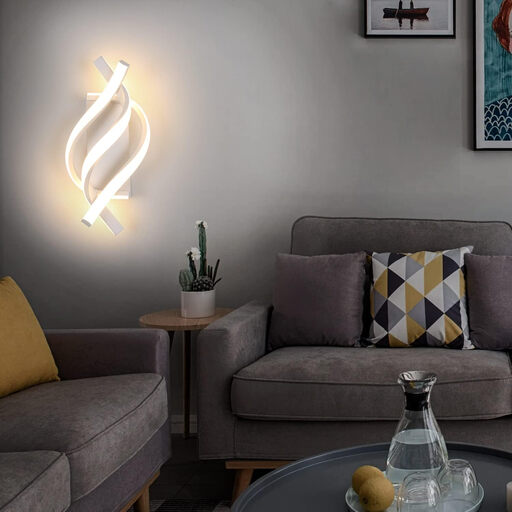
Why this product fits the profile: The white, twisted design blends into modern and understated interior styles. The stated colour temperature of 3000 K suits bedrooms, living rooms, hallways and stairwells.
The product description clearly states the warm colour temperature, the intended indoor use and the non-dimmable design. This makes it easier to assess its suitability before ordering.
White aluminium housing; integrated LED with, according to the product details, 3000 K and 1280 lumens. The stated wattage should be checked again in the listing before purchase.
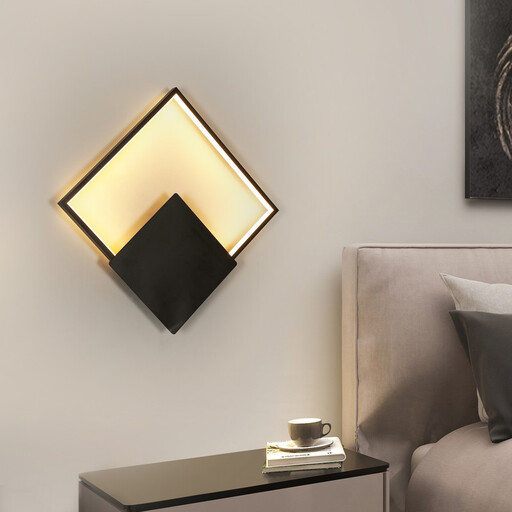
Why this product fits the profile: The square shape and black aluminium housing create a clear geometric accent. According to the product details, this model is suitable for living and sleeping areas.
The stated lumen value of 2362 makes it easy to gauge the brightness. The product data also specifies the material, colour temperature and heat dissipation through the shade.
21 W and 2362 lumens according to the product details; die-cast aluminium with a rust-resistant coating, plus included mounting accessories.
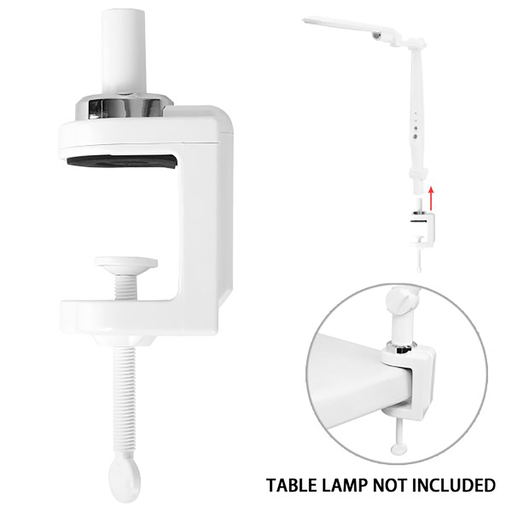
Why this product fits the profile: For desks, workbenches and craft areas, a flexible clip-on light is often more practical than a fixed wall-mounted one. According to the product details, the clip fits desk edges up to 74 mm.
The maximum edge thickness is clearly stated. The non-slip design is intended to protect the desk surface; the clip should not be over-tightened, as per the instructions.
Lightweight polycarbonate housing; compact dimensions of 58 × 74 × 169 mm and flexible positioning without taking up desk space.
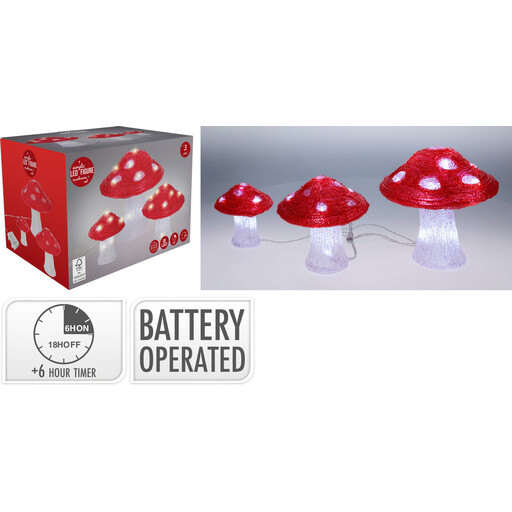
Why this product fits the profile: This set of three is intended as seasonal decoration for a mantelpiece, side table or table centrepiece. It complements a permanently installed light but does not replace it as room lighting.
The product description clearly indicates its decorative and seasonal use. This prevents the light from being mistakenly planned as functional wall lighting.
Three decorative LED mushrooms; no installation required and, according to the product description, ready to place straight away.
An LED light typically uses less electrical power over the same operating time than many older bulbs. You can roughly calculate the running costs as follows:
Wattage ÷ 1000 × hours of use × electricity price per kWh
With an integrated LED, you should also check whether the light source is replaceable. The statement "non-replaceable" does not automatically mean a specific lifespan. Reliable information on lifespan, switching cycles and warranty should be stated directly in the product information.
For hardwired models, such as a modern LED wall light for a living room or bedroom, installation should be carried out by a qualified electrician if you are unsure. Before drilling, check the routing of any cables. The light must not be mounted over existing ventilation openings or heat sources.
We have compiled a complete, regularly updated list of products that fully meet these strict selection criteria and the safety regulations in force in the EU.
That depends on the area of use. For decorative accent lighting, lower lumen values are sufficient. As functional hallway or room lighting, the light should be more closely matched to the actual space. The key factors are lumens, beam angle, mounting height and the number of lights.
A 3000K wall light produces warm white light and can be suitable for bedrooms, living rooms and hallways. If you use the light for reading or working, you should also ensure sufficient brightness and an appropriate light distribution. A dimming function can make adjustment easier, provided it is explicitly supported.
First, the desk edge must be compatible with the maximum clip width. Then position the clip straight on and tighten it only enough so that the light sits securely. A protective pad or non-slip contact surface can prevent scratches. Before use, check that the light is stable and that the gooseneck does not move on its own.