
Lieferung heute & morgen

Qualitätsgarantie

Willkommens-Angebote freischalten: KOSTENLOSE Lieferung | Bis zu 80 % RABATT | Kostenlose 30-Tage-JoyPlus-Testphase
App herunterladen
An LED wall light can illuminate a hallway, mark out a staircase, secure your front entrance or create decorative accents in the living room. The choice ranges from classic indoor LED wall lamps and outdoor LED wall lights to smart RGB lighting that can be controlled remotely. However, the wide variety of models often leads to unsuitable purchases.
The IP44 rating means protection against solid foreign objects larger than 1 mm and against splashing water. An IP44 wall light is therefore suitable for many indoor areas, covered entrances and sheltered exterior walls. However, it is not automatically designed for exposed locations subject to heavy rain or direct jets of water.
For garden paths, patios and façades, buyers should check whether the manufacturer has approved the light for the specific installation location. A light with a motion sensor must also be positioned so that the sensor is not constantly triggered by passing vehicles, moving plants or heat sources.
Wattage describes energy consumption, not brightness directly. The more meaningful figure is luminous flux in lumens (lm). For example, a light with 300 lm is more suitable for a limited area or as orientation lighting, while 950 lm can illuminate a considerably larger space.
With an outdoor LED floodlight or a double LED spotlight, you should also consider the beam angle and direction. Two adjustable light heads can distribute light more precisely, but they do not replace checking the actual lumen rating.
Colour temperature is measured in kelvins:
A dimmable LED wall light requires a compatible dimmer. For the stair lights considered here, a trailing-edge dimmer is expressly required. RGB LED wall lighting offers colourful scenes and app control, but is not automatically suitable for damp areas.
Hard-wired lights are connected directly to the mains. In Germany, the mains voltage is usually 230 V. The connection should be carried out by a qualified electrician in accordance with the product instructions. This is particularly important for a recessed wall light, a wall light installed flush with the wall and lights for outdoor use.
Not every model offered internationally is suitable for connection to the German mains. A product marked AC 120 V, 60 Hz must not be connected to a German 230-volt supply without an appropriate technical solution. It is therefore essential to check the voltage, frequency and connection type before buying.
The following formula is sufficient for a rough cost estimate:
Power in watts × daily operating hours × 365 ÷ 1,000 = annual consumption in kWh
A 6-watt light switched on for four hours a day uses approximately 8.76 kWh per year. The actual electricity cost depends on your personal tariff. Outdoor lights with a sensor may use less energy if the light is only activated when movement is detected.
Metal housings, glass covers and polycarbonate are combined differently depending on the model. For outdoor areas, corrosion protection, seals and a suitable IP rating are important. Integrated LEDs do not require a separate bulb, but on some models they cannot be replaced. If the LED module fails, the entire light must then be replaced.
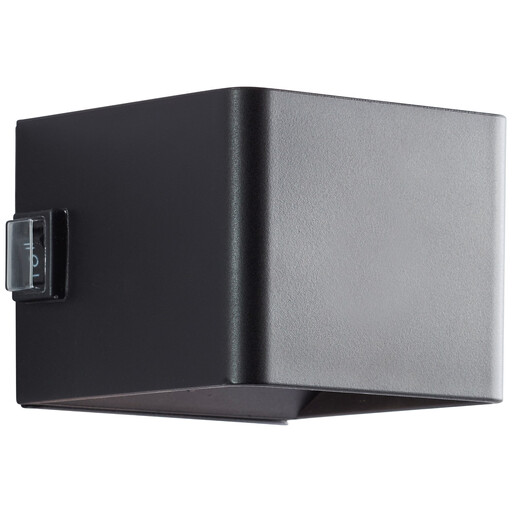
Why this product suits this profile: The battery-powered light can be used without a fixed power connection and is suitable for patios, gardens and entrance areas.
The specifications clearly state 300 lm, 3000 K, IP44 and an integrated rechargeable battery. This makes the brightness, light colour and protection rating easy to verify.
USB charging, magnetic mounting, rocker switch and motion sensor; 4 W power with a warm-white light colour.
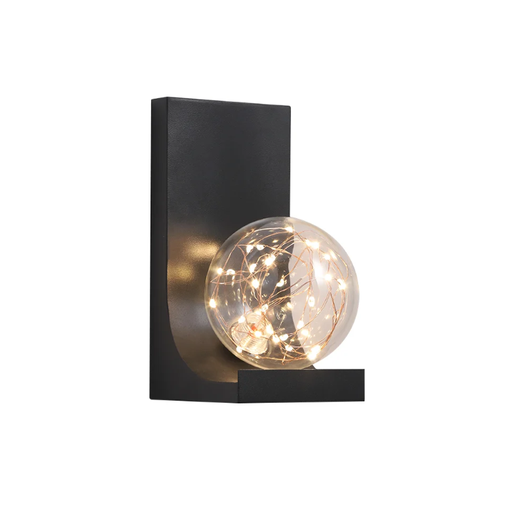
Why this product suits this profile: This modern black wall light combines a black metal frame with a transparent glass globe and a slim wall-mounted design for living spaces.
The product data explicitly states that the 6 W LED is non-replaceable and that the light is not dimmable. These points can be taken into account before buying.
Integrated 6 W LED, warm-white light colour, glass cover and compact dimensions of 120 × 125 × 240 mm.
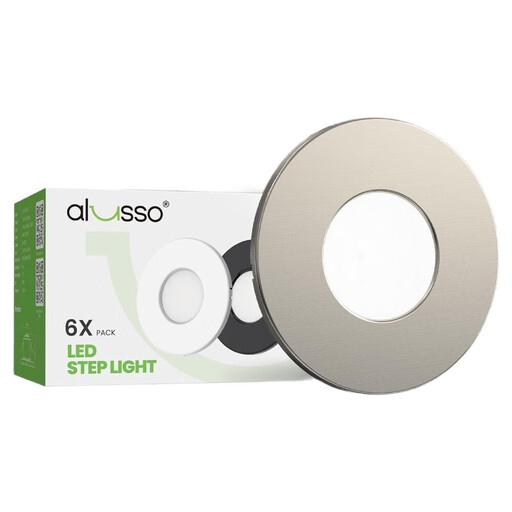
Why this product suits this profile: These lights are designed for staircases and hallways, offering three colour temperatures and three power levels.
The lights are designed for 230 V. At the same time, the IP44 rating, required dimmer type and restriction to sheltered outdoor areas are clearly stated.
Set of six lights, 220 lm per light, 3000/4000/6500 K, dimming from 10 to 100 per cent and two installation options.
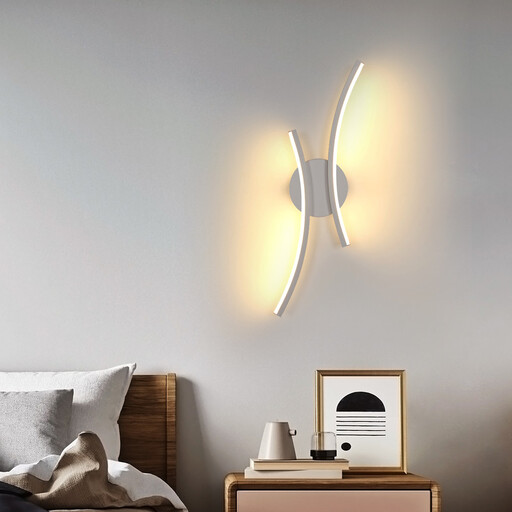
Why this product suits this profile: The slim geometric design with up- and downlighting is suitable for living rooms, bedrooms, hallways and studies.
The product description specifies 3000 K and a depth of 5 cm. This makes it easier to assess the lighting effect in advance instead of choosing based on the product photo alone.
20 W power, warm-white light colour and an aluminium housing with a space-saving profile.
We have put together a complete, regularly updated list of products that fully meet these strict selection criteria and the safety regulations applicable in the EU.
Indoors, the installation height is often around eye level or slightly higher. The key factors are the ceiling height, the shape of the light and how it distributes light. A light with direct illumination should not be positioned where it causes glare. For LED stair lighting, even spacing along the steps is more important than having one particularly bright light source.
The lifespan depends on the LED module, operating time, heat dissipation and environmental conditions. The stair lights described here have a stated average lifespan of 30,000 hours. This is a manufacturer’s specification, not a guarantee for every installation. Dust, moisture and high temperatures can affect service life.
LED lights generally require little electrical power for a comparable level of brightness. However, the actual cost depends on the wattage, daily operating time and electricity tariff. A motion sensor, timer or dimmable control can reduce the time the light is switched on or its light output in everyday use.