
Lieferung heute & morgen

Qualitätsgarantie

Willkommens-Angebote freischalten: KOSTENLOSE Lieferung | Bis zu 80 % RABATT | Kostenlose 30-Tage-JoyPlus-Testphase
App herunterladen
An LED wall light can divide a room into zones, illuminate pathways or provide a decorative accent. However, everyday practicality is often determined by more than design alone. An unsuitable colour temperature, insufficient brightness or missing information about the IP rating can mean that the wall light is no longer suitable for its location after only a short time.
A modern wall light may look appealing yet still cast light in an unsuitable way. With a light that provides only indirect lighting, a work surface may remain too dark. Light beams directed upwards and downwards, on the other hand, create decorative effects, but can also leave visible contrasts on smooth walls.
Before buying, check the following:
A warm-white wall light with a colour temperature of 3000 Kelvin creates a more homely atmosphere. However, this does not automatically mean that its brightness can be adjusted. Descriptions such as ‘two light colours’ or ‘dynamic scenes’ do not necessarily indicate a dimming function either.
If you are looking for dimmable LED wall lighting, look specifically for the word ‘dimmable’ and check the compatible control system. With some products, the brightness is fixed; others are controlled by a switch, remote control or app.
An indoor wall light in the living room has different requirements from an outdoor wall light at the entrance. The level of protection is indicated by the IP code. In practice, IP44 means protection against solid foreign objects above a certain size and against splashing water from various directions. A light with this rating is not designed to be immersed in water or exposed to direct high-pressure water jets.
For bathrooms and outdoor areas, you should also check the following:
Colour temperature is measured in Kelvin:
For make-up or shaving areas, even illumination may be more important than purely ambient lighting. A bathroom mirror with LED lighting combines the light source with a mirrored surface and, depending on the model, can switch between warm-white and cool-white illumination.
Brightness is measured in lumens, not simply in watts. Watts indicate electrical power consumption. As a comparison, the EGLO Mazzini LED outdoor wall light is specified as producing 11 watts and 950 lumens. According to the product description, this is approximately equivalent to the brightness of a conventional 65-watt light bulb. Such specifications help you assess the product, but do not replace consideration of the room size, beam angle and installation height.
A simple consumption calculation is:
Wattage × operating hours ÷ 1,000 = kilowatt-hours
A 10-watt light used for three hours a day consumes around 10.95 kilowatt-hours per year. The actual electricity cost depends on your tariff.
Measure the available wall space before buying. A light with a shallow design can be an advantage in narrow hallways or next to furniture. The Pheashine light, with its curved aluminium design, is described as having a depth of approximately 5 centimetres.
For areas without a fixed power connection, a battery-operated wall light may be suitable. In this case, pay attention to the charging method, battery capacity, charging intervals and mounting system. A magnet is practical for metal surfaces, but it does not replace permanent installation on every type of surface.
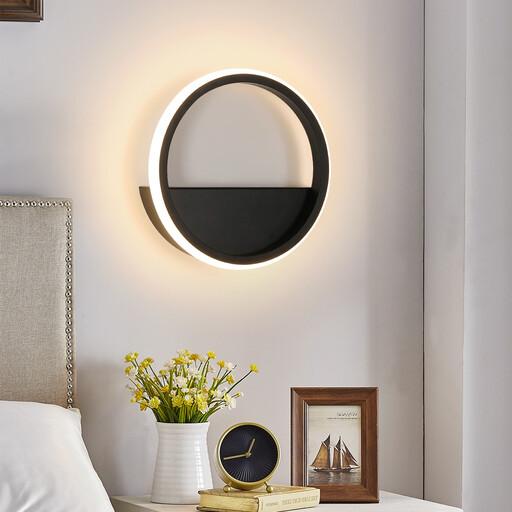
Why this product suits this profile: This round LED wall light is designed for living rooms, bedrooms, hallways and staircases, and provides warm-white light at 3000 Kelvin.
The colour temperature is clearly specified. This makes it easier to assess the lighting effect instead of relying solely on product images.
Round design, integrated LED technology and 12-watt power consumption for several indoor areas.
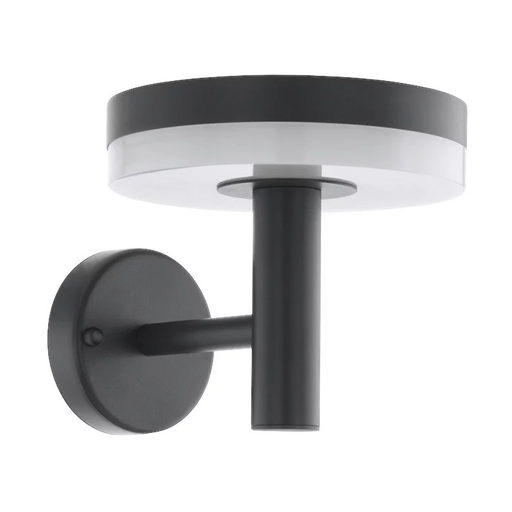
Why this product suits this profile: This outdoor wall light is described as suitable for gardens, patios, entrances and pathways. Its specific values of 950 lumens and 3000 Kelvin are clearly stated.
The choice is based not only on the anthracite finish, but also on the specified luminous flux, power consumption and intended outdoor use.
Integrated 11-watt LED module, 950 lumens, warm-white light and a metal-and-plastic construction with a white diffuser.
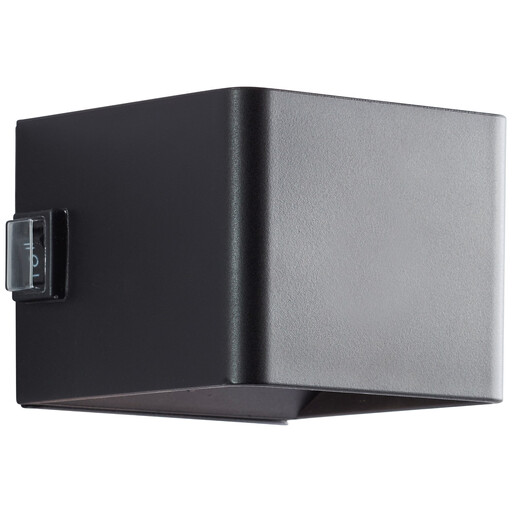
Why this product suits this profile: This cordless light is suitable for locations without a socket, such as patios, gardens or entrances. It has an integrated USB connection, battery, magnet and motion sensor.
The product data specifies 300 lumens, 4 watts, IP44 and 3000 Kelvin. This distinguishes the portable light from a permanently installed, more powerful outdoor lamp.
Integrated battery, USB charging, magnetic mounting, motion sensor and IP44 protection.
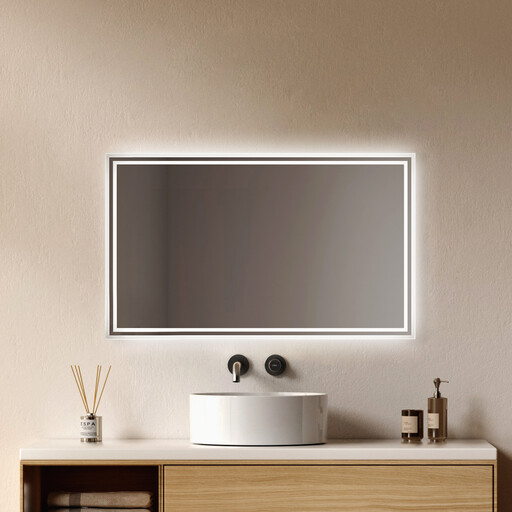
Why this product suits this profile: This illuminated mirror combines wall lighting with a mirrored surface and offers a choice of warm-white or cool-white light. It can be installed horizontally or vertically.
The product description explicitly states the IP44 rating, the separate anti-fog function and the non-dimmable lighting. The fixed brightness should be taken into account before buying.
100 × 60 cm, two light colours, anti-fog button, side switch and flexible orientation.
We have put together a complete, regularly updated list of products that fully meet these strict selection criteria and the safety regulations applicable in the EU.
With permanently wired models, electrical work must only be carried out by a suitably qualified professional. Before installation, check the wall material, drilling distances and cable routing. For adhesive mounting, the surface, weight and load-bearing capacity must be compatible.
For outdoor lights:
This depends on the size and purpose of the room. A few hundred lumens may be enough for decorative accent lighting. A light used for general orientation or in an entrance area should be more powerful. The beam angle and installation height are also important factors.
Its lifespan depends on the LED module, power supply, heat dissipation, operating time and ambient temperature. With integrated LEDs, bear in mind that the module may not be replaceable separately in the event of a fault, depending on the design. A stated lifespan should therefore be understood as the manufacturer’s specification, not as a guarantee for every application.
Calculate the annual kilowatt-hours from the wattage and operating time. A 4-watt light used for three hours a day consumes approximately 4.38 kilowatt-hours per year. To calculate the cost, multiply this figure by your electricity price. Depending on how they are used, warm-white, dimmable or smart functions can change energy consumption.