
Lieferung heute & morgen

Qualitätsgarantie

Willkommens-Angebote freischalten: KOSTENLOSE Lieferung | Bis zu 80 % RABATT | Kostenlose 30-Tage-JoyPlus-Testphase
App herunterladen
As a Joybuy Product Recommendation Officer, I see every day how the wrong lighting can ruin the atmosphere of an entire room. An Indoor LED Wall Light is more than just a light source; it's a key design element. However, the selection is vast and the technical specifications are often confusing. Many buyers invest in a light that looks modern in pictures, only to be disappointed by sterile light, technical failure, or unflattering light effects.
This guide will help you navigate the most common pitfalls and make an informed decision that suits your home and your needs.
Before we dive into the technical details, let's look at the three most common issues that lead to dissatisfaction.
To avoid these mistakes, you should carefully check three technical parameters. These determine the function, atmosphere, and longevity of your new wall light.
The colour temperature, measured in Kelvin, is crucial for the mood a light creates. Don't rely on vague descriptions; look for the specific value:
The brightness of an LED light is measured in lumens, not watts. Watts only indicate energy consumption. Use the following values as a guide:
The IP code indicates how well a light is protected against the ingress of foreign objects (first digit) and water (second digit).
Here are some models tailored to specific profiles and needs, taking the above criteria into account.
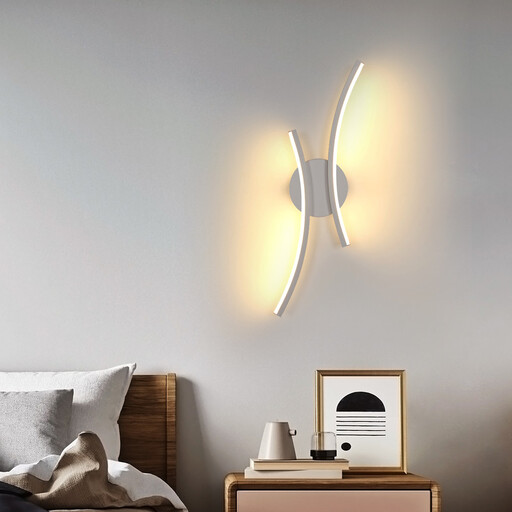
Why This Fits Their Persona: Ideal for users looking for a modern and sculptural wall lamp. Its curved shape is an eye-catcher and creates sophisticated, indirect lighting in the living room or bedroom with its up-and-down light.
The product description clearly specifies 3000K warm white, thus avoiding the "warm white" trap. It is explicitly designed for indoor use, preventing incorrect application.
Its slim profile of only 5 cm deep is space-saving. The flicker-free LED chips with a high colour rendering index provide eye-friendly and true-to-colour illumination.
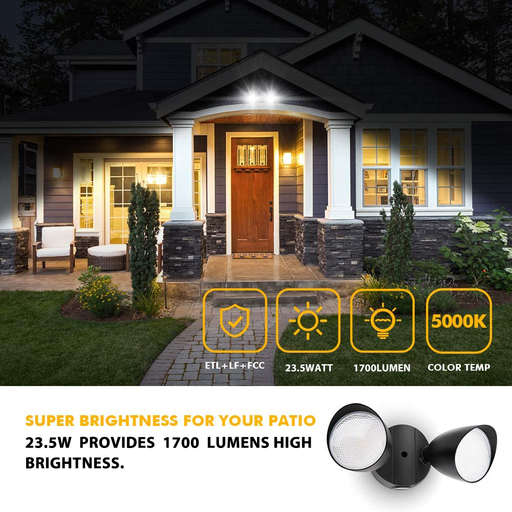
Why This Fits Their Persona: Perfect for homeowners who need a functional and robust outdoor wall light for illuminating driveways, gardens, or garages. The focus here is clearly on security and visibility.
With 5000K daylight white, it ensures high visibility, preventing the "too warm for security" trap. The die-cast aluminium housing is explicitly designed for outdoor use and is therefore weather-resistant.
The two 180° adjustable heads allow for targeted and flexible illumination. The robust material ensures longevity when exposed to the elements.
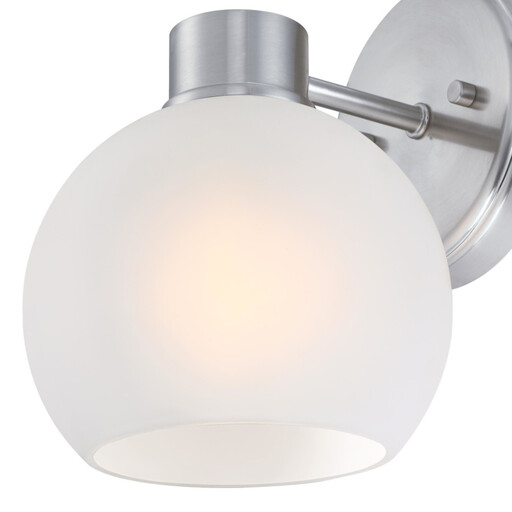
Why This Fits Their Persona: For users who want maximum control over their lighting. This fixture adapts to you, rather than locking you into a fixed, integrated LED. Ideal for rental properties or for those with evolving interior styles.
Thanks to the E27 socket, the user has full control over light colour, brightness, and dimmability by choosing the appropriate bulb. This completely bypasses the pitfalls of built-in LEDs.
The bulb is replaceable, which extends the life of the fixture. It can also be mounted with the light facing up or down, offering additional design freedom.
We have compiled a complete, up-to-date list of products that fully meet these strict selection criteria and safety regulations.
1. How many lumens do I need for a wall light in the living room? For atmospheric accent lighting in the living room, 400 to 800 lumens per light is often sufficient. If the wall light is part of the main lighting scheme, you should aim for 1000 to 1500 lumens, depending on the room size and the number of other light sources.
2. Can I use any dimmable LED wall light with my old dimmer switch? No, this is a common source of error. LED lights require a compatible LED dimmer (usually a trailing-edge or leading-edge dimmer). Using an old dimmer designed for incandescent or halogen bulbs often leads to flickering, buzzing, or a defective light. Always check the compatibility notes from the light manufacturer.
3. What does the IP rating mean for wall lights? The IP (Ingress Protection) rating indicates how well a light is protected against the entry of foreign objects and water. For an indoor LED wall light in dry rooms like the living room, IP20 is sufficient. For a bathroom or a covered outdoor wall light, at least IP44 (protection against splashing water) is required to ensure safety and longevity.