
Lieferung heute & morgen

Qualitätsgarantie

Willkommens-Angebote freischalten: KOSTENLOSE Lieferung | Bis zu 80 % RABATT | Kostenlose 30-Tage-JoyPlus-Testphase
App herunterladen
LED wall lighting can divide a room into zones, visually highlight a wall or provide colourful backlighting in a gaming room. However, there are clear differences between a classic LED wall light, modular LED light panels and an LED neon wall light when it comes to installation, power supply and lighting effect.
Before buying, it is therefore worth looking at the actual product features rather than relying on marketing terms such as “smart”, “music sync” or “energy efficient”.
A battery-powered light does not require a nearby socket, but the batteries will need replacing regularly. The ALIVE NEON LIGHT FLAMINGO, for example, requires three AA batteries, which are not included. This can be practical for a shelf or bedside table. However, using it as permanently switched-on wall décor creates ongoing costs and maintenance.
USB or mains power is generally more suitable for a fixed location. With solar-powered models, you should also check whether the light output depends on the location, sunlight exposure and charging time.
RGB LED lighting creates colourful accents and atmospheric illumination, but it is not automatically suitable for reading, working or evenly lighting a room. A light with 6,500 Kelvin, for example, appears considerably cooler than warm white light. An adjustable colour temperature can be more flexible for a living room or bedroom.
When choosing decorative wall lighting, you should therefore be clear whether it will be used as:
LED strips and lightweight light panels are often attached using double-sided tape. This works particularly well on smooth, clean and dust-free surfaces. Textured plaster, wallpaper or delicate painted surfaces can affect adhesion or become damaged when the lighting is removed.
Before installation, buyers should therefore check:
Colour temperature is measured in Kelvin. 2,700 to 3,000 Kelvin typically indicates warm white light, while 6,500 Kelvin is perceived as cool white. RGB models also offer coloured lighting modes, but they do not replace precise information about white-light output.
For brightness, luminous flux in lumens is more relevant than wattage. A 27-watt model with 3,000 lumens should be assessed very differently from a decorative neon light with a more limited accent effect. If you are looking for dimmable wall lighting for different times of day, look for an explicitly stated dimming function.
A smart LED wall light can be operated using a remote control, app or voice assistant. The systems supported are therefore crucial. According to the product description, the 6-piece WiFi wall light supports the Smart Life app as well as Alexa and Google Assistant. Nanoleaf Shapes can be controlled via the app and touch controls, as well as with Alexa, Google Assistant and Apple HomeKit.
Before buying, users should clarify:
Not all LED wall lighting is suitable for damp rooms or outdoor use. If no specific protection rating, such as an IP classification, is provided, the product should not automatically be used in the bathroom, on a balcony or in a sheltered outdoor area.
The ALIVE flamingo model is expressly intended for dry indoor spaces. Nanoleaf Shapes and Elements are also listed as indoor products and are not water-resistant. Materials such as ABS, PP, PVC, SAN or aluminium may be suitable depending on the design, but what matters most is whether the installation method, power supply and intended use are right for the room.
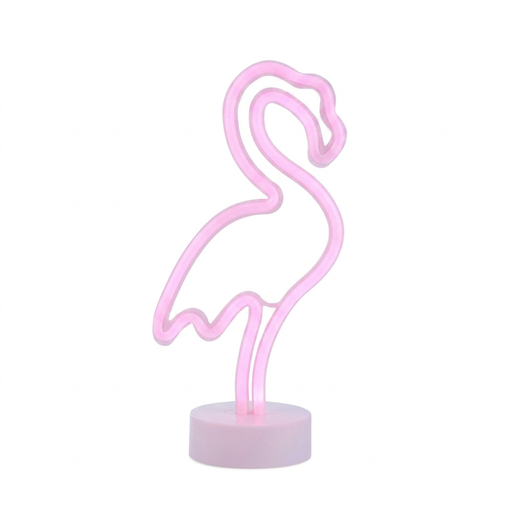
Why this product suits the profile: Measuring 14.5 x 10 x 33 cm, this compact decorative light does not require a socket and is suitable for a shelf, sideboard or bedside table. It is not a wall light, but it can be an easy introduction to decorative lighting.
The product description clearly states the battery type, quantity and dry indoor use. This makes it easier to assess ongoing costs and suitable applications.
Battery-powered, with a stable base and ABS/PP construction; three AA batteries are required separately.
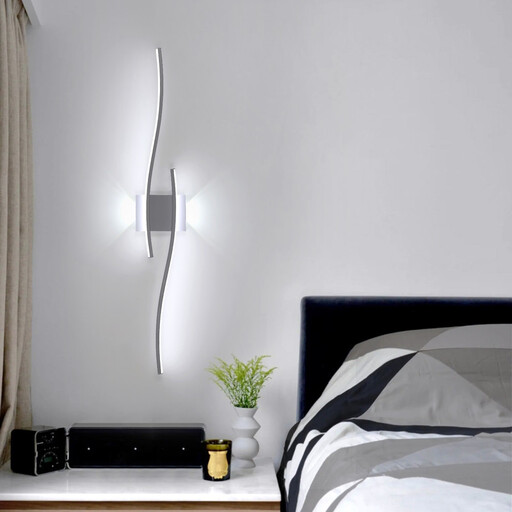
Why this product suits the profile: This 27-watt aluminium LED wall light is ideal for users looking for a permanently mounted, bright light with clear technical specifications.
Rather than simply promoting colour modes, the description specifies 3,000 lumens, 6,500 Kelvin, 27 watts and upward and downward lighting.
Aluminium housing, flexible vertical, horizontal or angled installation, and frosted PVC acrylic glass.
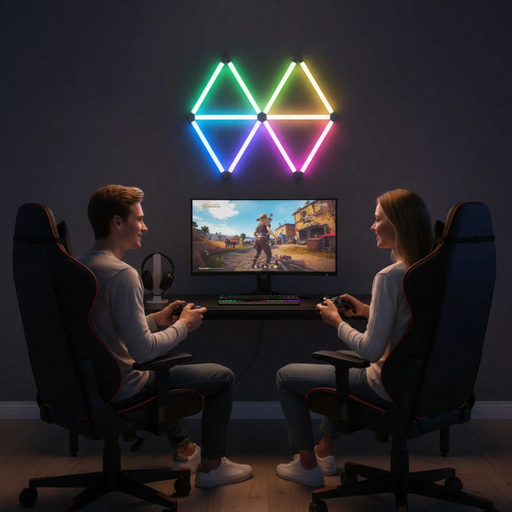
Why this product suits the profile: Six flexible light strips with app, remote-control and voice control are suitable for gaming rooms, home offices, TV backlighting or a bar.
The installation requirements are clearly stated: the surface should be smooth and dust-free, and the supplied adhesive tape is intended for smooth surfaces.
16 million RGB colours, more than 40 dynamic scenes according to the product information, plus music synchronisation via microphone or smartphone.
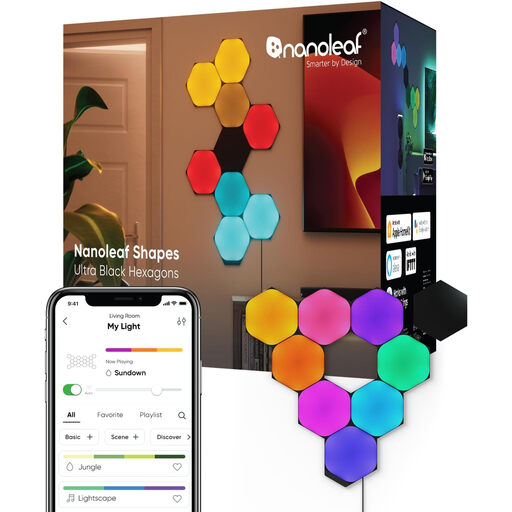
Why this product suits the profile: The nine hexagonal LED light panels can be arranged in a modular layout and controlled via touch, app or a compatible voice assistant.
The modular design makes it possible to plan your preferred arrangement before buying. At the same time, the product is intended for indoor use and is not water-resistant.
Nine RGBW panels, dimming function, WiFi control and a stated maximum luminous flux of 1,500 lumens.
We have put together a complete, regularly updated list of products that fully meet these strict selection criteria and the safety regulations applicable in the EU.
With an LED wall light, the cable should not be under tension. Adhesive strips should only be applied to suitable surfaces and checked for a secure hold before switching the light on. Power supplies should not be placed in damp areas unless the product is expressly approved for this purpose.
For ongoing costs, remember that consumption depends on the wattage, daily operating time and selected lighting mode. A 10-watt model used for four hours a day consumes approximately 1.2 kilowatt hours per month in theory. The actual cost depends on your electricity tariff. With battery-powered lights, the cost of replacement batteries takes the place of electricity costs.
Lightweight neon lights and LED strips are often attached with adhesive or using integrated hanging points. Panels or heavier LED wall lights may require additional mounting hardware. The mounting method must be suitable for both the wall surface and the product weight.
A specific service life should only be relied upon if it is stated in the product information or instructions. LED lights generally do not require conventional bulb replacements, but the electronics, power supply, battery or adhesive connections can affect the actual operating life.
Consumption mainly depends on wattage, brightness, colour mode and daily operating time. RGB functions do not automatically increase consumption to a specific level. For a realistic estimate, the information on the rating plate or in the product data sheet is decisive.