
Lieferung heute & morgen

Qualitätsgarantie

Willkommens-Angebote freischalten: KOSTENLOSE Lieferung | Bis zu 80 % RABATT | Kostenlose 30-Tage-JoyPlus-Testphase
App herunterladen
An LED wall light can provide practical illumination, decorative accent lighting or outdoor security lighting. The choice ranges from a simple warm-white wall lamp for the bedroom to a smart RGB wall light for a gaming setup. However, differences in light output, IP rating, installation and controls all affect whether a light is genuinely suited to its intended location.
As a Joybuy Product Recommendation Officer, I sift through the key product details and match them to specific situations. This helps you avoid common buying mistakes, without relying solely on design promises or attention-grabbing feature names.
A modern wall light may look just right in your room, yet provide too little light for a hallway, staircase or entrance. So check the luminous flux in lumens (lm). Wattage mainly indicates power consumption and does not directly tell you how bright a light will be.
For decorative wall lighting in a bedroom, a lower light output is often enough. An outdoor wall light for an entrance, garage or patio should have a clear lumen rating and be approved for outdoor use.
An outdoor LED wall light must be suitable for the conditions where you plan to use it. The key factor is its IP rating. The first digit indicates protection against solid objects, while the second indicates protection against water. If there is no clear IP rating, avoid installing the light without protection on an exposed wall.
The installation position matters too: a covered entrance has different conditions from a fully exposed exterior wall. For hardwired 230-volt lights, installation by a qualified electrician is advisable and may be required, depending on the connection.
A smart wall light can be controlled via an app, remote control or voice assistant. Before buying, check whether it requires a specific standard such as Wi-Fi, Bluetooth Mesh or an additional bridge. For an RGB wall light, it is also worth checking whether it only offers coloured light or can provide neutral white or warm white as well.
A 3000 Kelvin warm-white wall lamp creates a calm atmosphere. For a bathroom mirror or functional staircase lighting, a different light colour may be more suitable.
First compare the luminous flux in lumens, then the power consumption in watts. An integrated 11-watt LED producing 950 lumens is a different proposition from a decorative USB neon light designed primarily for accent lighting.
For a frequently used hallway or entrance, standby power consumption, switching cycles and expected lifespan may also be worth considering. If the LED module is fixed in place and cannot be replaced, factor this into your decision.
Before ordering, check:
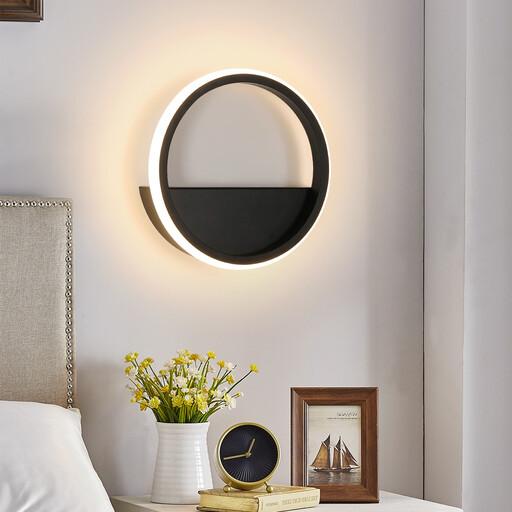
Why this product suits this profile: This round indoor LED wall light is designed for living rooms, bedrooms, hallways and staircases. It combines 12 watts of power with warm-white light at 3000 Kelvin.
The stated light colour and output make it easier to choose than a light bought on looks alone. It is not intended for outdoor use.
Warm white at 3000 K, an aluminium housing and a round design measuring 20 cm in diameter.
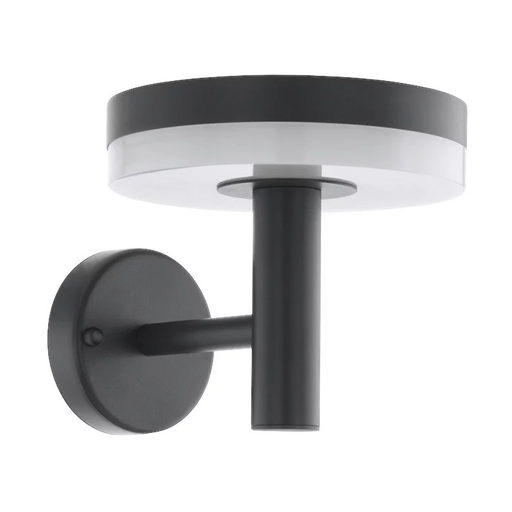
Why this product suits this profile: According to the product details, this outdoor LED wall light delivers 950 lumens at 11 watts and 3000 Kelvin. It is designed for gardens, patios, entrances and paths.
The luminous flux, colour temperature, power consumption and dimensions are all clearly stated. According to the product information, the integrated LED module cannot be replaced.
Anthracite-coloured metal and plastic construction, 950 lm and warm-white light at 3000 K.
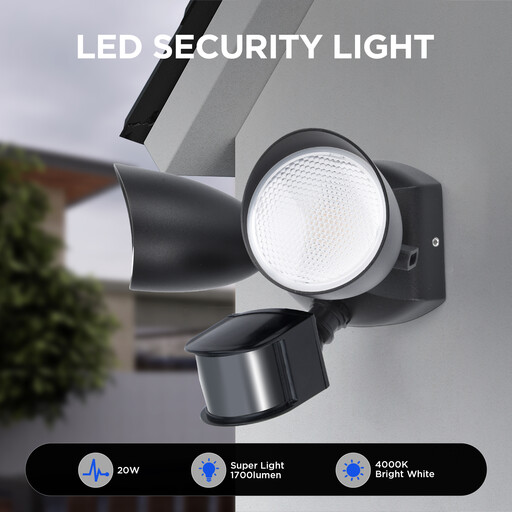
Why this product suits this profile: This outdoor light has two heads and a sensor. It is designed for gardens, courtyards, patios or driveways where brighter illumination is needed.
The product name specifies 1700 lumens, 20 watts, 4000 Kelvin and a sensor. Before installation, check the full product details for the IP rating and detection range.
Two light heads, 1700 lm and an integrated motion sensor, according to the product name.
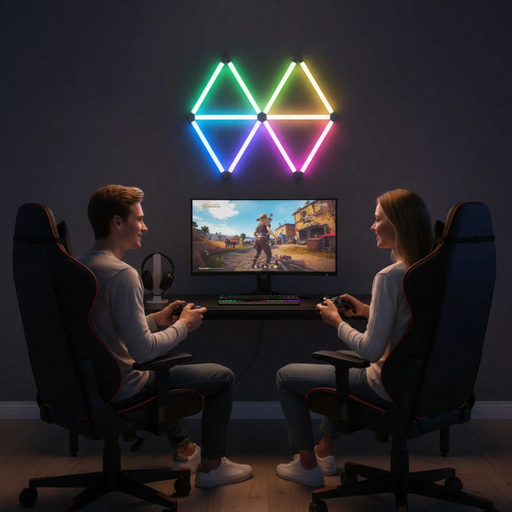
Why this product suits this profile: Six flexible LED strips offer RGB colours, scene modes and music synchronisation, with app, remote and voice control.
Consider the available control options and the space needed for installation. According to the product details, the strips must be protected from moisture.
Up to 16 million RGB colours, more than 40 dynamic scenes according to the product description, and compatibility with Alexa and Google Assistant.
We’ve put together a complete, regularly updated list of products that meet these strict selection criteria and fully comply with the safety regulations applicable in the EU.
Before installing a hardwired LED wall light, switch off the relevant circuit. Outdoor lights need to be mounted appropriately for their location, with sealed cable entries. For adhesive mounting, make sure the wall surface and the light’s weight are suitable, and follow the manufacturer’s instructions. An LED light should not be used with an incompatible dimmer.
For lower running costs, a simple calculation can help: power in watts × operating hours per day × electricity price. A motion sensor can reduce how long an outdoor light stays on, while a decorative light left on continuously will use more energy.
It depends on where you plan to use it. A lower lumen output is enough for accent lighting. Hallways, stairs and outdoor areas generally need more light. Compare the stated luminous flux with the size of the space and the type of lighting you want.
Lifespan depends on the LED module, heat dissipation, switching cycles and how long the light is used for. For integrated LEDs, check the manufacturer’s stated lifespan, as the module cannot be replaced in every model.
No. A wall light must be explicitly described as dimmable. The bulb, dimmer and light must also be electrically compatible. For lights with integrated LEDs, check the technical specifications for compatibility.