
Lieferung heute & morgen

Qualitätsgarantie

Willkommens-Angebote freischalten: KOSTENLOSE Lieferung | Bis zu 80 % RABATT | Kostenlose 30-Tage-JoyPlus-Testphase
App herunterladen
LED lamps are suitable for many areas of the British home: as an LED night light in the hallway, an LED wall light in the bedroom or a central LED ceiling light in the living room. Smart LED lamps, RGB LED lighting and battery-powered lamps also offer different solutions for creating atmosphere and providing guidance.
The choice may seem straightforward at first glance. However, unclear product specifications, unsuitable light colours or incorrect installation often lead to disappointing purchases. The following criteria will help you choose the right lighting more precisely.
A high wattage does not automatically mean high brightness. With LED lamps, lumens (lm) are what matter. Colour temperature is measured in Kelvin (K):
A high lumen output is not necessarily suitable for every room either. An LED night light requires considerably less light than an LED ceiling light for a large living room.
RGB LED lighting is often advertised with millions of colours, music synchronisation and voice control. Before buying, check whether an app, a Wi-Fi network, a remote control or a compatible voice assistant is required. With LED strips, the installation surface is also crucial: dust, unevenness or moisture can affect the tape’s adhesion.
A decorative LED pendant light can look great in a room, but it requires a suitable ceiling connection and sufficient clearance from furniture. An LED wall light, on the other hand, needs suitable wall fixings and, where applicable, a fixed power connection. For battery-powered lamps, check the battery type, what is included and the operating time. Batteries are not always included.
For an informed choice, at least lumens, Kelvin and – where specified – the CRI or Ra value are relevant. A higher Ra value can make colours appear more natural, but it is not a general guarantee of quality. Moderate brightness is often sufficient for decorative indoor lighting, while hallways, stairways and larger rooms require more even illumination.
A motion and light sensor performs two different functions. A motion sensor responds to activity, while a light sensor responds to the brightness of the surroundings. According to the product information, the Aigostar LED night light switches on below 20 lux and switches off again when there is sufficient light. Such specifications are particularly relevant for hallways, children’s bedrooms and stairways. The sensor must not be covered.
For indoor areas, IP20 is suitable provided there is no expected contact with water or high humidity. Mains-powered lamps should be compatible with the stated voltage. With ceiling and wall lights, check whether you can install them yourself or whether you should consult a qualified electrician. A light fitting must not be covered or modified without authorisation.
The following recommendations categorise specific models according to their intended use and verifiable product features. Before buying, always check the latest information on the relevant product page.

Why this product suits this profile: This compact table lamp requires two AAA batteries and can be placed in the bedroom or living room without permanent installation.
Battery operation means that a missing wall connection is not an issue. However, the required AAA batteries are not included.
Glass housing, a height of 15.5 cm and three possible colour options; according to the product information, the colour is dispatched at random.
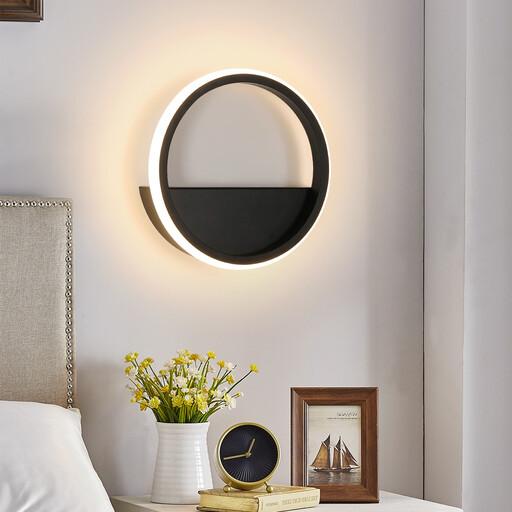
Why this product suits this profile: This permanently installed LED wall light is designed for living rooms, bedrooms, hallways and stairways.
The product name explicitly states 12 W and 3,000 K. This makes it easier to assess the desired light colour before buying.
Aluminium housing, a round design with a diameter of 20 cm and warm white light at 3,000 K according to the product name.
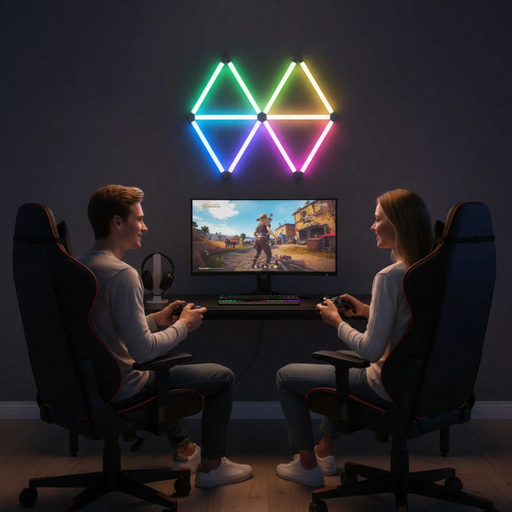
Why this product suits this profile: This six-piece system is aimed at gaming areas, home cinemas, party rooms and users who want to control their lighting via an app or voice assistant.
App, remote and voice control are specifically stated. For installation, the surface must be smooth, clean and dry.
16 million RGB colours, dynamic scenes and music synchronisation; Alexa and Google Assistant are supported.
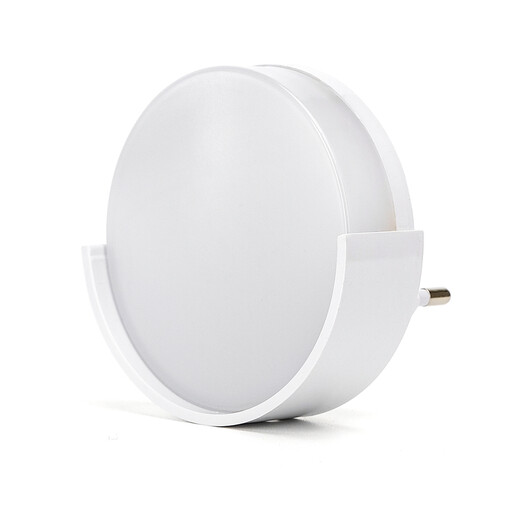
Why this product suits this profile: This plug-in light switches on automatically in the dark and is suitable for hallways, children’s bedrooms, bedrooms or stairways.
According to the product information, it requires neither batteries nor charging. It is designed for dry indoor areas with 220–240 V.
1 W power consumption, 40 lm, 6,500 K, IP20 and a stated lifespan of 25,000 hours.
We have put together a complete, regularly updated list of products that fully meet these strict selection criteria and the safety regulations applicable in the EU.
Consumption depends on the power rating in watts and how long the lamp is used each day. A 10 W light that is switched on for five hours a day uses 0.05 kWh per day in theory. To calculate the running cost, multiply this consumption by your electricity tariff. Wattage alone does not indicate the actual brightness; lumens are the key measure.
Lifespan varies according to the model and operating conditions. According to the product information, the Aigostar LED night light has a stated lifespan of 25,000 hours. This figure should be regarded as manufacturer or product information. Frequent switching on and off, heat generation or an unsuitable environment can affect its service life.
Not every LED light is dimmable. Dimmability must be expressly stated in the product description and, for permanently installed lights, must be compatible with the dimmer being used. When buying, you should also consider the light colour, connection type and installation location together, so that the light is genuinely suitable for the room in everyday use.