
Lieferung heute & morgen

Qualitätsgarantie

Willkommens-Angebote freischalten: KOSTENLOSE Lieferung | Bis zu 80 % RABATT | Kostenlose 30-Tage-JoyPlus-Testphase
App herunterladen
Choosing the right LED lamps may seem straightforward at first: check the fitting, compare the wattage and place your order. In practice, however, unclear manufacturer specifications, unsuitable colour temperatures or incompatible light fittings can quickly lead to the wrong purchase. Brightness is still often judged by wattage alone, even though for LED bulbs the luminous flux in lumens is the deciding factor.
The shape can also cause problems. An LED bulb with a large heat sink may not fit inside an enclosed light fitting. An LED night light with a sensor may be suitable for a hallway, but unsuitable for outdoor use because of its IP rating. You should therefore establish a few key technical details before buying.
Wattage describes energy consumption, not brightness directly. A 9 W LED lamp producing 840 lumens can replace a conventional 60 W incandescent bulb in terms of luminous flux. Lumens, beam angle and light distribution are therefore more important when choosing a lamp than wattage alone.
As a rough guide:
The actual effect also depends on the shape of the light fitting, the size of the room and the colour of the walls.
Colour temperature is measured in Kelvin (K):
A 6500 K LED bulb can feel very cool in a bedroom. In a hallway or over a worktop, however, this colour temperature may be practical.
An E27 LED bulb requires an E27 screw fitting. A GU10 LED spotlight, on the other hand, is usually secured by pushing it in and twisting it. The two systems are not interchangeable.
Buyers should also check:
A non-dimmable light source connected to a dimmer may flicker or make noises. The IP rating is also important for outdoor lights. IP20 is intended exclusively for dry indoor areas; IPX4, for example, protects against splashing water, but not submersion.
Luminous flux in lumens indicates how much visible light a lamp emits. The beam angle describes how widely this light is distributed. An angle of around 190 to 200 degrees is suitable for even general lighting. A spotlight with a narrower beam angle directs the light more precisely onto a particular area.
The CRI or Ra value indicates how naturally colours appear under the light. For everyday living areas, Ra ≥ 80 is a common guideline.
Manufacturers often state a rated lifespan, such as 15,000 or 25,000 hours. This is a technical specification, not a guarantee for every installation situation. High temperatures, poor ventilation and very frequent switching can affect the actual service life.
You should therefore also check the stated number of switching cycles. This figure is particularly relevant for hallways, toilets or stairwells.
Energy consumption is easy to calculate:
Power in kW × operating hours × electricity price = running costs
A 9 W lamp uses 9 kWh over 1,000 operating hours. The energy efficiency class should also be taken into account. Classification follows the current EU scale from A to G and cannot be directly compared with older plus-rated classes.
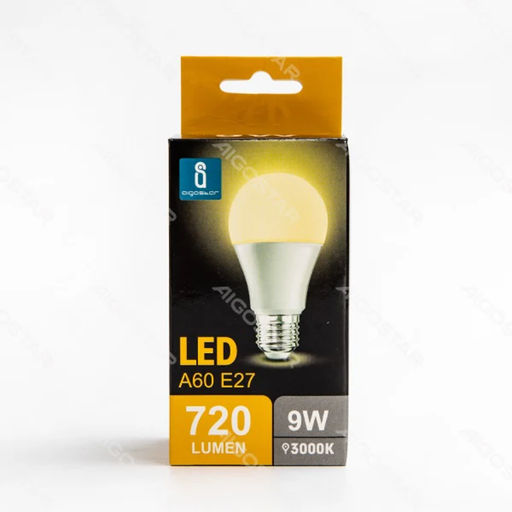
Why this product suits this profile: The standardised E27 fitting and 840 lumens make it easy to replace a conventional lamp in many living areas.
The 840-lumen specification gives you a better idea of the brightness than a wattage comparison alone. The lamp is designed for 3000 K and a wide light output.
9 W power consumption, 840 lm luminous flux and a stated lifespan of 15,000 hours.
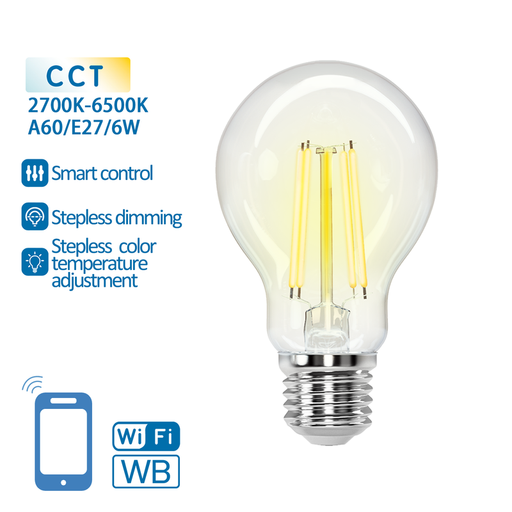
Why this product suits this profile: For smart home users, this E27 LED lamp offers app, voice and timer control without an additional hub.
The specifications state that a 2.4 GHz Wi-Fi connection is required and confirm compatibility with Alexa and Google Home. You should check this against your own network before buying.
6 W power consumption, 850 lm, adjustable colour temperature from 2700 to 6500 K and Wi-Fi control.
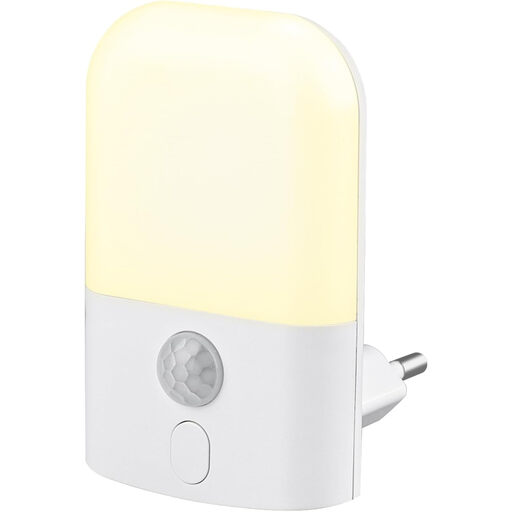
Why this product suits this profile: This plug-in light is designed for hallways, stairs and children’s bedrooms, switching on automatically when movement is detected in dark surroundings.
The stated range of up to 3 m, detection angle of 120° and switch-off after 60 seconds provide clear guidance for using the product.
Five brightness levels, 0.5 W power consumption and no need to replace batteries.
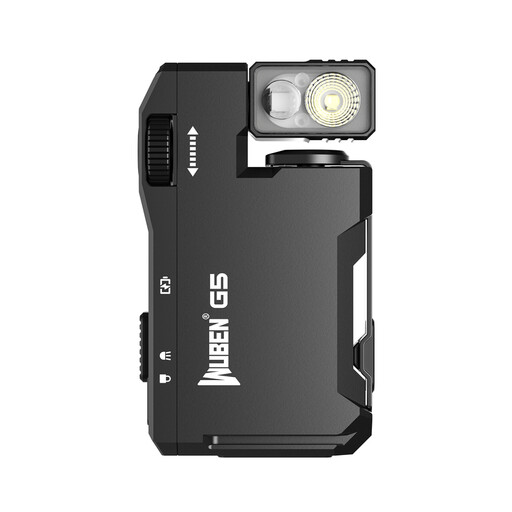
Why this product suits this profile: For camping, hiking and emergency kits, USB-C rechargeable battery power is more practical than regularly replacing disposable batteries.
The IP68 rating and USB-C connection are specific technical features. Make sure the connection is dry before charging, and never shine the torch directly into anyone’s eyes.
Stated light output of 1,200 lm, six lighting modes and a range of up to 93 m.
For an LED floor lamp, you should know the fitting’s maximum power rating. The 150 cm-high Keli floor lamp is designed for an E27 bulb rated up to 40 W; the light source is not included. If you are buying a decorative light fitting, you should also consider the cable length, footprint and stability.
A rechargeable LED lamp with warm light can be a sensible choice for bedrooms or children’s rooms. With a battery-powered model, capacity, charging connection and operating time are more important than a high maximum brightness. For work areas, a flexible clip-on lamp with neutral white 4000 K light and several brightness levels is a better choice.
If you are specifically looking for a GU10 LED lamp, a dimmable smart LED lamp or energy-efficient lighting, check the relevant product description for compatibility, indoor or outdoor suitability and the exact control method.
We have put together a complete, regularly updated list of products that fully meet these strict selection criteria and the safety regulations applicable in the EU.
Around 800 to 1,500 lumens may be sufficient for general lighting in a smaller living room. Larger rooms or dark walls may require more light. Several light fittings often distribute light more evenly than a single very bright light source.
No. An LED lamp must be explicitly stated to be dimmable, and the dimmer must be suitable for LED technology. Otherwise, flickering, buzzing or a limited dimming range may occur.
Depending on the model, the stated rated lifespan may be 15,000, 20,000 or 25,000 hours, for example. It depends on factors including operating time, heat dissipation, switching cycles and compliance with the specified ambient temperature. The manufacturer’s specification should therefore be understood as a technical guide for the particular application.