
Lieferung heute & morgen

Qualitätsgarantie

Willkommens-Angebote freischalten: KOSTENLOSE Lieferung | Bis zu 80 % RABATT | Kostenlose 30-Tage-JoyPlus-Testphase
App herunterladen
An LED night light with a motion sensor should help you find your way at night without making the room unnecessarily bright. For families, older people and households with dark hallways or stairs, it’s not just the design that matters. The sensor type, light colour, power supply and installation all determine whether a night light is practical for everyday use.
Many disappointing purchases come down to three common marketing pitfalls:
A night light with a dusk sensor responds to ambient light levels. The Aigostar model with a light sensor has a stated switching threshold of below 20 lux. It switches on when it’s dark enough and turns off again in daylight.
A PIR sensor, by contrast, detects movement. The Aigostar NL01 LED Night Light has a stated range of up to 7 metres and a detection angle of 120 degrees. The Grifema Children's Night Light has a stated range of up to 3 metres, also with a 120-degree angle. A shorter range is sufficient for a small hallway or the area beside your bed. A wider detection range can be more practical in a longer hallway.
Also check whether the light only activates when it’s dark and movement is detected. This combination stops the LED switching on unnecessarily during the day.
For a children’s night light or a bedroom night light, warm white light at around 2700 to 3000 Kelvin is often preferred. According to the product information, the Grifema model has a colour temperature of 2700 Kelvin and five brightness levels. The Aigostar NL01 uses 3000 Kelvin and has a luminous flux of 20 lumens.
Not all white light is warm white: the Aigostar night light with a dusk sensor is rated at 6500 Kelvin. This is a cooler shade of white and may be more suitable for hallways, stairs or storage areas.
A dimmable night light gives you more flexibility. Models with five brightness levels or stepless dimming can be adjusted to suit where you use them. A low setting is often enough to find your way around a hallway, while a slightly brighter light may be useful in a bathroom.
A plug-in night light doesn’t need batteries or charging. Before you buy, check the technical information for the mains voltage. The plug-in models listed here are designed for indoor use and, depending on the product, for 220–240 volts or 100–240 volts.
A rechargeable model can be placed anywhere, without needing a nearby socket. However, you’ll need to keep an eye on its charge level and battery life as part of everyday use. According to the product description, the Aigostar model with PIR and dusk sensors has a 500 mAh battery and charges via USB.
The IP rating is important in bathrooms, kitchens and damp cellars. The plug-in models listed here are rated IP20, so they’re intended for dry indoor areas only. Keep them away from water, don’t cover them and don’t modify them yourself. A PC or ABS casing can be robust, but it doesn’t replace proper use.
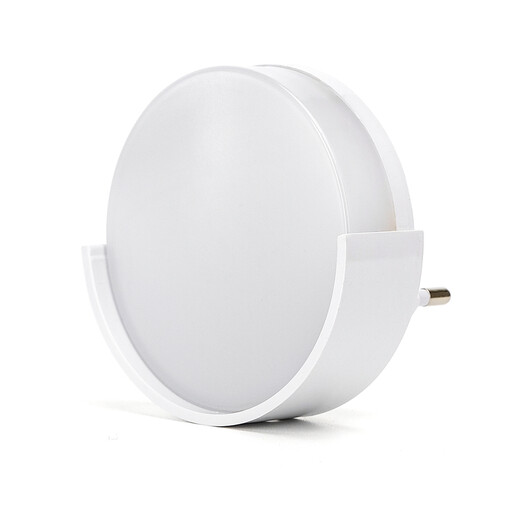
Why it suits this profile: Its direct plug-in design and built-in light sensor make it a good choice if you want an automatic night light without batteries or manual operation.
The switching threshold is clearly stated as below 20 lux, making it easier to judge when the light will come on.
1 W power consumption, 40 lumens, a 120-degree beam angle and a stated lifespan of 25,000 hours.

Why it suits this profile: The combination of a PIR motion sensor, dusk sensor and five brightness levels is well suited to children's rooms, hallways, stairs and bedrooms.
The product information clearly separates the sensor function, detection range and switch-off time: movement detection up to 3 metres, a 120-degree angle and automatic switch-off after 60 seconds without movement.
2700-Kelvin warm white light, five settings from 20 to 100 per cent and 0.5 W power consumption.
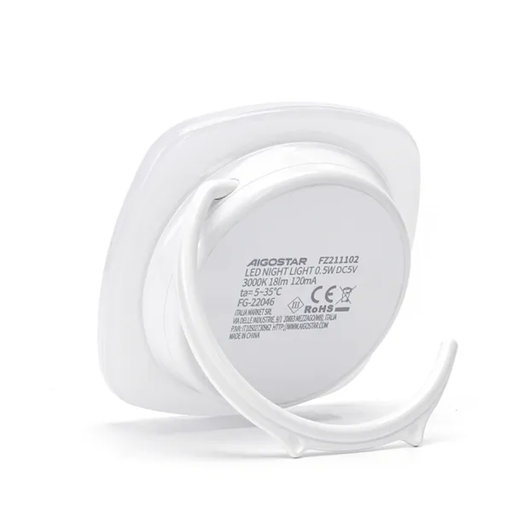
Why it suits this profile: Its rechargeable design is ideal for areas without a spare socket, such as cupboards, shelves or hallways where you may need to move it around.
The power supply is clearly specified as a USB-rechargeable 500 mAh battery. You know when it will need charging, and won’t mistake it for a battery-powered model.
3000 Kelvin, 18 lumens, a 3.5-metre detection range and a 120-degree beam angle, according to the product description.
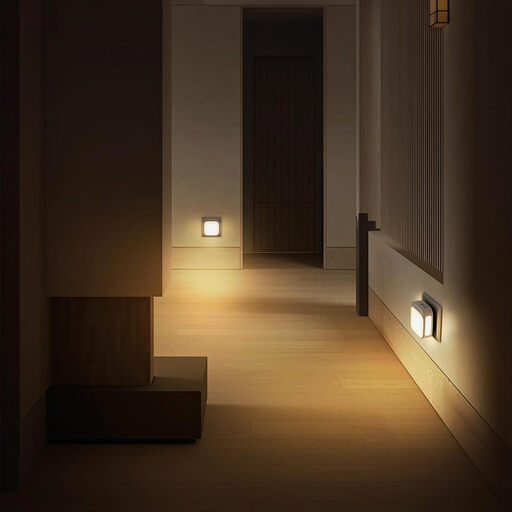
Why it suits this profile: You can use the two plug-in lights at the same time in a hallway, nursery or near the bathroom.
The automatic light control has a stated threshold of 20 lux or less. Brightness can be adjusted steplessly from 10 to 100 per cent.
0.3 W power consumption per light, 2800–3000 Kelvin and two lights included.
We’ve put together a complete, regularly updated list of products that meet these strict selection criteria and fully comply with the safety regulations in force in the EU.
A PIR sensor detects changes caused by moving bodies within its detection area. Combined models also check whether it’s dark enough. The light switches on only when both conditions are met. It switches off again after a set period without movement.
Power consumption depends on the model. The products in this selection range from 0.3 W to 1 W. In theory, a 1-watt model uses 0.001 kilowatt-hours in one hour of operation. The actual cost depends on how long the light is on and your household’s electricity tariff.
Product information gives different figures for each model. The Aigostar night light with a light sensor is rated for 25,000 hours and 12,500 switching cycles, while the Aigostar NL01 is rated for 10,000 hours. These are technical figures provided by the manufacturer, not a guarantee for every individual use. Dust, heat, frequent covering or moisture can affect how the light works.