
Lieferung heute & morgen

Qualitätsgarantie

Willkommens-Angebote freischalten: KOSTENLOSE Lieferung | Bis zu 80 % RABATT | Kostenlose 30-Tage-JoyPlus-Testphase
App herunterladen
An LED outdoor floodlight should reliably illuminate your garden, courtyard, garage, patio or driveway. In practice, however, wattage alone does not determine whether a light is suitable. Depending on where it is used, luminous flux, colour temperature, protection rating, power supply and installation are all important. If you choose solely based on an especially high lumen figure or a low price, you may later find yourself dealing with glare, inadequate illumination or a complicated installation.
Wattage describes energy consumption, not the amount of light directly. For comparison purposes, luminous flux in lumens is more meaningful. A modern LED floodlight can provide a high light output while consuming relatively little power. Also check whether the stated lumen figure applies to one unit or to a set.
For a set of two lights, it should be clear whether the stated luminous flux applies to both LED floodlights together or to each individual LED outdoor floodlight.
The term “waterproof” is of limited value without a specific IP classification. The first digit of the IP protection rating describes protection against solid foreign objects and dust, while the second indicates protection against water.
The protection rating must match the installation position. A light installed beneath a roof is exposed to far less direct rain than an outdoor LED floodlight mounted on an exposed house wall.
A motion sensor can be useful for driveways, entrances or outbuildings. For a patio that needs to remain permanently lit, however, an LED floodlight with a motion sensor is not always the right solution. Check the detection angle, range and adjustment options.
With a solar outdoor floodlight, actual operating time depends on the orientation of the solar panel, sunlight levels and battery capacity. A separate panel provides greater flexibility for lights installed in shaded locations, but it requires a suitable place for installation.
Colour temperature also affects how the light can be used:
A compact light may be sufficient for small entrance areas. A courtyard or wide driveway, on the other hand, requires either a higher luminous flux or several carefully positioned lights. An outdoor twin-head floodlight often distributes light in two directions. Adjustable brackets are useful if you want to adapt the lighting seasonally or after redesigning your garden.
Pay attention to the actual area covered by the beam, not just the lumen figure. A highly focused garden LED spotlight can brightly illuminate a limited area, while a wide beam angle enables more even area lighting.
For permanently installed outdoor LED lighting, you should at least check the manufacturer's information on the IP protection rating, housing material and installation position. Aluminium, glass and corrosion-resistant coatings can offer practical advantages when used outdoors. Cables, plugs and connection points must also be protected against moisture.
For mains-powered models, the following applies: the electrical installation should comply with local regulations. Disconnect the power supply before installation. For permanently connected lights, installation by a suitably qualified person is advisable.
Mains-powered LED outdoor floodlights provide light regardless of the weather or level of sunlight. For a rough cost estimate, you can use the following calculation:
Power in kilowatts × operating hours × electricity price = running costs
For example, a 20-watt floodlight uses 0.2 kilowatt-hours when operated for ten hours. Solar lights do not incur ongoing electricity costs, but battery condition, panel positioning and charging conditions are important.
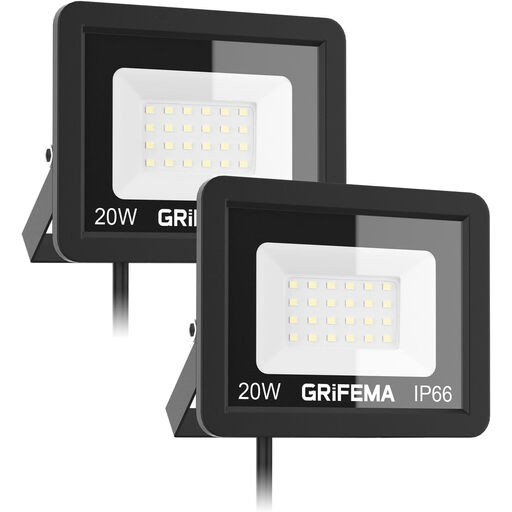
Why this product suits this profile: This set of two mains-powered LED outdoor floodlights is suitable for shoppers who want to illuminate several areas, such as a garage, garden or courtyard, with one product solution.
The product details specify 2200 lumens for the 2-piece set, an IP66 protection rating and an adjustable bracket. This means key buying criteria can be checked in advance.
20 watts per floodlight, 6500 Kelvin, IP66 and a 180° adjustable bracket; without a pre-fitted plug.
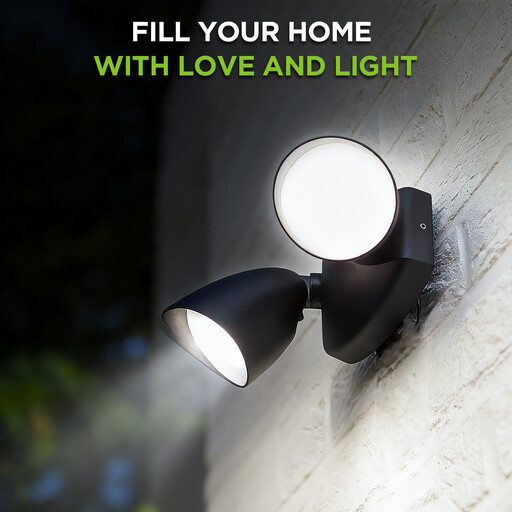
Why this product suits this profile: This outdoor twin-head floodlight is suitable for users who want to direct light precisely towards two areas of a patio, courtyard or garden.
The separate light heads allow more individual positioning than a single fixed outdoor wall floodlight. The full installation and protection details should be checked before purchase.
1800 lumens, 20 watts, 4000 Kelvin and a twin-head design for two lighting directions.
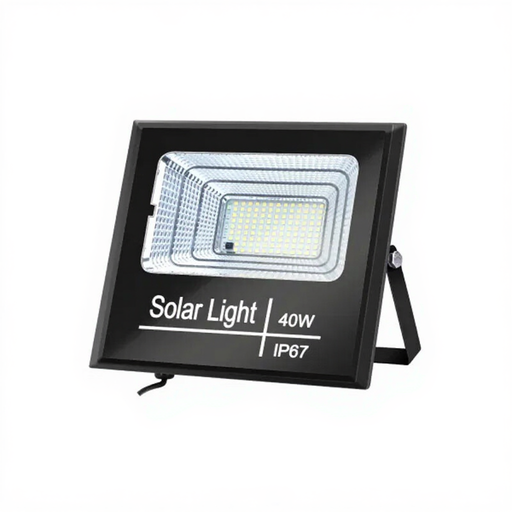
Why this product suits this profile: For garden areas, paths or outbuildings without an existing power connection, a solar outdoor floodlight can reduce the need for cabling.
The separate solar panel allows more flexible positioning. The IP67 rating and 10,000 mAh battery are specific details, but they do not replace checking local lighting and weather conditions.
Solar power supply, separate panel, IP67 and a battery capacity of 10,000 mAh stated by the supplier.
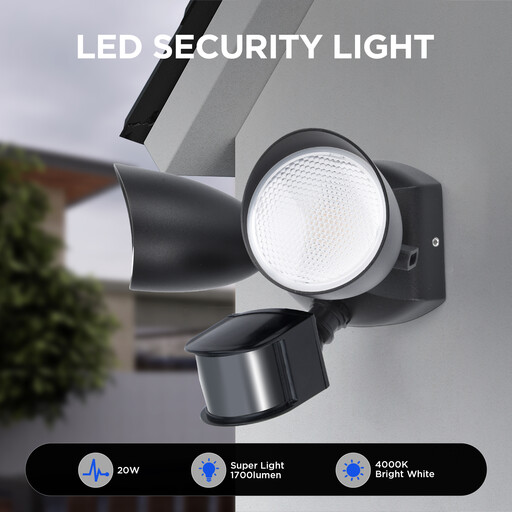
Why this product suits this profile: The integrated sensor is useful for entrances, garage driveways and paths where light is only needed when movement is detected.
The sensor function is explicitly included in the product name. Before installation, consider the detection area, activation duration and possible false triggers caused by animals or passing vehicles.
1700 lumens, 20 watts, 4000 Kelvin, two light heads and an integrated motion sensor.
We have put together a complete, regularly updated list of products that fully meet these strict selection criteria and the safety regulations applicable in the EU.
Before buying, measure the installation location and decide which area you want to illuminate. An outdoor wall floodlight requires a load-bearing surface and enough room for the bracket. For an outdoor LED floodlight, the beam must not be aimed directly at windows, neighbouring properties or public roads and pathways.
Also bear the following in mind:
This depends on the area, installation height and the level of illumination required. Lower luminous fluxes are often sufficient for paths and entrances, while courtyards, garages or security lighting require more lumens or several lights. The key is the combination of luminous flux, beam angle and positioning.
IP65 may be suitable for many exposed outdoor installations if the light is protected from prolonged immersion. For exposed positions or areas subject to severe weather, IP66 or IP67 can provide additional protection. The manufacturer's specific installation instructions remain decisive.
Solar lights do not use electricity from the household mains during operation and generally do not require permanent cabling. However, their performance and illumination time depend on sunlight, battery condition and the time of year. For consistent, predictable lighting, a mains connection is often easier to plan.